?China, IRA Fosters Domestic Supply Chains
Advanced Manufacturing Tax Credit Subrules Announced
Korean Companies' Uncertainty Resolved... Benefits from US Market Entry
Companies with US Production Facilities for North American Market Likely to Gain Tax Credit Benefits
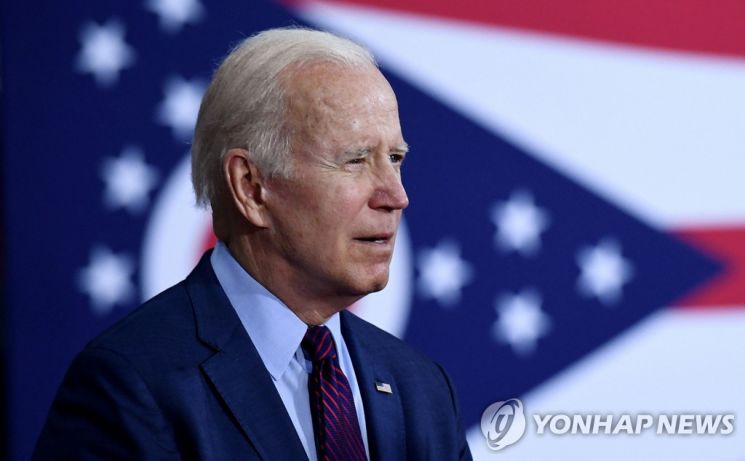
The U.S. Department of the Treasury announced sub-regulations of the Inflation Reduction Act (IRA) provisional guidance, which provides extensive tax cuts when producing 'batteries,' 'wind power,' 'solar power,' and 'critical minerals' domestically. The government stated, "Our companies will benefit."
The government (Ministry of Trade, Industry and Energy, Ministry of Foreign Affairs, Ministry of Economy and Finance) released a press statement on the 15th regarding the 'U.S. Inflation Reduction Act provisional guidance announcement,' saying, "We expect that our battery companies and solar and wind-related companies that have established production facilities in the U.S. to enter the North American market will receive significant benefits."
Strengthening IRA Benefits for Decoupling from China and Developing Domestic Supply Chains
On the 14th (local time), the U.S. Department of the Treasury specified the amount of tax credits by item related to advanced climate change industries in the IRA advanced manufacturing guidance. For batteries, cells and modules receive tax credits of $35 and $10 per kilowatt-hour (kWh), respectively. Solar modules and cells receive 7 cents and 4 cents per watt (W), respectively. Wafers receive $12 per cubic meter (㎥), and polysilicon receives $3 per kilogram (kg) in tax credits. Wind power blades and nacelles receive tax credits of 2 cents and 5 cents per watt, respectively. Towers receive 3 cents per watt, and critical minerals receive tax credits for 10% of production costs, including labor, electricity, and storage fees.
The U.S. is actively promoting IRA tax credits to decouple from China and develop domestic supply chains in eco-friendly energy transition industries such as batteries and solar power. The goal of this law is to increase the domestic renewable energy and clean industry base. The U.S. federal government plans to make fossil fuel power generation 'zero' on the power grid by 2035. For the manufacturing-weak U.S., achieving this goal requires importing foreign resources. For the Biden administration, power grid 'net zero' is not only a means to enhance energy security but also important for gaining voter support through lower electricity bills. Bringing the entire supply chain of these industries into the U.S. to increase domestic manufacturing jobs is also a core goal of the IRA.
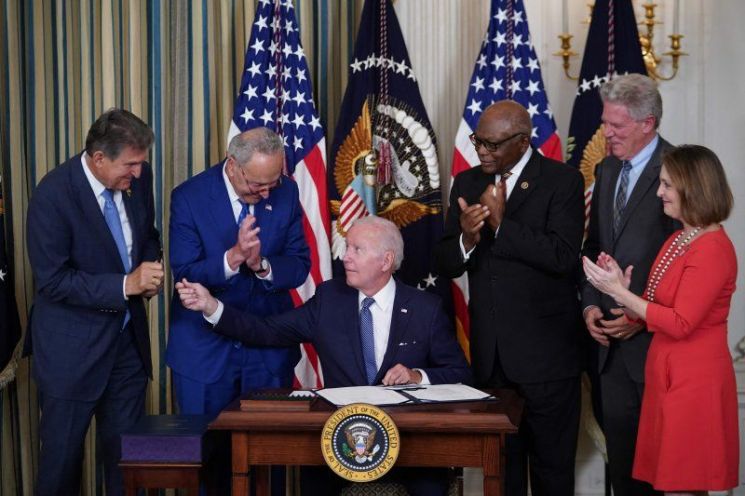
Reduced Uncertainty for Korean Companies... Expected Benefits for Companies Entering the U.S. Market
The provisional guidance applies to products produced and sold after December 31 of last year. The U.S. Department of the Treasury posted this guidance on the 15th and will have a 60-day period for public comments. A public hearing is also scheduled for February 22 next year. The government evaluated that the guidance includes detailed information on the definition and application of AMPC target items, which will reduce uncertainty for our companies entering the U.S. market.
The financial investment industry expects that all three battery companies?LG Energy Solution, Samsung SDI, and SK On?that have entered the U.S. will benefit from this measure. LG Energy Solution is analyzed to see an increase in tax credit amounts as the operating rate of its first joint plant with GM in Ohio, which started operation in November last year, rises. Currently, LG Energy Solution is establishing joint plants with GM (plants 2 and 3), Stellantis, Honda, and Hyundai Motor Group in the U.S. It is also expanding its independent Michigan plant and constructing a new plant in Arizona. SK On operates independent plants 1 and 2 in Georgia, U.S., and is establishing joint plants 1, 2, and 3 with Ford and a joint plant with Hyundai Motor Group. Samsung SDI is building joint plants 1 and 2 with Stellantis and a joint plant with GM in Indiana, U.S., so the tax credit benefits are expected to increase further.
© The Asia Business Daily(www.asiae.co.kr). All rights reserved.
![User Who Sold Erroneously Deposited Bitcoins to Repay Debt and Fund Entertainment... What Did the Supreme Court Decide in 2021? [Legal Issue Check]](https://cwcontent.asiae.co.kr/asiaresize/183/2026020910431234020_1770601391.png)
















