GDF15 Hormone Causing Nausea and Vomiting
Fluctuation Range Before and After Pregnancy Determines Morning Sickness Occurrence
Nausea and vomiting experienced by pregnant women in early pregnancy are commonly referred to as morning sickness. Pregnant women suffering from morning sickness experience a decrease in food intake, leading to rapid weight loss. In severe cases, dehydration symptoms may occur, which can adversely affect fetal health.
Until now, there has been no proper treatment for morning sickness, and the only option was to administer fluids to supplement nutrition. Meanwhile, the hormone that induces morning sickness has been identified, opening the way for the development of treatments.
On the 14th, Professor Steven O’Rahilly’s research team at the University of Cambridge in the UK published research results in the international journal Nature, examining the relationship between nausea and vomiting in pregnant women and the hormone growth differentiation factor 15 (hereafter, 'GDF15').
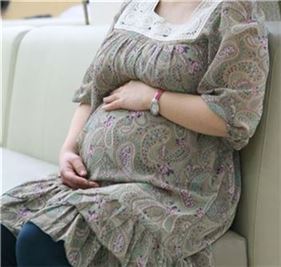 In pregnant women with severe morning sickness, dehydration symptoms may occur, which can negatively affect the health of the fetus.
 Photo by Asia Economy DB
The researchers analyzed the blood of 120 pregnant women to study the correlation between hormone levels and morning sickness. As a result, it was found that cases with high levels of the 'GDF15' hormone often experienced morning sickness.
According to the research team, GDF15 is mainly a hormone produced by the fetus, and its levels increase significantly during pregnancy. On the other hand, women who had high GDF15 hormone levels before pregnancy had a lower incidence of morning sickness after becoming pregnant. This is because genetic mutations caused them to have high baseline GDF15 levels, resulting in tolerance.
The research team also conducted animal experiments to investigate the effects of GDF15 on health and to find ways to prevent morning sickness.
The researchers administered GDF15 to mice and then mated them to observe whether weight loss due to morning sickness occurred. As a result, mice exposed to GDF15 before pregnancy did not show morning sickness, and there were no particular problems with food intake or weight. In contrast, mice that were not given GDF15 experienced morning sickness, with decreased food intake and weight loss.
Accordingly, the research team predicted that women with low baseline GDF15 levels are more likely to experience morning sickness, and that inducing tolerance could prevent it. Currently, the team is conducting two clinical trials using antibodies that prevent GDF15 from binding to the brain.
Professor O’Rahilly said, "We now have a clear target for the cause and treatment of morning sickness," adding, "By increasing GDF15 levels before pregnancy to induce tolerance, it may be possible to prevent morning sickness."
He continued, "Women with severe morning sickness sometimes require hospitalization due to deteriorating health," and said, "We expect that the development of new treatments will help protect the health of pregnant women."
© The Asia Business Daily(www.asiae.co.kr). All rights reserved.
















