The Ministry of Health and Welfare and the Korean Medical Association (KMA) clashed over solutions to the shortage of residents (specialist trainees) in essential medical fields during the Medical Issues Council meeting.
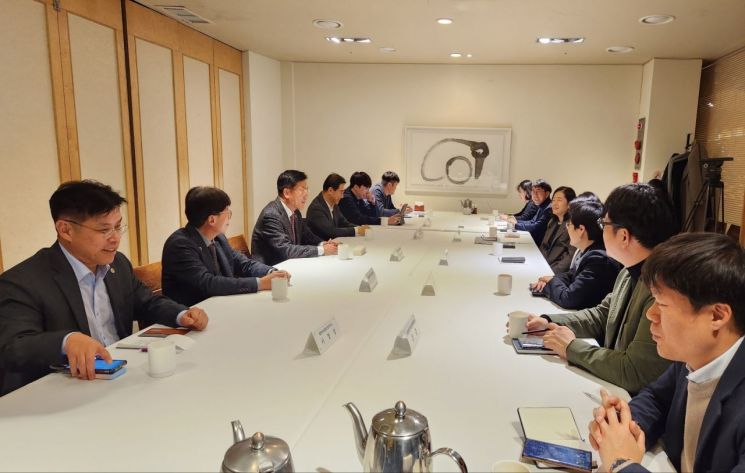
On the afternoon of the 13th, the Ministry and the KMA held the 21st Medical Issues Council meeting at Conference House Dalgaebi in Jung-gu, Seoul, to discuss medical sector issues including the increase in medical school quotas.
The KMA referred to the resident application results announced on the 7th and pointed out that increasing medical school quotas would not solve the essential medical care problem. Yang Dong-ho, head of the KMA negotiation team, said, "Despite the government's will, the resident recruitment results for the first half of next year show that most hospitals failed to secure quotas in essential medical departments such as pediatrics," adding, "In this situation, do you believe that simply increasing medical school quotas will result in residents who handle essential medical care being the 'trickle-down' doctors?"
He emphasized, "Even hospitals known as the 'Big 5' failed to secure quotas," and stated, "We must first address the causes of the collapse of essential medical care, such as the high risk-low return and excessive punishment, and prioritize improving the training environment."
According to the results of the first half of 2024 resident first-year early recruitment (targeting 140 training hospitals) released by the Ministry on the 7th, pediatrics had 53 applicants for 205 quotas, with an application rate of 25.9%, ranking last overall. Other essential medical departments such as emergency medicine (application rate 79.6%) and obstetrics and gynecology (67.4%) also failed to fill their quotas.
Regarding this, Jeong Gyeong-sil, Director of Health and Medical Policy at the Ministry, said, "Although the government made various efforts, it was insufficient to achieve results immediately," and emphasized, "We will reform the workforce system so that hospitals relying on residents shift to a specialist-centered structure, improve continuous working hours for residents, and prevent healthcare workers from burnout."
On the issue of increasing medical school quotas, Director Jeong explained that the government has not unilaterally pushed for an increase, referring to the process of the Medical Issues Council meetings so far. He stated, "Going forward, the government will discuss the scale of physician workforce expansion within the Medical Issues Council and decide through the Health and Medical Policy Deliberation Committee, which includes participation from various sectors."
Regarding the supplementary measures for the pilot project of non-face-to-face medical consultations to be implemented on the 15th, he explained, "Although concerns are significant, we will communicate with the field implementing non-face-to-face consultations during the pilot period and continuously make improvements."
© The Asia Business Daily(www.asiae.co.kr). All rights reserved.

















