Amendment to the Special Measures Act on Vacant Houses... Penalties Even Without Collapse Risk
Japan, which had been struggling with the problem of vacant houses caused by population decline, has finally decided to impose a 'vacant house tax.' From now on, if administrative authorities point out negligence in managing vacant houses, such as leaving broken windows unattended, the tax benefits applied to residential land will no longer be granted.
On the 13th, Japanese media including Asahi Shimbun reported that the revised Vacant House Countermeasure Special Measures Act, which strengthens the management and utilization of vacant houses, is scheduled to take effect from this day.
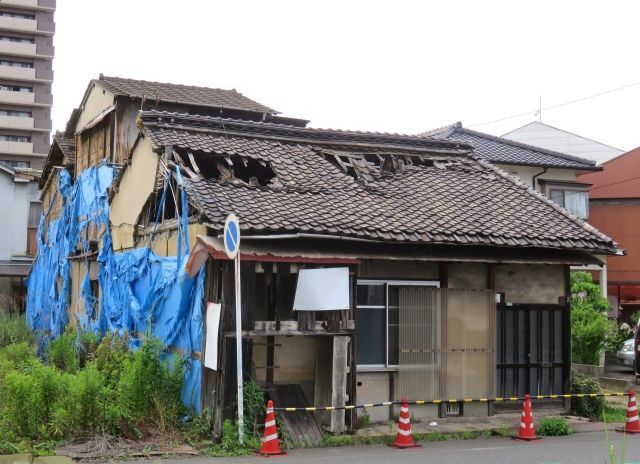
The core of the revision is to exclude houses that are poorly managed (neglected vacant houses) from tax benefits, even if there are no immediate risks such as collapse. Houses with damaged or corroded roofs or pillars, broken glass windows, or overgrown trees and weeds are newly defined as 'neglected vacant houses.' The Ministry of Land, Infrastructure, Transport and Tourism will set the standards, and local governments will make judgments based on these criteria.
Owners of houses classified as neglected vacant houses and who receive improvement recommendations will no longer be eligible for fixed asset tax reduction measures applied to vacant house land. In Japan, special measures are applied to residential land for houses or mansions, reducing fixed asset tax by one-sixth to one-third depending on the area. However, if the house is demolished and the land becomes vacant, it cannot be used for residential purposes, and thus the benefits cannot be received. Because of this, there have been many cases where vacant houses were deliberately left unattended to receive tax reductions.
Under the existing law, only vacant houses with obvious risks such as collapse were excluded from tax benefits. The Vacant House Countermeasure Special Measures Act, implemented since 2015, classifies houses that are in a state of significant risk of collapse or pose health hazards such as asbestos dispersion as 'specified vacant houses.' Specified vacant houses that do not comply with improvement recommendations face fines of up to 500,000 yen (approximately 4.5 million won) and are excluded from fixed asset tax reduction measures.
In short, this revision significantly expands the scope of tax penalties. Asahi explained, "The newly defined neglected vacant houses in the law refer to conditions that, if left unattended, could become specified vacant houses," adding, "The purpose is to urge prompt improvement through a de facto tax increase to prevent the risk of collapse from increasing due to neglect."
Japan's vacant house problem is already severe. According to a 2018 survey by the Ministry of Internal Affairs and Communications, there are approximately 3.49 million vacant houses nationwide that are unused, an increase of about 1.9 times over 20 years since 1998. Among these, about 235,000 houses are in poor condition with risks such as collapse. The Ministry of Land, Infrastructure, Transport and Tourism estimates that if this trend continues, the number of vacant houses in Japan will increase to about 4.7 million by 2030.
A Ministry of Land, Infrastructure, Transport and Tourism official appealed to Asahi, saying, "Vacant houses not only pose safety issues but also cause crime problems and decline in real estate prices, ultimately having a negative impact on neighboring residents," and urged, "House owners should not neglect their houses and should take responsibility for their management."
© The Asia Business Daily(www.asiae.co.kr). All rights reserved.
![Clutching a Stolen Dior Bag, Saying "I Hate Being Poor but Real"... The Grotesque Con of a "Human Knockoff" [Slate]](https://cwcontent.asiae.co.kr/asiaresize/183/2026021902243444107_1771435474.jpg)
















