Amendment to the Farmland and Fisheries Village Improvement Act Passed by the National Assembly on the 8th
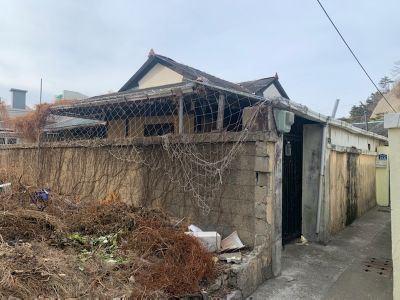
From now on, owners who receive demolition orders for vacant houses with high safety accident risks and fail to comply will be required to pay enforcement fines.
The Ministry of Agriculture, Food and Rural Affairs announced on the 10th that a partial amendment bill to the Rural Development Act containing these provisions was submitted and passed at the National Assembly plenary session on the 8th.
Until now, there has been an issue that local governments have no means to forcibly demolish vacant houses in rural areas, and owners have no incentives to voluntarily maintain vacant houses. To address this, the Ministry of Agriculture, Food and Rural Affairs has promoted amendments to the Rural Development Act to systemically supplement this problem.
First, the amendment allows mayors, county governors, and district heads to impose enforcement fines of up to 5 million won up to twice a year repeatedly if the owner of a vacant house with high risks of safety accidents or landscape damage fails to comply with demolition or other orders. Additionally, when demolition or other measures are taken ex officio, if the costs incurred exceed the compensation amount, the difference can be collected from the owner, establishing a legal basis for this.
A special provision for Priority Vacant House Maintenance Zones will also be introduced. Local government heads can designate areas where vacant houses are increasing or where the vacancy rate is high as Priority Vacant House Maintenance Zones. When reconstructing or changing the use of vacant houses within these zones, the local government’s review committee can relax standards related to building coverage ratio, floor area ratio, and building height restrictions under the Building Act within the scope of existing vacant houses.
Lee Sang-man, Director of the Rural Policy Bureau at the Ministry of Agriculture, Food and Rural Affairs, said, "Since voluntary efforts by owners are necessary for vacant house maintenance, it is significant that both incentives and disincentives have been institutionalized simultaneously. Furthermore, efforts to reduce property tax burdens when demolishing vacant houses are underway, so we expect vacant house maintenance to gain more momentum in the future."
© The Asia Business Daily(www.asiae.co.kr). All rights reserved.

















