Purchase of 860 Million USD in Lira-Denominated Government Bonds in the Second Half of the Year
As T?rkiye normalizes its monetary policy to prevent the collapse of the lira and a surge in inflation, global investors are increasingly turning their attention to Turkish government bonds.
According to an analysis of data from the Central Bank of T?rkiye by major foreign media on the 9th, overseas fund managers purchased approximately $860 million worth of lira-denominated Turkish government bonds in the second half of this year. This is the largest amount on a half-year basis since 2021.
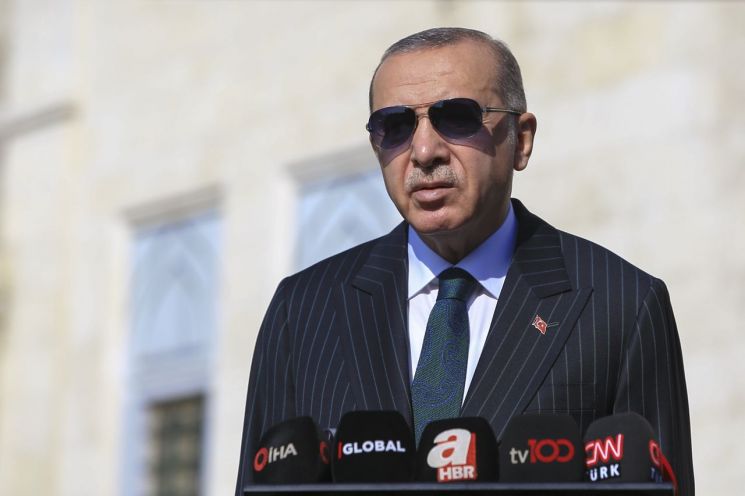
The gradual increase in foreign investment in Turkish government bonds is attributed to the government's rapid normalization of unconventional economic and monetary policies. President Recep Tayyip Erdo?an had previously forced the central bank to adopt monetary policies contrary to economic common sense, lowering the benchmark interest rate to curb high inflation. As a result, T?rkiye's benchmark interest rate fell from 19% in September 2021 to 8.5% in February this year, while the inflation rate reached 100%.
However, after successfully securing a third term in May, President Erdo?an reversed his stance 180 degrees. The central bank raised the benchmark interest rate six times to the current 40% to control inflation. Although inflation still exceeds 60% as of last month, it has significantly eased compared to the beginning of the year.
Carol Carenza, portfolio manager at Allianz Global Investors, analyzed, "The new monetary and fiscal policies are sending positive signals to the market," adding, "T?rkiye's central bank is independently raising interest rates to combat inflation, and the government is also striving to address fiscal deterioration."
Turkish government bonds currently offer a yield of 35% on 2-year maturities. This far exceeds the 14% inflation rate predicted by the central bank for the end of 2025, two years from now. From an investor's perspective, this increases the attractiveness of investing in government bonds. Additionally, the Turkish lira has depreciated by 35% against the dollar since the beginning of the year, enabling foreign investors to purchase bonds at lower prices.
Sergey Strigo, co-head of emerging market bonds at Amundi Asset Management in France, noted, "Global investors who had not previously participated in this (T?rkiye) market have begun to reverse their previous positions of reducing exposure to Turkish government bonds."
Some express concerns that T?rkiye might pursue unconventional economic and monetary policies again ahead of local elections scheduled for March next year. Rising tensions due to T?rkiye's differing stance from the West on issues such as Israel and the Ukraine war, which could increase geopolitical instability, are also cited as factors that heighten uncertainty regarding investment in Turkish assets.
© The Asia Business Daily(www.asiae.co.kr). All rights reserved.

















