The government is set to raise fees in risky and challenging medical fields to prevent the collapse of essential healthcare. Fees refer to the compensation paid by the health insurance authorities to medical institutions for medical services provided.
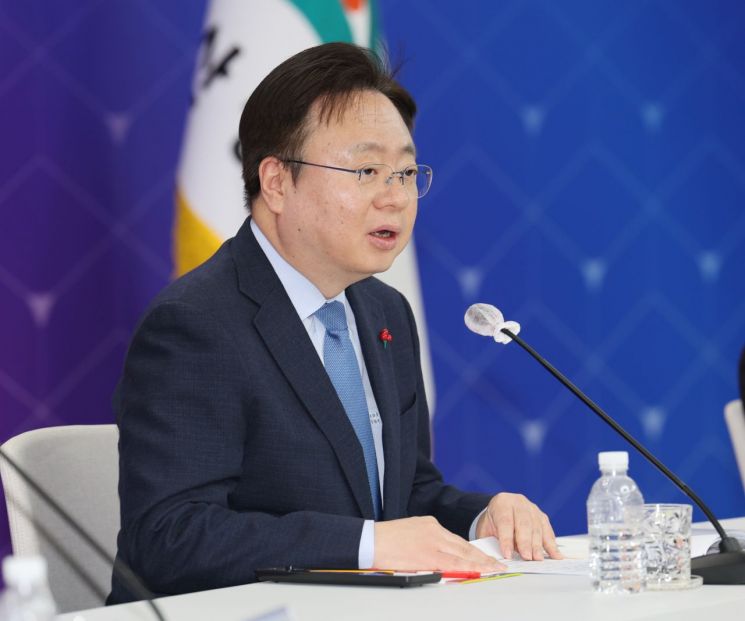
On the 6th, Cho Kyu-hong, Minister of Health and Welfare, held the first regional tour meeting at Ulsan City Hall and stated, “We plan to significantly reform the health insurance compensation system so that difficult and demanding essential medical services can be fairly and adequately compensated.”
First, through public policy fees, support will be concentrated on areas within essential healthcare that face significant challenges. Following this year’s normalization of pediatric and maternity fees, compensation will be expanded for urgent normalization in fields such as surgical specialties. The newly applied public policy fees in essential healthcare complement the current fee-for-service system. The fee-for-service system pays based on the medical services provided by healthcare professionals, which has been criticized for causing avoidance in fields with low treatment frequency.
Additionally, the Ministry of Health and Welfare plans to introduce a ‘Regional Medical Innovation Pilot Project’ from the second half of next year to reduce disparities in essential healthcare between regions. Up to 50 billion KRW of health insurance funds will be invested over three years in selected regions.
Furthermore, through fundamental improvements to the compensation system, the relative value scale for medical services will be revised to ensure that the characteristics of essential healthcare?such as high risk, high difficulty, urgency, and waiting costs?are sufficiently reflected in the fees. The relative value score, which forms the basis of the fee system, represents a comprehensive evaluation of medical personnel, facilities and equipment, and risk factors. There have been concerns that the relative value scores for essential medical services like surgical operations are low. Additionally, the current adjustment cycle for relative value scores, which is 5 to 7 years, will be drastically shortened to 1 to 2 years to promptly correct any imbalances in compensation across fields.
The Ministry of Health and Welfare will first increase health insurance investment and then, in consultation with financial authorities, prepare financial investment plans to expand regional essential medical personnel and infrastructure.
Minister Cho Kyu-hong said, “Along with expanding the number of doctors, the government will promote various policy measures, including reforming the compensation system, so that doctors dedicated to regional and essential healthcare are sufficiently respected and can work with pride.”
Meanwhile, attendees of the meeting, including Oh Yeon-cheon, President of Ulsan University, also requested the government to promptly increase medical school admission quotas to secure medical personnel.
© The Asia Business Daily(www.asiae.co.kr). All rights reserved.
!["The Woman Who Threw Herself into the Water Clutching a Stolen Dior Bag"...A Grotesque Success Story That Shakes the Korean Psyche [Slate]](https://cwcontent.asiae.co.kr/asiaresize/183/2026021902243444107_1771435474.jpg)
















