Professor Park Young-ah at Ewha Seoul Hospital
"Increasing Cases with No Improvement Despite Antibiotic Administration"
Recently, there has been a concerning spread of Mycoplasma pneumonia primarily among children, and caution is needed as it is known to have strong antibiotic resistance.
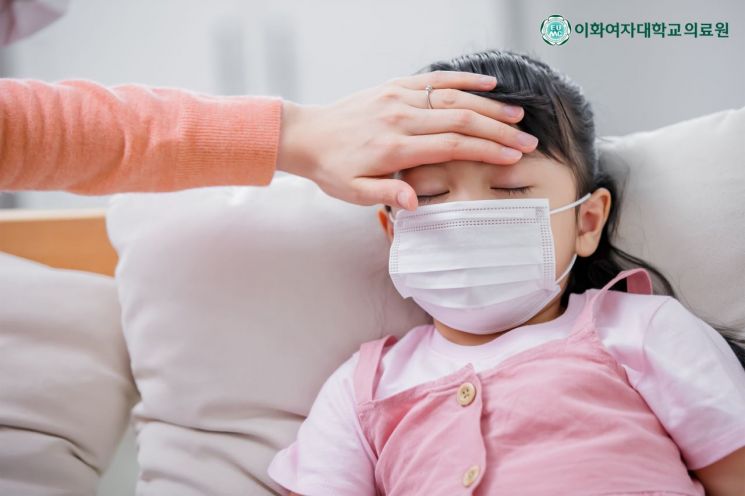
According to Ewha Womans University Seoul Hospital on the 6th, the number of patients hospitalized for Mycoplasma infection increased more than twofold from 102 in the third week of October to 226 in the second week of November. Among them, children aged 1 to 12 account for about 80% of the total cases.
Mycoplasma pneumonia is an acute respiratory infection caused by Mycoplasma pneumoniae. After infection through droplets, it has an incubation period of about 2 to 3 weeks, followed by symptoms such as high fever, chest pain, and cough. Pneumonia symptoms, including cough and general weakness, can persist for 2 to 6 weeks, and in rare cases, extrapulmonary symptoms such as erythema multiforme on the skin, arthritis, meningitis, or encephalitis may accompany the infection.
Mycoplasma infection is classified as a Category 4 notifiable infectious disease, similar to COVID-19, which was downgraded in August. Unlike COVID-19, it responds well to antibiotic treatment, and appropriate antibiotic administration can shorten the clinical course. Immunity develops as antibodies are produced in the body upon infection with Mycoplasma pneumoniae, but this immunity does not last long, making reinfection common.
Dr. Young-Ah Park, a pediatric respiratory specialist (professor) at Ewha Womans University Seoul Hospital, stated, "When Mycoplasma pneumonia is diagnosed, macrolide antibiotics are primarily administered, and since most cases improve, Mycoplasma pneumonia may be underestimated." She added, "Recently, among hospitalized children, the proportion of Mycoplasma pneumoniae strains resistant to macrolides has increased, and cases where symptoms do not improve despite antibiotic treatment are rising, so more caution is needed than in the past."
It is also important to note that multiple viruses are circulating simultaneously. This winter, respiratory viruses such as Mycoplasma, COVID-19, influenza, respiratory syncytial virus, and rhinovirus are all spreading concurrently. Therefore, if fever and cough do not improve despite medication, it is important to undergo testing based on the recommendation of a pediatric specialist to differentiate the disease and start appropriate treatment.
Dr. Park advised, "Since the incubation period of Mycoplasma pneumoniae is long, about 2 to 3 weeks, outbreaks can continue for several weeks within families and daycare centers." She added, "If symptoms such as fever and cough appear after close contact with a Mycoplasma-infected person, it is best to refrain from attending daycare or kindergarten and visit a pediatric clinic for medical evaluation."
© The Asia Business Daily(www.asiae.co.kr). All rights reserved.
![Clutching a Stolen Dior Bag, Saying "I Hate Being Poor but Real"... The Grotesque Con of a "Human Knockoff" [Slate]](https://cwcontent.asiae.co.kr/asiaresize/183/2026021902243444107_1771435474.jpg)











