Autonomous agricultural robots that can mow weeds alone, spray pesticides, and transport harvests, as well as technology that can turn 2nd-grade Hanwoo beef into 1++ (Two-Plus) grade with just 48 hours of short-term aging, have been selected as excellent achievements of the Rural Development Administration (RDA) this year.
The RDA announced on the 6th that it will hold the "2023 Agricultural Science and Technology Excellent Achievement Sharing Conference" on the 7th at the aT Center in Seocho-gu, Seoul to widely promote these agricultural research and development achievements.
The Excellent Achievement Sharing Conference is an event to share innovative excellent achievements developed through rural development projects, set directions for basic science and convergence practical research, and award and encourage outstanding individuals.
This year, unlike previous years, the event will be held as a public event where farmers, consumers, and companies participate together in the presentation and discussion of excellent achievements. Any interested member of the general public can participate.
Based on expert opinions in the agricultural field and results from a public survey, a total of 15 excellent achievements selected from ▲industrial basic research ▲future growth basic research ▲field application ▲public sector will be presented and awarded.
First, in the industrial basic research category (2 cases), smart mechanization and automation technologies that make agricultural sites safer and more convenient, and Hanwoo aging technology that enhances taste and flavor were selected.
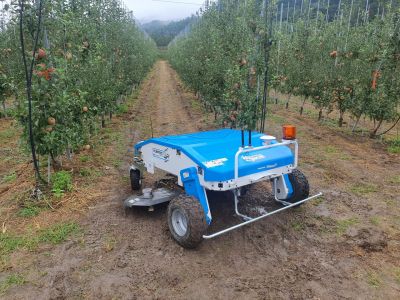
The weeding robot developed by the RDA uses a high-precision satellite navigation system (RTK-GNSS) to create a work path in advance and autonomously drives based on this path while physically weeding using the weeding blades attached to the robot. When obstacles are present, it recognizes them using video devices or LiDAR sensors and resumes work after the obstacles are removed. The transport robot currently under development uses LiDAR sensors to unmannedly transport harvests, farming tools, snacks, and more to desired locations. Additionally, the RDA has advanced the previously developed pest control robot that autonomously sprays pesticides only on fruit trees by electrifying the autonomous driving device, enabling automatic charging of pesticides and batteries (moving autonomously to the pesticide refill station and returning to the last work position), and allowing linked operations with the transport robot.
An RDA official said, "Recently, a major issue of rural extinction has been raised due to the decrease and aging of the agricultural population," adding, "Agricultural robots incorporating robot technology are expected to gradually resolve challenges faced by rural areas such as carbon neutrality and labor replacement, lead the presentation of future agricultural models, and play a leading role in realizing unmanned farming operations."
In the future growth basic research category, four cases were selected, including strengthening research and development (R&D) competitiveness through the introduction of supercomputers, development of pig organoids (mini organs) and gene-edited pigs as alternatives to animal testing, shortening the development period of wheat varieties using speed breeding technology, and establishing a fermentation microorganism-based platform for biological sovereignty.
In the field application category (4 cases), there are a converged pest and disease diagnosis app, farm-level weather disaster alert service, K-agricultural product exports using CA containers, and technology to reduce low-temperature damage in oriental melons.
Public sector research achievements include five cases: replacing imported wheat with domestic powdered rice, methane gas reduction rice variety 'Miryang 360', eco-friendly packaging materials using mushroom substrate, livestock product safety diagnostic sensors, and distribution of high-quality domestic rice seeds to alleviate food shortages in Africa.
The content and development process of the excellent achievements selected this year will be explained in an easy-to-understand manner by researchers in a talk show format on the day of the conference.
Meanwhile, the RDA is striving to overcome difficulties faced by agriculture and rural areas through agricultural technology based on the vision of "Vibrant agriculture and rural areas created by science and technology, a better future." To this end, it has established four strategic goals: ▲future growth industrialization of agriculture ▲sustainable agriculture ▲realization of vibrant rural areas ▲and realization of a happy life for the people, and is devoted to producing research and development achievements that the public can feel.
Jo Jae-ho, Administrator of the RDA, said, "As we wrap up 2023, I hope this achievement sharing conference will be an opportunity to strengthen cooperation and communication in the field of agricultural research and development," adding, "The RDA will lead innovation in agricultural science and technology for the future growth industrialization of agriculture, food security, and sustainable agriculture."
© The Asia Business Daily(www.asiae.co.kr). All rights reserved.
![Clutching a Stolen Dior Bag, Saying "I Hate Being Poor but Real"... The Grotesque Con of a "Human Knockoff" [Slate]](https://cwcontent.asiae.co.kr/asiaresize/183/2026021902243444107_1771435474.jpg)
















