Income-Based Tax Causes Youth Complaints
Increase in Medical and Care Insurance Burden Rates
Social Security System Reform Initiated
In Japan, where the tax burden on the younger generation is increasing due to rapid aging, measures are being promoted to improve the social security system by increasing the tax burden on elderly people belonging to the wealthy asset class. This is a measure to reduce the burden on the younger generation, who had a higher tax burden despite having smaller asset sizes than the elderly, because taxes were imposed based on income criteria.
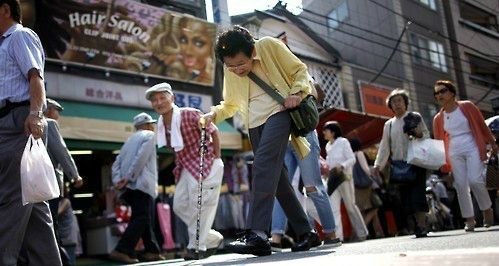
On the 5th, the Japanese government announced a draft reform of the social security system focusing on medical and nursing care insurance reform. The reform plan included increasing the burden of medical insurance and nursing care insurance premiums mainly on elderly people with substantial assets.
As a specific measure, a plan was discussed to raise the self-pay rate for nursing care insurance only for elderly people belonging to the wealthy asset class. Nursing care insurance is a system in which the entire society bears the burden of nursing and care needed by the elderly. Japanese citizens must pay this insurance premium to the state from the age of 40. When using this insurance, they only need to pay 10% of the fees when using care services such as day care services.
The Japanese government plans to raise this fee burden rate to at least 20% and up to 30% for elderly people with substantial assets. When calculating the taxpayer's asset size, financial assets such as stock sale profits are also expected to be included. Currently, insurance premiums reflect financial income only if the taxpayer voluntarily reports it. The Japanese government expects to save 670 billion yen (about 5.9733 trillion won) annually in tax revenue through this policy.
The Japanese government also proposed raising the medical insurance self-pay rate only for the wealthy asset class among the super-aged population aged 75 and over. This is a plan to raise the medical expense self-pay rate up to 30% for the super-aged with substantial assets by adding asset criteria besides income. Currently, the medical expense self-pay rate for the super-aged is set based on income criteria. For the super-aged with a certain income, the rate is 20%, and high-income elderly people earning more than 3.83 million yen annually pay up to 30% of medical expenses directly. Super-aged people without a certain income pay only 10% of medical expenses.
The Japanese government’s intention to increase insurance burdens on wealthy elderly people is due to the increasing cost burden across all generations caused by rapid aging. Compared to 2000, when the system was first implemented, the insurance premiums paid by elderly people aged 65 and over have more than doubled, but the financial burden on the younger generation is further increasing due to aging. According to the Japanese government, the total cost of nursing care insurance, including self-payments, exceeded 13.3 trillion yen last year.
In particular, since the self-pay rate is set based on income criteria, elderly people with substantial assets also enjoy many social security benefits, raising equity issues among the younger generation. Although elderly people may have lower income levels than the younger generation, the fact that they hold relatively large assets means that it is argued that it is not a reasonable policy for the younger generation to bear more taxes.
© The Asia Business Daily(www.asiae.co.kr). All rights reserved.
![Clutching a Stolen Dior Bag, Saying "I Hate Being Poor but Real"... The Grotesque Con of a "Human Knockoff" [Slate]](https://cwcontent.asiae.co.kr/asiaresize/183/2026021902243444107_1771435474.jpg)
















