On the 5th at the Political Reform Special Committee, the People Power Party asks, "What is the opposition's stance?"
Following Lee Byeongrip's current affairs, Hong Ikpyo says, "Must all promises be kept?"
Lee Nakyeon, Kim Bu-gyeom, Son Hakgyu, and others oppose returning to the 'Byeongrip' system... Conflict intensifies
The Democratic Party of Korea is struggling to find a clear direction on electoral system reform as of the 5th, with only a week left until the preliminary candidate registration day for next year's general election (the 12th). Following the People Power Party's early advocacy for a 'parallel proportional representation system,' the Democratic Party has recently appeared to shift from its original stance of 'banning satellite parties and maintaining a mixed-member proportional representation system' to supporting the 'parallel system.' Prohibition of satellite parties, a presidential pledge by leader Lee Jae-myung, is being questioned by the leadership with pragmatic arguments, leading to a conflict between old and new factions over electoral reform.
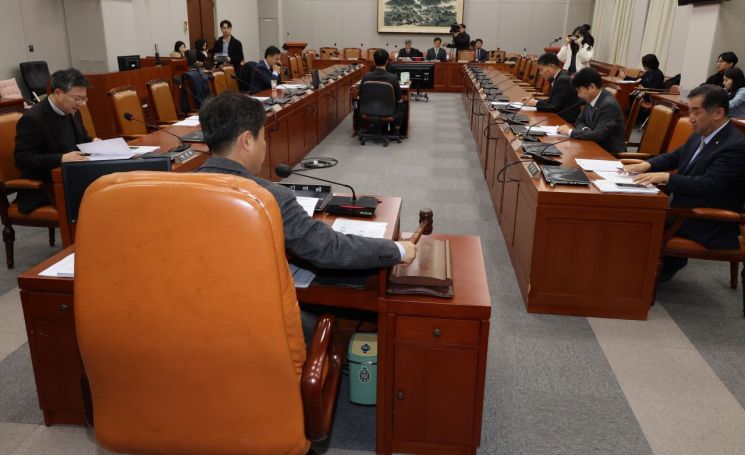
On that day, members of the ruling and opposition parties belonging to the National Assembly's Political Reform Special Committee (PRS Committee) continued to hold parallel positions during a plenary session held at the National Assembly regarding electoral reform. The People Power Party advocated a return to the parallel proportional representation system, while the Democratic Party emphasized the priority passage of the satellite party prevention bill.
Democratic Party lawmaker Lee Tan-hee said, "In mid-November this year, the Democratic Party requested the adoption of an agenda to discuss the satellite party ban bill at the PRS Committee's second subcommittee, but the People Power Party did not agree and rejected it," adding, "Eventually, all Democratic Party members of the second subcommittee signed a consent form requesting the addition of the satellite party prevention bill to the agenda. Since the second subcommittee has not yet convened, we urge that the bill be properly reviewed and processed according to National Assembly procedures," advocating for direct referral to the plenary session.
However, no clear position was expressed regarding the method of proportional representation seat allocation. The People Power Party side criticized, "What exactly is the Democratic Party's position? Is it parallel or semi-mixed?"
People Power Party lawmaker Bae Jun-young said, "Leader Lee Jae-myung's remark, 'Elections are about winning; what's the use of losing stylishly?'?does that mean the Democratic Party intends to adopt the parallel system?" He added, "I don't want to pry into the Democratic Party's internal matters in detail, but by the 12th next week, preliminary candidates who may not even know their own constituencies will be campaigning with pledges. Please promptly clarify your position on the proportional representation system."
Democratic Party lawmaker Kim Young-bae, the opposition secretary of the PRS Committee, countered, "You ask the Democratic Party to decide first, but the problem started because the People Power Party insisted on returning to the old electoral law, and negotiations have not progressed under the guideline that mixed-member proportional representation with 240 district seats and 60 proportional seats, which was the Democratic Party's party line, could be discussed together with the parallel system."
He continued, "In a public opinion survey earlier this year, the public showed a strong demand to increase proportionality and appeared quite open to the proportional representation system, but the National Assembly has made no progress, failing to satisfy proportionality and representation, so no conclusion has been reached." He added, "Despite demands for improvements to the mixed-member proportional system, including the satellite party prevention bill, substantive discussions have not been conducted in the PRS Committee, leading to conflicting opinions. We urge both party leaderships, including the Democratic Party and People Power Party, to reach an agreement quickly."
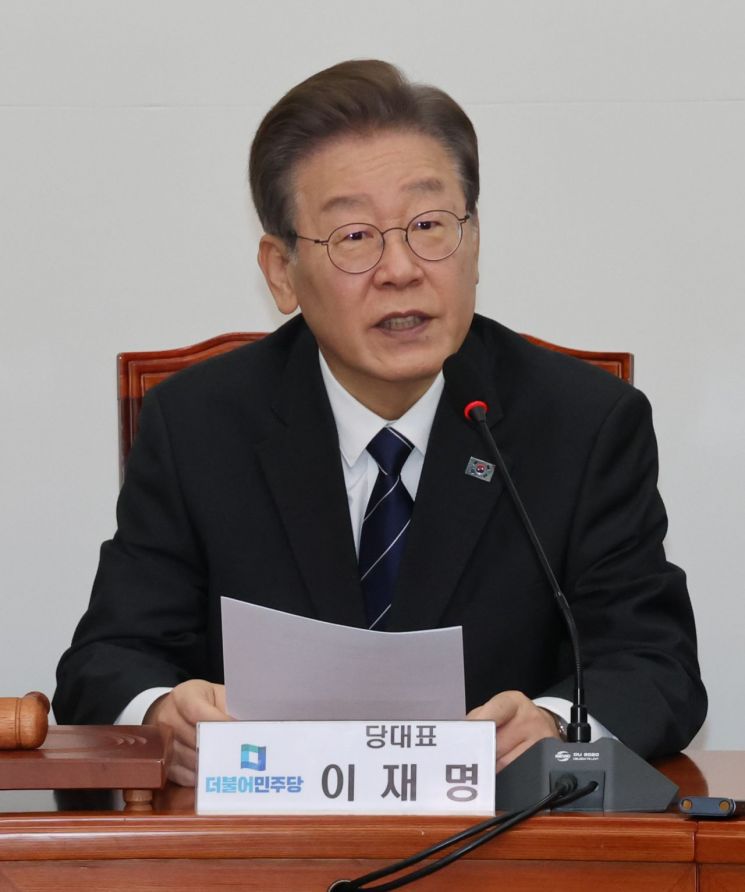
Although Democratic Party leader Lee Jae-myung has advocated banning satellite parties and maintaining a mixed-member proportional representation system since his presidential campaign, recent remarks suggesting a return to the 'parallel system,' such as "What's the use of losing stylishly," have caused internal discord within the party.
On the same day, Floor Leader Hong Ik-pyo appeared on CBS Radio and, when asked about former leader Lee Nak-yeon's recent call for Lee Jae-myung to uphold the campaign pledges to prevent satellite parties and maintain mixed-member and regional proportional representation systems, responded, "Do we have to keep all promises?" This was interpreted as hinting at a return to the parallel proportional representation system or the possibility of forming satellite parties.
Floor Leader Hong left open all possibilities, including the parallel proportional representation system, mixed-member proportional representation system, and the promotion of mixed-member proportional representation with allied proportional parties. He said, "Some advocate the parallel system, and among those supporting the mixed-member system, some say satellite parties should not be formed, but half say it might be possible to have allied proportional parties. However, this could be criticized by opponents or the media as a disguised satellite party."
However, senior Democratic Party figures such as former leader Lee Nak-yeon, former Prime Ministers Kim Boo-kyum and Chung Sye-kyun, and former leader Sohn Hak-kyu oppose a return to the parallel system, indicating that the conflict over electoral reform is escalating into a clash between old and new factions. They share a common negative view of the pro-Lee Jae-myung faction's party management, the return to the parallel system, and the reduction of the delegate system, leading to speculation in political circles about a possible united front among them. Lee Jae-myung's hardline supporters are requesting the expulsion of former leader Lee Nak-yeon, citing that he is "hindering party unity."
On the same day, former leader Lee Nak-yeon said on MBC Radio, "If the party drives me out, I will accept it; what else can I do?" When asked if he would accept a role in the party for next year's general election, he replied, "I am not interested in my role or position; my primary concern is what I can do for the country at this time." When asked if he could fulfill a role for the country through the party, he said, "I don't think so these days," suggesting the possibility of forming a new party. Regarding political alliance rumors with former Prime Ministers Chung Sye-kyun and Kim Boo-kyum, he said, "I have a very deep sense of crisis about the current situation," leaving the possibility open.
© The Asia Business Daily(www.asiae.co.kr). All rights reserved.
![Clutching a Stolen Dior Bag, Saying "I Hate Being Poor but Real"... The Grotesque Con of a "Human Knockoff" [Slate]](https://cwcontent.asiae.co.kr/asiaresize/183/2026021902243444107_1771435474.jpg)

















