When a commercial lease contract has ended but the landlord does not return the deposit, and the tenant continues to occupy and use the property, how much rent should the tenant pay to the landlord?
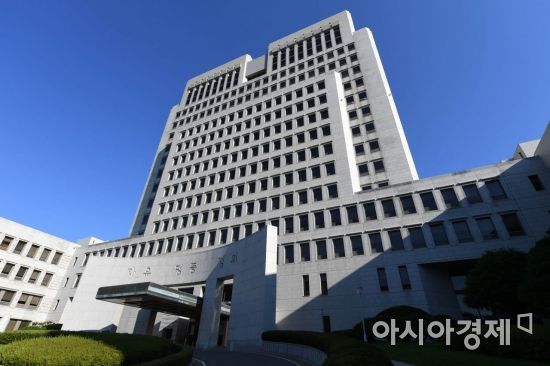
The Supreme Court ruled that the tenant only needs to pay the rent according to the existing contract. In other words, even if the rent increased significantly during the extended occupancy period, the tenant is not obligated to pay unjust enrichment corresponding to the market rent.
The Supreme Court Civil Division 1 (Presiding Justice Oh Kyung-mi) on November 9 overturned the lower court’s partial ruling in favor of the plaintiff in the lease deposit return lawsuit (2023Da257600) filed by Company A against Mr. B and remanded the case to the Seoul Central District Court.
Company A entered into a lease contract with Mr. B for a deposit of 42 million KRW and a monthly rent of 4.2 million KRW, with the lease period from November 1, 2020, to October 31, 2021. However, around July 12, 2021, Mr. B notified Company A that “the lease will not be renewed upon expiration, so please restore the leased property to its original condition and deliver it by the expiration date.” Subsequently, Company A requested renewal from Mr. B on August 23, 2021, but eventually delivered the property to Mr. B around February 28, 2022. Afterwards, Company A filed a lawsuit against Mr. B seeking the return of the lease deposit on the grounds that the lease had ended.
The court stated, “Even when a commercial building lease terminates due to expiration of the term or mutual agreement, under Article 9, Paragraph 2 of the Commercial Building Lease Protection Act, the lease relationship is deemed to continue until the tenant receives the deposit back.” It added, “This provision protects the tenant’s possession of the leased property as strongly after the lease term ends as before, effectively guaranteeing the tenant’s claim for the return of the deposit.”
Furthermore, the court said, “Even if a tenant of a commercial building subject to the Commercial Building Lease Protection Act occupies the leased property after the lease ends but before the deposit is returned, unjust enrichment equivalent to rent does not arise.” It added, “When a lease governed by the Commercial Building Lease Protection Act ends due to expiration, mutual agreement, or termination, the tenant who continues to occupy and use the leased property until the deposit is returned is only obligated to pay the rent stipulated in the previous lease contract, and is not obligated to pay unjust enrichment corresponding to the market rent.”
Previously, the first and second instance courts ruled that Company A must return the unjust enrichment for the period from the lease termination date until the property was delivered.
The lower courts reasoned, “Since the market rent during that period significantly differs from the agreed rent, it is reasonable to calculate the amount of unjust enrichment that Company A must return to Mr. B after the lease ends by applying the market rent for that period.”
Park Su-yeon, Legal Times Reporter
※This article is based on content supplied by Law Times.
© The Asia Business Daily(www.asiae.co.kr). All rights reserved.
![From Bar Hostess to Organ Seller to High Society... The Grotesque Con of a "Human Counterfeit" [Slate]](https://cwcontent.asiae.co.kr/asiaresize/183/2026021902243444107_1771435474.jpg)
















