Easy Remittance Service Accidents, Difficulties in Damage Relief
Users Must Take Special Care of Security Themselves
The number of people using simple payment remittance services that allow easy money transfers via mobile devices through biometric authentication such as fingerprints or facial recognition is steadily increasing. Meanwhile, damages related to simple payment remittance services are also rapidly rising.
According to the Bank of Korea's "Status of Electronic Payment Service Usage in the First Half of 2023," the average daily number of simple payment remittance transactions in the first half of 2023 was approximately 6.1 million, with a transaction amount of about 746.1 billion KRW, representing increases of 24.2% and 23.9%, respectively, compared to the same period last year.
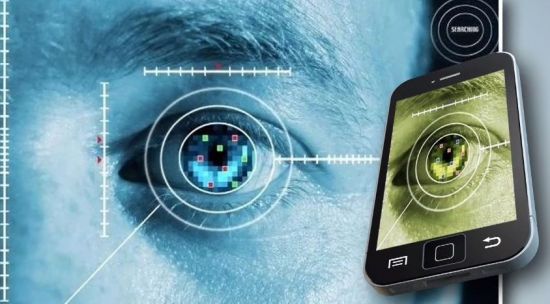 The number of people using simple payment remittance services, which allow easy transfers via mobile devices through biometric authentication such as fingerprints or facial recognition, is steadily increasing. Meanwhile, damages related to simple payment remittance services are also rapidly rising.
 [Photo by Asia Economy DB]
As the simple payment remittance market has become more active, related incidents have also increased. Since transactions proceed instantly once biometric information is entered, cases have occurred where money was sent immediately without time to correct a mistakenly entered account number.
In fact, according to the "Status of Erroneous Remittance Occurrences by Financial Companies" provided by commercial banks to Assemblyman Kang Byung-won of the Democratic Party of Korea, Toss Bank recorded 478 cases of erroneous remittance in the second half of 2021 and 1,021 cases from January to March 2022.
The problem is that even after experiencing such incidents, it is difficult to receive compensation. This is because responsibility is considered to lie with the 'individual,' not the 'company.' The logic is that if the 'company' had previously informed users of the risks of biometric authentication and provided alternative authentication methods such as passwords or patterns, then if the user chose biometric authentication and an incident occurred, the responsibility ultimately falls on the 'individual' themselves.
Rapidly Increasing Crimes Related to Simple Payment
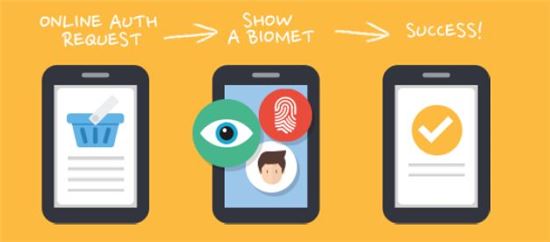 The scale of damages related to easy payment remittances has sharply increased from 34 people and 78 million won in 2018 to 2,095 people and 4.2 billion won as of June last year, more than four years later, making urgent measures necessary.
 [Photo by Asia Economy DB]
Not only erroneous remittance incidents but also voice phishing crimes related to simple payment remittance services are rapidly increasing, along with the amount of related damages.
The scale of damages related to simple payment remittance increased sharply from 34 victims and 78 million KRW in 2018 to 2,095 victims and 4.2 billion KRW as of June last year, making urgent countermeasures necessary.
For example, in 2019, an elementary school student unlocked his sleeping father A’s iPhone using facial recognition and purchased about 10 million KRW worth of game items. A requested a refund from Apple, but Apple refused, citing that the risks of biometric authentication had already been notified in advance.
It is also not easy to get help from investigative agencies for damages caused by using simple payment remittance services. This is because if the remittance was made through the user’s biometric or password authentication, it is difficult to prove that the money was forcibly sent against the user’s will.
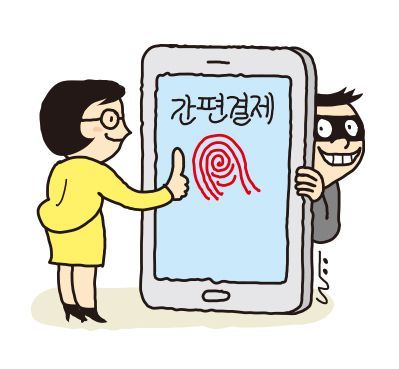 As the simple payment remittance market has become more active, related incidents have also increased. Since the process is completed instantly by just entering biometric information, there have been cases where money was sent without a chance to correct the account number if it was entered incorrectly.
 [Photo by Asia Economy DB]
In July, a man in his 30s was arrested on charges including computer fraud after forcibly obtaining 55 million KRW by grabbing a drunk person’s hand and using fingerprint recognition. However, in that case, clear evidence such as CCTV footage made compensation possible.
Ultimately, experts point out that users themselves must be thoroughly vigilant about security.
Professor Yeom Heung-yeol of the Department of Information Security at Soonchunhyang University warned, "While simple remittance services have increased user convenience, security vulnerabilities have also increased. User education on these vulnerabilities is necessary, and users themselves must exercise caution."
Meanwhile, in July, Assemblyman Yoon Chang-hyun submitted a bill to the National Assembly that includes provisions for information sharing between financial companies and simple remittance operators regarding fraud-use accounts and allowing partial suspension of accounts for victims of bankbook extortion. However, a full review of this bill has not yet taken place.
Regarding this, the National Assembly Legislative Research Office pointed out, "Cases of voice phishing using virtual assets and prepaid simple remittance, as well as bankbook extortion crimes abusing the payment suspension system under the Telecommunications Fraud Damage Refund Act, remain legal blind spots, requiring prompt discussion and response."
© The Asia Business Daily(www.asiae.co.kr). All rights reserved.












