HMM Acquisition Company to Show Book Profit
Issue Is Shipping Industry Downturn Right After Acquisition
Impact of Increased Container Ship Supply and Won-Dollar Exchange Rate Decline
Diversification Efforts Needed, Including Increasing Bulk Carriers
The preferred bidder to acquire HMM, the largest shipping company in South Korea, will be decided within this week. As the shipping industry is entering a downturn, the HMM acquirer, who will invest a large amount of capital, is expected to carefully devise their strategy.
The HMM creditors, including KDB Industrial Bank and Korea Ocean Business Corporation, are expected to select the preferred bidder for HMM's sale this week. The number of shares for sale is 398.79 million shares held by the bank and the corporation. Currently, the prices offered by Harim Group and Dongwon Group are reported to be between 6.3 trillion and 6.4 trillion KRW. However, while both companies have independently secured about 3 trillion KRW, they do not have cash for the remaining amount and will need to borrow money. The company acquiring HMM is structured to make a guaranteed profit on the books. HMM holds cash-equivalent assets worth 10 trillion KRW. In other words, if they raise an additional 3 trillion KRW and complete the acquisition, they can earn about 3 trillion KRW in cash profit. This is why there is a view that even if the two companies take a risk to acquire it, it could still be a profitable deal.
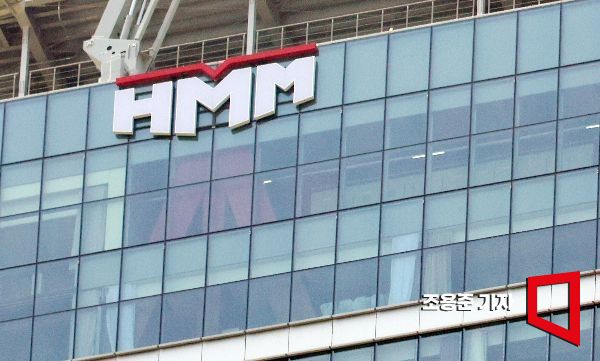 As the HMM acquisition battle officially begins, the HMM headquarters located in Park One Tower, Yeouido. Photo by Jo Yongjun jun21@
The problem is that the shipping market may be difficult after the acquisition, making it hard to expect immediate profits. This is because the container shipping industry, which HMM focuses on, is facing a downturn. The Shanghai Containerized Freight Index (SCFI), which indicates container ship freight rates, recorded 1010.81 points on the 1st of this month. Freight rates, which had once risen to 5000 points during the COVID-19 pandemic period from 2021 to last year, have dropped to about one-fifth of that level.
The reason for the decline in freight rates is the oversupply of container ships. Currently, the global container ship capacity is 27.7 million TEU (20-foot equivalent units), the highest ever. Many more container ships are scheduled to be built. Singapore-based shipping and port analytics firm Linerlytica stated that the delivery volume of container ships ordered by shipping companies that enjoyed a boom during the COVID-19 period will continue to increase until 2025. This year’s delivery volume is 2.2 million TEU, and next year’s scheduled container ship deliveries are 3 million TEU, totaling 391 vessels.
Additionally, the declining KRW-USD exchange rate is expected to negatively impact the shipping industry. The industry conducts transactions in US dollars. Therefore, when the KRW-USD exchange rate falls, profitability decreases. The exchange rate, which surged to 1,357.5 KRW last month, is now fluctuating between 1,290 and 1,300 KRW. With expectations that the US Federal Reserve (Fed) may lower interest rates next year, the exchange rate is expected to fall further. When the US lowers interest rates, the dollar weakens. From an investor’s perspective, more investment flows into the Korean won, which is considered a risk asset, strengthening the won against the dollar and causing the exchange rate to decline.
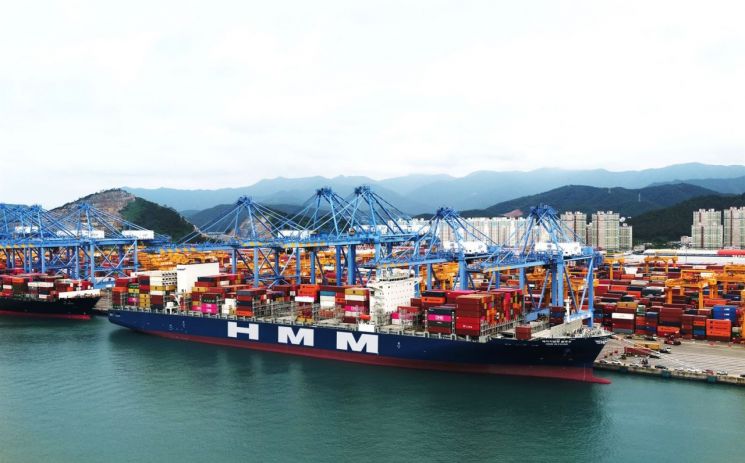
In response to this downturn, voices calling for business diversification are growing louder. It is suggested that HMM should move away from a container ship-centered revenue structure and invest in bulk carriers as well. Bulk carriers refer to dry bulk carriers that load unpackaged cargo such as grains, iron ore, and coal, oil tankers, and car carriers. Bulk carrier freight rates have stabilized. The Baltic Dry Index (BDI), a representative bulk carrier freight index, recorded 3,192 points on the 1st, marking the highest level of the year. It had fallen to 538 points in February but has since recovered.
The rise in freight rates is attributed to seasonal factors. Many countries have increased their stockpiles of fuel and grains in preparation for winter. Experts predict that this favorable condition will continue into next year. Heeyoung Ryu, a senior researcher at the Korea Maritime Institute (KMI), expects global crude oil demand to increase by 2.3% next year. Sujin Hwang, a research fellow at KMI, forecasted regarding iron ore carriers (Capesize vessels) that “demand will exceed supply due to increased raw material demand following the recovery of the steel industry.”
Before welcoming a new owner, HMM has already started increasing its bulk carrier fleet. In October, the company signed a long-term lease contract worth 1.28 trillion KRW for four bulk carriers. The number of bulk carriers increased from 29 at the end of last year to 35 this year, and it plans to expand to 46 next year. By 2026, the fleet size will grow to 55 vessels. In March, HMM also ordered three car carriers. This was the first shipbuilding contract in 21 years since 2002, and the industry views this as a re-entry into the business due to rising demand for electric vehicles.
© The Asia Business Daily(www.asiae.co.kr). All rights reserved.


















