Amid expectations of a large-scale financial dispute related to Hong Kong H Index equity-linked securities (ELS), financial authorities are reportedly considering establishing compensation standards for cases of mis-selling.
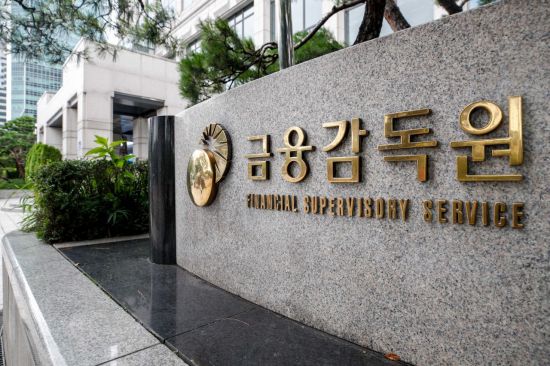
The Financial Supervisory Service (FSS) is said to be reviewing measures to create compensation ratio guidelines to address disputes between financial companies and consumers if large-scale losses and mis-selling of Hong Kong H Index ELS are confirmed. Although dispute mediation is generally handled on a one-to-one basis, compensation standards were adopted during the private equity fund disputes. If the compensation standard approach is applied to the Hong Kong H Index ELS dispute mediation, it will be the second case following the derivative-linked fund (DLF) and private equity fund incidents.
Previously, the FSS mandated compensation of 40-80% of losses related to mis-selling of DLF, Lime, and Optimus products. After setting a basic compensation ratio based on violations of suitability principles, disclosure obligations, and unfair solicitation, the final compensation ratio is adjusted individually according to the investor's own responsibility.
Among investors who subscribed to Hong Kong H Index ELS through banks, a significant number are elderly investors and re-investors, which could become a contentious issue. If investors have a long history of subscription, such as re-investors, it may be difficult to recognize mis-selling or violations of suitability principles. Given that the product has been widely sold over a long period, some view that proving mis-selling will not be easy.
There is also expected to be discussion on whether it was appropriate for banks to handle large volumes of products with high principal loss risk. The FSS has extended the on-site inspection deadline for KB Kookmin Bank until this week. Depending on the results of written inspections of other banks, additional inspections will be considered. Kim So-young, Vice Chairman of the Financial Services Commission, said regarding the ELS mis-selling controversy, "We plan to conduct a detailed investigation" and "additional measures may also be taken."
Banks have declared the suspension of sales of Hong Kong H Index ELS. KB Kookmin Bank stopped selling Hong Kong H Index ELS products from the 30th of last month, and Hana Bank will suspend sales of Hong Kong H Index-based equity-linked funds (ELF) and equity-linked trusts (ELT) starting from the 4th. Woori and Shinhan Banks have suspended sales of Hong Kong H Index-included ELS since last year, and NH Nonghyup Bank is not selling principal non-guaranteed ELS products.
Meanwhile, ELS are a type of derivative product whose returns are linked to the price of underlying assets or stock indices. If the price remains above a certain level until maturity, profits are generated; however, if the product enters the "Knock In" (principal loss occurrence zone) and the final price at maturity falls below a certain threshold, principal loss occurs. The Hong Kong H Index consists of Chinese company stocks listed in Hong Kong, which have plummeted from the 12,000 range to 5,000 over the past three years. Among the Hong Kong H Index-linked ELS sold by the five major banks (KB Kookmin, Shinhan, Hana, Woori, NH Nonghyup), the outstanding sales balance with maturities in the first half of next year amounts to 8.41 trillion KRW. Considering the product structure and current stock price levels, the financial sector anticipates principal losses in the range of 3 to 4 trillion KRW.
© The Asia Business Daily(www.asiae.co.kr). All rights reserved.

















