As China moves to respond to Western sanctions, including those from the United States, by controlling exports of critical minerals, the Chinese Ministry of State Security has reiterated the importance of resource security.
According to the South China Morning Post (SCMP) in Hong Kong on the 1st, the Ministry of State Security emphasized in a post on its official WeChat account the previous day that "key mineral resources are an important foundation contributing to the development of new industries," adding that "this is a top priority for resource security, and protecting key minerals is one of the most important missions." The Ministry's WeChat account, launched in August, regularly posts content related to national security.
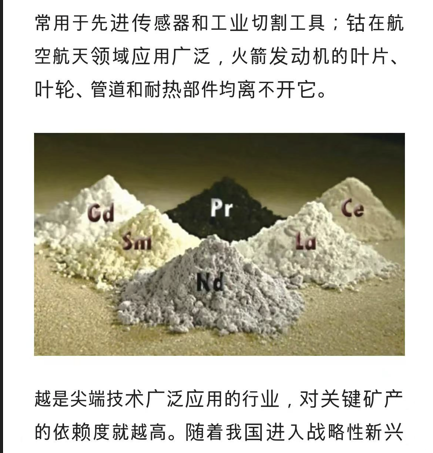
In the post, the Ministry of State Security identified lithium, gallium, germanium, and rare earth elements as key mineral resources. It further evaluated that these minerals have promoted the development of strategic new industries such as new energy, semiconductors, artificial intelligence, and aerospace, explaining that "strategic critical minerals have become an important engine accelerating the establishment of a modern industrial system directly linked to national security and promoting high-quality economic development."
Earlier, China announced it would control exports of gallium, germanium, and various compounds used in semiconductor manufacturing as retaliation against sanctions imposed by the United States and other Western countries on the semiconductor industry. Since August, related companies have been required to obtain approval from the Ministry of Commerce based on information about end users and material usage before exporting.
The Ministry of State Security also emphasized that "essential minerals have become a new arena of competition among world powers, triggering resource protectionism and geopolitical tug-of-war," and highlighted that "the shortage of important mineral resources and monopolies enjoyed by a few countries are causes of global contention."
Starting from the 1st, China is implementing export controls on graphite, a key raw material for electric vehicle batteries. South Korea imported $241 million (approximately 300 billion KRW) worth of artificial and natural graphite for secondary battery anodes last year, of which 93.7% was sourced from China. Following China's announcement of graphite export controls, the South Korean government formed a dedicated response team to prepare countermeasures, and it is reported that companies currently hold three to five months' worth of inventory.
The Ministry of Commerce, the Chinese authority responsible for export controls, emphasized on the 30th of last month, one day before the controls took effect, that the measures are "not targeted at any specific country." At a regular briefing, Ministry of Commerce spokesperson Shu Jueting stated, "We have repeatedly emphasized that export controls on certain graphite items are internationally accepted practices," adding, "The Chinese government, based on recent export control law provisions, conducted a comprehensive evaluation of the temporary control measures on graphite items after consulting relevant companies and industries, and made decisions to improve and adjust them." Spokesperson Shu said, "This control concept integrates development and security and is not aimed at any specific country or region," and added, "Exports that comply with relevant regulations will be approved."
© The Asia Business Daily(www.asiae.co.kr). All rights reserved.
!["The Woman Who Threw Herself into the Water Clutching a Stolen Dior Bag"...A Grotesque Success Story That Shakes the Korean Psyche [Slate]](https://cwcontent.asiae.co.kr/asiaresize/183/2026021902243444107_1771435474.jpg)
















