Foreign Capital Shows Reduced Interest in Japanese Real Estate Investment
Commercial Real Estate Sees Selling Dominance for the First Time in 4 Years
Exiting Amid Expectations of BOJ Easing Policy End
Overseas investors who had been sweeping up real estate in Japan have recently started selling off commercial buildings. As the Bank of Japan (BOJ) is expected to normalize its monetary policy, analysts suggest that signs of change are emerging in Japan's commercial real estate market, which had experienced a boom based on ultra-low interest rates and a weak yen.
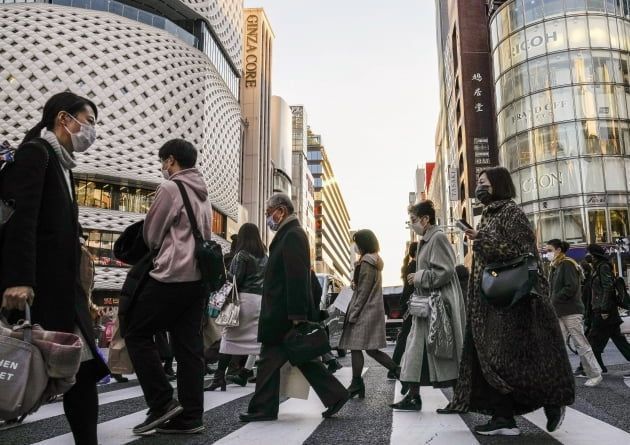
According to CBRE, a global commercial real estate services firm, overseas investors purchased commercial real estate worth 830 billion yen in Japan from early this year until September. This represents a 20% decrease compared to the same period last year. On the other hand, the amount of real estate sold during the same period was 1.05 trillion yen, more than double the amount from the previous year. This marks the first time in four years since 2019 that overseas investors have shifted to a selling dominance.
Some overseas funds that had swept up Japanese real estate last year are also observed to be moving toward selling commercial properties. The Singapore sovereign wealth fund, Government of Singapore Investment Corporation (GIC), has reportedly started the process of selling a large office building since September. GIC has launched a bidding process for the sale of the large commercial building Shiodome City Center located in Minato Ward, Tokyo, aiming to complete the sale by March next year. The market estimates the sale price to reach 300 billion yen. Until March this year, GIC's Japanese real estate accounted for 7% of its total investment portfolio. However, Nihon Keizai explains that after suffering significant losses in U.S. commercial real estate investments this year, GIC is trying to cover those losses by selling off its Japanese real estate holdings.
Demand for commercial real estate is also noticeably declining. According to Miki Shoji, a commercial real estate brokerage firm, the office vacancy rate in five central Tokyo wards stood at 6.10%, exceeding the oversupply threshold of 5% for 33 consecutive months. The average rent for commercial real estate dropped 14% compared to the previous peak in July 2020 (23,014 yen), recording 19,741 yen per tsubo. The rent for commercial buildings in the five Tokyo wards has been declining for 39 consecutive months as of last month.
Some analysts believe that overseas investors are withdrawing from the market in anticipation of the end of Japan's large-scale monetary easing policy. If the BOJ abolishes negative interest rates, overseas investors who had been purchasing real estate by leveraging low interest rates and a weak yen will no longer be able to achieve the same high returns as before. In fact, a survey by Mitsubishi UFJ Trust and Banking Corporation showed that while 88% of overseas investors expressed an intention to invest in Japanese commercial real estate in 2019, this figure dropped to 28% this year.
Nihon Keizai stated, "Although overall real estate investment in Japan, including residential properties, remains robust, commercial real estate accounts for 40% of Japanese real estate investment trusts. As signs emerge that the BOJ is moving toward monetary normalization, the investment patterns of overseas capital relying on easing policies are reaching a turning point."
© The Asia Business Daily(www.asiae.co.kr). All rights reserved.

















