Petition for Amendment of Ticket Scalping Laws
5 million won. This is the price of a scalped ticket for singer Lim Young-woong's concert. As scalped ticket prices soar to dozens of times the face value, even music-related organizations have called for legal amendments. The relevant law has not been revised once in over 50 years.

The Korea Music Label Industry Association (KMLIA) announced on the 28th that the government has converted the scalped ticket law amendment petition they submitted on the 19th of last month into a public petition. Accordingly, the government must process the petition after a 30-day public opinion gathering and deliberation process and notify the results within 90 days.
Yoon Dong-hwan, chairman of KMLIA, stated in the petition, "Scalped tickets are a social cancer like drugs," and argued, "A law should be enacted, like the Railroad Business Act, that prohibits selling tickets to others at prices exceeding the purchase price."
He pointed out, "As scalped tickets become rampant, fraud using scalped tickets is also increasing," and added, "These illegal acts that exploit innocent fans and undermine the industry structure should be severely punished, but currently, in our country, they cannot even be punished as minor offenses."
Offline transactions fined 200,000 won... No punishment for online transactions
According to data received by Justice Party lawmaker Ryu Ho-jeong from the Korea Creative Content Agency, reports of scalped tickets surged from 359 cases in 2020, to 785 in 2021, and 4,224 last year, but no significant measures were taken.
The current Minor Offenses Punishment Act defines the punishment target for scalped ticket sales as "persons who resell admission tickets, boarding passes, or sailing tickets at a premium to others at entertainment venues, stadiums, stations, ferry terminals, bus stops, or other places where admission or boarding is charged." According to Article 3 of the Minor Offenses Punishment Act, scalped ticket trading at stadiums, etc., is punishable by a fine of up to 200,000 won, detention, or a surcharge. However, there is no legal basis to punish online scalped ticket transactions.
Chairman Yoon said, "With the advent of macros (automated input repetition), scalpers are becoming organized and corporatized," and added, "From March next year, the revised Performance Act will define purchases using macros as illegal, but realistically, it is impossible to detect individual scalpers’ macro transactions due to division of labor. Please revise the scalped ticket-related laws that were made about 50 years ago first."
What is the scalped ticket situation like? "Bruno Mars Korea concert tickets selling for 180 million won"
Adding an extra zero to the price is common. In May, a scalped ticket worth 'hundreds of millions' appeared on a secondhand trading site. A scalped ticket listing titled "Transfer of 8 consecutive seats for Bruno Mars" was openly posted for 180 million won.
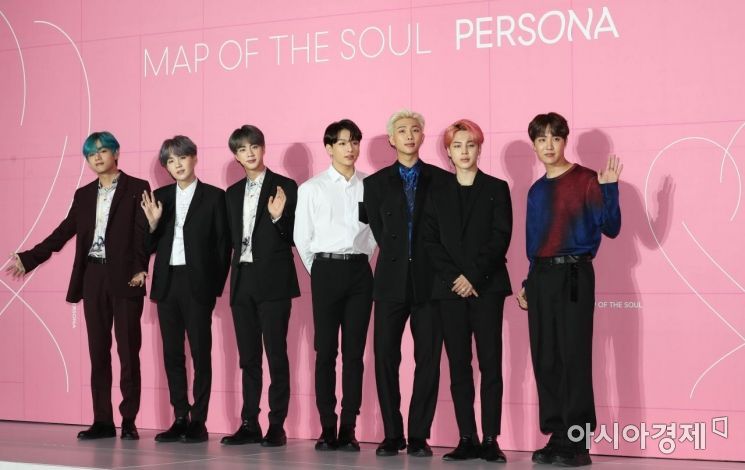
Last year, BTS, a boy group that held a concert in Korea after two and a half years, had tickets priced at 220,000 won face value, but scalped tickets carried premiums up to 10 million won. At the end of 2019, just before the COVID-19 pandemic, tickets for the boy group EXO's concert "EXplOration dot" with a face value of 121,000 won were sold for 2 million won. Although scalped tickets worth up to 16 times the face value were rampant four years ago, there is still no relevant law.
Opinions on legalizing ticket resale
Given the situation, some singers have taken it upon themselves to catch scalpers. Singer Sung Si-kyung’s manager is famous for frequently accessing Danggeun Market to catch scalped ticket traders, earning the nickname "secret royal inspector."
Not only Sung Si-kyung but also concert planners and singers’ agencies have tried to eradicate scalping by requiring real-name verification before ticket purchase and ID checks before ticket receipt. However, methods to evade crackdowns have developed even faster. Ticket trading that avoids crackdowns is still rampant.
Because eradication is difficult, some suggest bringing scalped ticket trading into the open, as in the United States. In the U.S., ticket resale sites such as 'StubHub' and 'Ticketmaster' are legally managed and operated within the framework of the law.
© The Asia Business Daily(www.asiae.co.kr). All rights reserved.


















