As the impact of high inflation and high interest rates has become more pronounced, domestic consumer sentiment has deteriorated for four consecutive months. According to the November Consumer Sentiment Survey released by the Bank of Korea on the 28th, the Consumer Sentiment Index (CCSI) fell by 0.9 points from the previous month to 97.2. After rising to 103.2 in July, it has declined for four consecutive months: 103.1 in August, 99.7 in September, 98.1 in October, and 97.2 in November.
Among the consumer sentiment indices, the Housing Price Outlook Index dropped by 6 points to 102. This marks a decline for two consecutive months since September (110). Despite weakening expectations of interest rate hikes, the decline in the Housing Price Outlook Index indicates that the current housing market is not performing well.
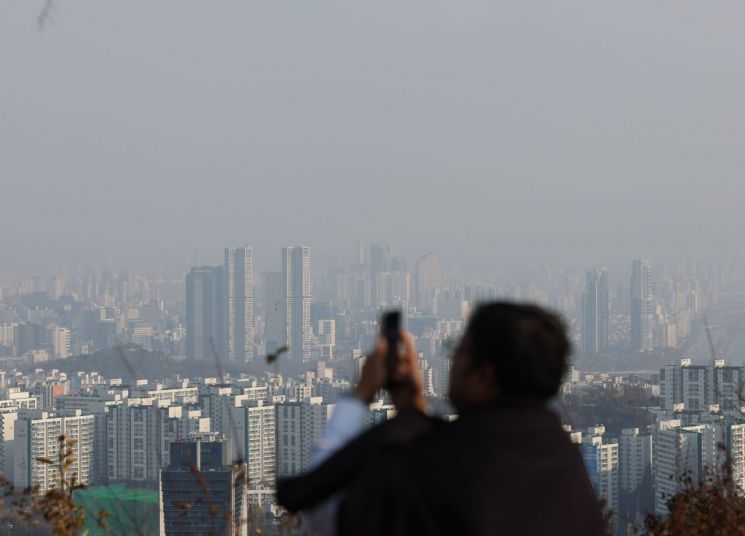
In fact, apartment prices nationwide have stopped rising after 19 weeks and have stabilized. In particular, the sales prices in Gangnam-gu, Seoul, which led the housing price increase this year, have turned downward after 31 weeks, leading to forecasts that the real estate market has entered a correction phase.
Looking at actual transaction prices, declines in apartments in the Gangnam area are noticeable. The 78㎡ unit of 'Acro Riverview Sinbanpo' in Jamwon-dong, Seocho-gu, was sold for 3.4 billion KRW in August but dropped to 3.1 billion KRW last month. Also, a 59㎡ unit of 'Gaepo Raemian Forest' in Gaepo-dong, Gangnam-gu, was traded for 2.03 billion KRW on the 16th of last month but fell to 1.898 billion KRW on the 25th of the same month. The 59㎡ unit of Dogok Rexle in Dogok-dong was contracted for 2.15 billion KRW on the 4th of last month but was contracted for 1.82 billion KRW on the 13th.
The market views the price fluctuations in Gangnam, once considered an invincible real estate area, as a meaningful indicator reflecting the current sentiment of the real estate market. This is because even when the market was sluggish earlier this year, some apartments in Gangnam alone recorded new highs.
Seo Jin-hyung, co-representative of the Fair Housing Forum and professor at Gyeongin Women's University, said, "In the first half of the year, switching and investment demand moved together to support housing prices. However, in the second half, due to high interest rates, loan regulations, and perceptions of rising housing prices, more buyers are feeling burdened when purchasing."
© The Asia Business Daily(www.asiae.co.kr). All rights reserved.

















