SME Ombudsman Recommends Improvements to 8 Local Governments Nationwide
Regulations on the minimum length of acceleration and deceleration lanes on local roads in non-urban areas will be relaxed going forward. This is expected to reduce the burden on small and medium-sized business owners.
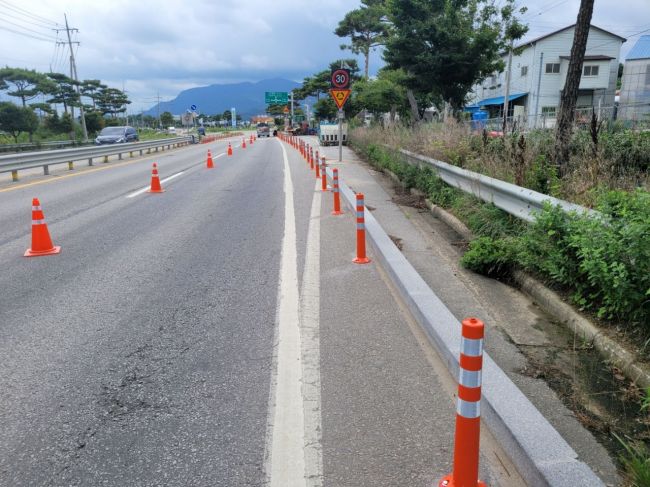
The Small and Medium Business Ombudsman announced on the 27th that it recommended local governments to improve ordinances requiring business owners to secure minimum lengths of acceleration and deceleration lanes when connecting local roads with other roads, and that a significant number of them have accepted the recommendation.
An acceleration and deceleration lane is a lane installed on local roads (regional arterial road networks connecting city and county offices, airports, ports, stations, etc.) to allow vehicles to accelerate or decelerate. According to the current "Ordinance on the Connection of Local Roads with Other Roads," when connecting local roads with other roads, acceleration and deceleration lanes of up to 75 meters based on secondary roads must be secured. The installation standards for acceleration and deceleration lanes are generally based on the number of parking spaces or households of factories or other facilities opening access roads.
The burden of installing acceleration and deceleration lanes had to be borne by the business owners who needed the road. Accordingly, voices from the small and medium business community pointed out that the burden of securing acceleration and deceleration lanes was significant. In the case of Company A located in Chungju, Chungcheongbuk-do, they faced difficulties securing acceleration and deceleration lanes on the road leading to their aging factory when attempting to expand and renovate it. It was difficult to obtain consent from the road owner, and purchasing land for the installation of the lanes cost about 600 million KRW, which was a heavy burden. Ultimately, Company A requested the Ombudsman to "adjust the minimum length of acceleration and deceleration lanes for relatively low-traffic areas."
The Ombudsman, reflecting advice from specialized institutions such as the Korea Road Traffic Authority and cases of ordinance amendments already made by Gyeonggi-do and Jeollabuk-do, recommended improvements to eight local governments nationwide. For non-urban areas with low traffic volume, they suggested subdividing the standards for securing acceleration and deceleration lanes by newly establishing a small and medium scale category of 5 or fewer parking spaces or households, instead of the current 20 or fewer.
Chungcheongbuk-do, Incheon City, Gangwon-do, Gyeongsangbuk-do, and Jeju-do accepted the proposal and decided to amend their ordinances starting in the second half of this year. Jeollanam-do and Gyeongsangnam-do responded that they would actively consider amendments after expert consultations.
Kim Hee-soon, head of the Small and Medium Business Ombudsman Support Group, said, "This improvement is expected to greatly reduce the difficulties faced by small and medium business owners who previously spent significant costs and time connecting to local roads," and added, "We will continue to actively promote regulatory improvements that small and medium enterprises and small business owners can feel directly."
© The Asia Business Daily(www.asiae.co.kr). All rights reserved.

















