6 out of 10 Office Workers Always Consider Job Change
But Few Actually Take Action
"Due to Economic Reasons... Will Stay at Current Job for Now"
Six out of ten office workers in South Korea are considering 'quiet quitting.' However, not many actually take action on it. Given the significant anxiety about current wage levels and future prospects, the fear of an immediate loss of income is also considerable.
The market research firm 'Embrain' recently released the results of a survey titled '2023 Job Change Intentions and Perceptions on Quiet Quitting,' conducted among 1,000 male and female office workers aged 19 to 59. In this survey, about 58% of all respondents said they were considering quiet quitting. This means that roughly six out of ten domestic office workers are contemplating quiet quitting.
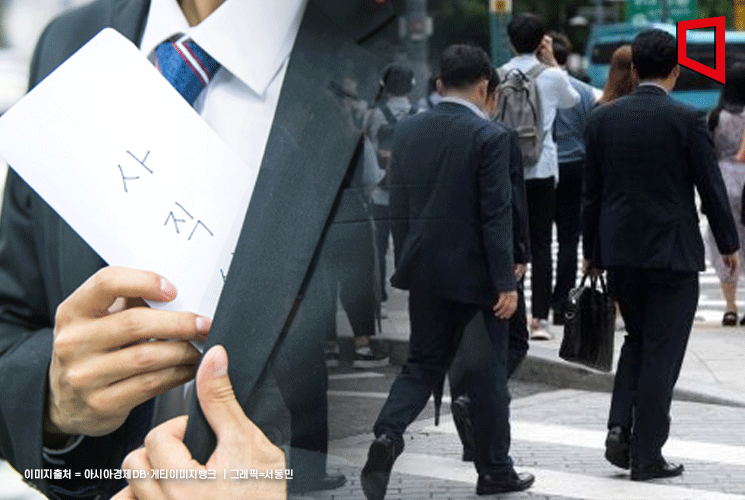
Quiet quitting is a newly coined term that gained popularity starting last year. It refers to a passive attitude of doing only the assigned work at the workplace, giving up on promotions or higher pay. It also means maintaining a stance of being ready to quit anytime if work is perceived to infringe on one’s leisure or personal life.
Embrain pointed out that low job satisfaction is the fundamental cause of the quiet quitting trend. In particular, 43.5% of all respondents believed that "economic conditions do not improve through work alone."
While quiet quitting was mainly popular among the MZ generation last year, it has now spread to people in their 40s and 50s. Among those in their 40s, 53.6%, and among those in their 50s, 42.0% said they are mentally preparing for a job change.
However, actual cases of quiet quitting are not common. Eight out of ten office workers (83.0%) answered, "I will not actually change jobs until the next job is definitely secured." Additionally, 78.7% responded that "for the time being, I will continue working at my current job for economic reasons."
Office workers believe that companies should accept 'quiet quitting' as a new normal phenomenon. It is pointed out that the attitude of "taking responsibility only as much as the compensation given" has already become socially established.
However, a strong attitude of taking responsibility for the work they are assigned was also evident. Among all respondents, 75.2% said, "I tend to work with passion for the tasks I am currently doing," and a significant number, 71.0%, said they are making efforts to find their own 'professional value' or to grow themselves.
© The Asia Business Daily(www.asiae.co.kr). All rights reserved.
![Clutching a Stolen Dior Bag, Saying "I Hate Being Poor but Real"... The Grotesque Con of a "Human Knockoff" [Slate]](https://cwcontent.asiae.co.kr/asiaresize/183/2026021902243444107_1771435474.jpg)
















