Reflecting Expectations of the End of Austerity
As expectations grow for the end of global tightening, the credit squeeze risk for European junk bond companies has fallen to its lowest level in 18 months. This is analyzed as a revival of investment sentiment in risky assets as concerns over the prolonged high interest rate trend subside.
According to Bloomberg on the 23rd (local time), the 'Markit iTraxx Crossover Index,' which reflects the credit default swap (CDS) rates of European junk-rated companies, dropped to 374.86 basis points (bp). This is the lowest level in about 18 months since April 2020. Due to the banking sector crisis, including the U.S. Silicon Valley Bank (SVB), corporate credit conditions rapidly tightened, and this level is significantly lower compared to over 500bp in March this year. The index tracking CDS of high-credit companies, which have shown relatively low volatility, also fell to around 67bp from the March peak of 100bp.
This decline in the index reflects expectations for the end of tightening by the U.S. Federal Reserve (Fed). Just a month ago, amid concerns that the high interest rate trend would continue for a long time, the index surged to its highest level since March this year. Marco Stockl, Head of Credit Strategy at Commerzbank, analyzed in an investor memo at the time that "amid concerns over prolonged high interest rates, geopolitical crises such as the Israel-Palestine armed conflict have created a 'pain sandwich' in the credit market."
However, recent U.S. inflation slowdown indicators have rapidly changed market sentiment. The U.S. Consumer Price Index (CPI) for October, released on the 14th, rose 3.2% year-on-year, below the market forecast of 3.3%, and the core CPI increase rate was 4.0%, also below the forecast of 4.1%. Following indicators confirming a cooling labor market as private employment growth in October fell short of expectations, inflation concerns eased, leading to widespread market views that the tightening cycle has effectively ended. Bloomberg reported, "Investors are betting that the steep tightening cycle by the Fed and other central banks worldwide has ended, and interest rate cuts will begin around mid-next year."
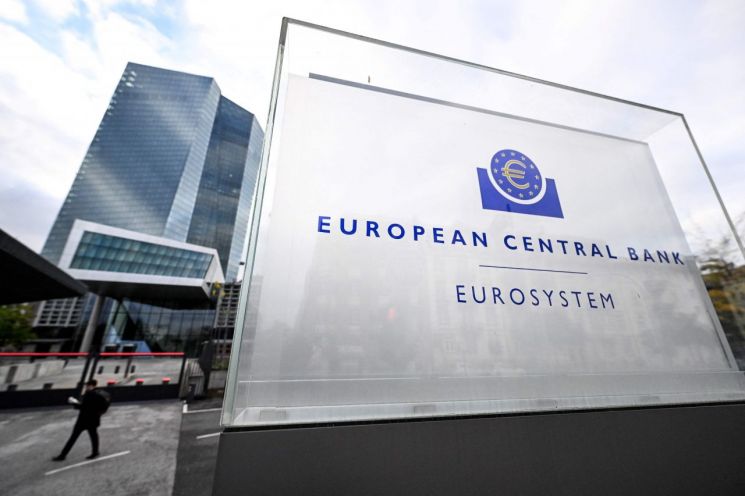
With forecasts that Europe and the UK may start cutting interest rates earlier than the U.S., investment sentiment toward risky assets within Europe is reviving. A foreign media outlet in the UK noted, "Investors have begun betting on the European Central Bank (ECB) making its first rate cut in April next year, lowering the benchmark rate from 4.5% to 3.5%." It added that although Europe and the UK have prioritized inflation control and maintained a tightening stance, recent signs of inflation slowdown and labor market cooling have led to analyses that the end of tightening is urgent. The Eurozone (20 countries using the euro) recorded a -0.1% economic contraction in the third quarter, while the UK's third-quarter economic growth rate remained flat at 0%.
However, experts caution against excessive optimism, suggesting that CDS rates may have already passed their bottom. Marco Stockl, Head of Credit Strategy at Commerzbank, said, "Inflation optimism contributed to pulling CDS rates down to their lowest levels in months," but he also predicted that the index is unlikely to fall below the 360 level. There are also forecasts that as the economic downturn deepens, the financing conditions for low-credit companies will worsen further. Shanawaz Bhimji, Head of Corporate Bond Research at the Dutch ABN AMRO Bank, predicted, "Due to the fragile economic situation, corporate debt burdens will increase regardless of credit ratings."
© The Asia Business Daily(www.asiae.co.kr). All rights reserved.

















