49.1% of This Year's Supply in the Capital Area
Daegu 34 Units, Sejong '0'
Due to the rise in raw material costs and high interest rates, the volume of private housing sales this year has decreased by nearly 40% compared to last year. With the number of permits and construction starts also on a downward trend this year, concerns about a housing supply shortage in the next 2 to 3 years are growing.
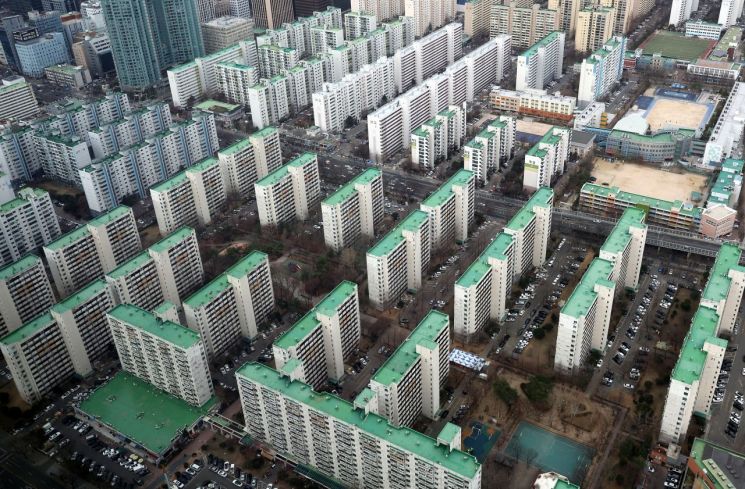
On the 24th, Real House, a specialized sales evaluation company, analyzed private apartment sales data from the subscription platform Cheongyak Home and found that as of November this year (up to the 23rd), a total of 220 apartment complexes were sold to the general public, which is only 59.6% of the volume compared to the same period last year. This is interpreted as construction companies holding back and postponing sales schedules due to concerns about unsold units and other risks.
The sharp decline in sales volume was more pronounced outside the metropolitan area. While the metropolitan area saw a 19.0% decrease in sales volume compared to the same period last year, the provinces experienced a 52.6% decrease, with 50,887 households sold.
In particular, Daegu and Sejong had almost no sales. Daegu, where the real estate downturn has been prolonged, saw the number of sales complexes drop from 28 last year to just 1 this year, with supply volume plummeting from 10,646 households to 34 households. Sejong recorded zero sales.
In Gyeongnam, the volume dropped by 83.9% from 13,857 households last year to 2,229 households this year. Gyeongbuk recorded 21.2% of last year's volume, Daejeon 25.7%, Chungnam 28.0%, Chungbuk 39.8%, Jeonnam 40.3%, Jeonbuk 48.3%, and Jeju 49.9%, all failing to reach half of last year's figures. Ulsan saw a reduction of 1,508 households.
As the sales volume decreased, the metropolitan area's share of the sales market increased to 49.1%. Especially, the number of sales complexes in Seoul increased by 12 compared to last year, raising the metropolitan area's proportion. This year, Seoul recorded 7,787 households sold, an increase of 5,080 households. Gyeonggi Province sold 32,520 households, a decrease of 13,045 households from last year, and Incheon supplied 8,813 households.
For the time being, a reduction in apartment sales volume seems inevitable. According to the Ministry of Land, Infrastructure and Transport, as of September this year, the nationwide apartment permit volume decreased by 29.6% compared to the same period last year, and construction starts dropped by 58.1%. Recently, conflicts due to rising construction costs have delayed scheduled sales. In Seoul, five complexes including ‘Sinbanpo Maple Xi’ (3,307 households), ‘Acro Ritz County’ (707 households), ‘Raemian One Perla’ (1,097 households), Gangnam-gu’s ‘Cheongdam Le El’ (1,261 households), and Songpa-gu’s ‘Jamsil Raemian I-Park’ (2,678 households) have postponed their sales schedules to next year.
Kim Seon-ah, team leader at Real House, said, "As uncertainty in the real estate market deepens, both construction companies and prospective buyers are focusing on reducing risks," adding, "Although significant policies such as the announcement of 80,000 new housing sites this month have been introduced, it is necessary to quickly translate these into actual supply."
© The Asia Business Daily(www.asiae.co.kr). All rights reserved.

















