Public transportation fares, including city buses and subways in the Daejeon area, will be increased.
The Daejeon City government announced on the 22nd that starting January 1 next year, the standard city bus fare will be raised to 1,500 KRW (currently 1,250 KRW), and the urban railway fare will be increased to 1,550 KRW (currently 1,250 KRW), while youth and children fares will remain unchanged.
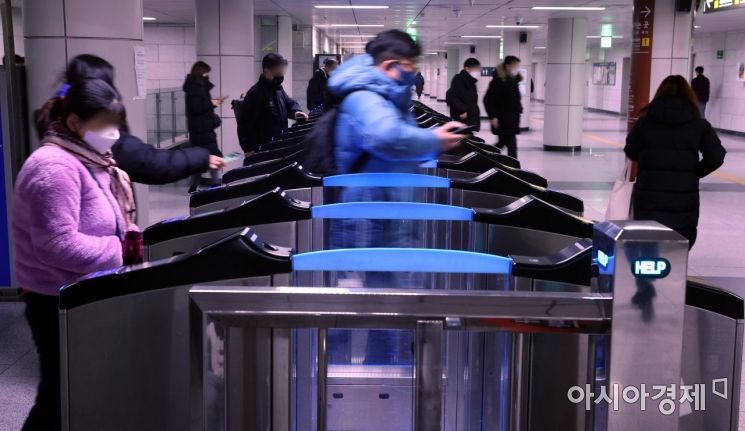
The fare increase was finalized during the Daejeon Consumer Policy Committee meeting held on the 15th. Initially, the committee proposed raising both city bus and subway fares to 1,550 KRW for the general fare.
However, the committee acknowledged the ‘inevitability’ of the fare increase but adjusted the proposed fare hike after considering the recent difficult economic conditions and the impact of public transportation fares on household finances, according to Daejeon City’s explanation.
Following the fare increase, from January 1 next year, city bus fares will be 1,500 KRW for general passengers, 750 KRW for youth, and 350 KRW for children; subway fares will be 1,550 KRW for general passengers, 880 KRW for youth, and 550 KRW for children.
Transfers between city buses and subways will remain free for youth and children as before. However, for general fares, an additional 50 KRW difference will be charged when transferring from a city bus to the subway. Conversely, no additional charge will be applied when transferring from the urban railway to a city bus.
This is the first time in nine years since 2015 that Daejeon City has raised public transportation fares. The main reasons for the fare increase include the continuous rise in transportation costs such as labor and fuel, expenses related to replacing aging facilities, and a decrease in public transportation operating revenues following the COVID-19 pandemic.
Due to these factors, the financial support provided by Daejeon City to public transportation operators (to cover the gap between transportation costs and revenues) surged from 64.3 billion KRW in 2015 to 193.8 billion KRW this year.
Among these, the city bus sector currently operates 1,015 vehicles on 102 routes. At the time of the 2015 fare increase, financial support was 38.3 billion KRW, accounting for less than 30% of total transportation costs, a situation maintained until 2019.
However, after COVID-19, the financial support increased to 116.6 billion KRW in 2022. The financial support for city buses began in July 2005 when Daejeon city buses transitioned to a semi-public operation system and started receiving payments to operators.
Daejeon City explained that the decrease in passengers due to the spread of COVID-19 contributed to the increase in financial support. In fact, passenger numbers dropped by about 15% in 2020 compared to the previous year when COVID-19 spread.
Due to these complex reasons, Daejeon City expects the financial support for the city bus sector to increase further to 123.3 billion KRW this year, exceeding last year’s amount.
The subway sector is facing a similar situation. Although about 100,000 people use the subway daily, helping to alleviate downtown traffic congestion, the operating deficit continues to grow despite the increased number of users.
This is largely attributed to the replacement of aging facilities and increased safety investment costs after 17 years since opening, as well as the expansion of free ride beneficiaries. The financial support for the subway sector in Daejeon also rose from 26 billion KRW in 2015 to 70.5 billion KRW this year.
A Daejeon City official stated, “Daejeon has decided to raise public transportation fares early next year, nine years after the last fare increase in 2015. This is because the scale of financial support has continued to grow, making it impossible to overlook the factors necessitating a fare increase any longer.”
He added, “Daejeon City will create a public transportation environment that citizens can use safely and will continue to pursue service improvements. Along with this, various policies to revitalize public transportation will also be prepared.”
© The Asia Business Daily(www.asiae.co.kr). All rights reserved.

















