Slowing Electric Vehicle Demand Poses Crisis for LFP Battery Expansion
Focus on Companies with Strong Performance and Financial Structure
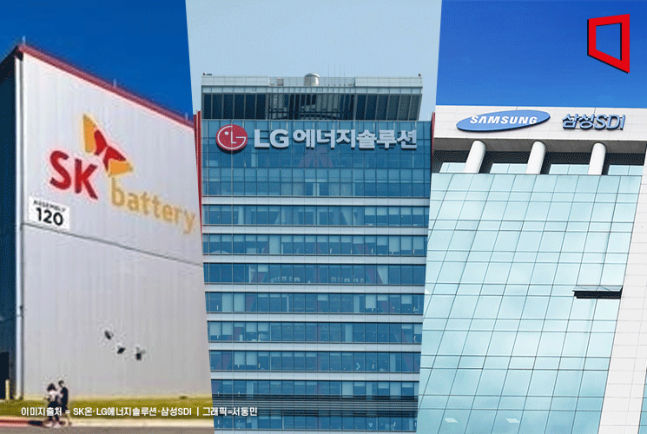
There are securities industry forecasts that the stock prices of the secondary battery sector, which have lost momentum, will not recover from the slump until the first half of next year.
According to the Korea Exchange on the 22nd, LG Energy Solution's stock price, which hovered around 600,000 won last July, fell to 447,000 won as of the previous day's closing price. This represents a decline of about 30%. Samsung SDI also dropped by about 30% during the same period. Secondary battery cathode material companies such as EcoPro BM and POSCO Future M experienced declines exceeding 50%.
The downturn in the secondary battery sector is due to concerns over a global electric vehicle market slowdown amid a worldwide economic slowdown. Major automakers such as Volkswagen, General Motors (GM), and Ford are facing difficulties securing profitability due to price competition in electric vehicles, leading to delays in new car launches and a visible slowdown in electric vehicle demand.
Moreover, the fact that major electric vehicle companies are adopting LFP (Lithium Iron Phosphate) batteries instead of the existing NCM (Nickel-Cobalt-Manganese) batteries is also expected to pose a burden on the domestic secondary battery cell industry. Anna Lee, a researcher at Yuanta Securities, said, “All companies except Renault have declared the adoption of LFP,” and analyzed, “From the perspective of the domestic secondary battery industry, the rapid rise of LFP technology is a bigger problem than the slowdown in electric vehicle demand.”
LFP has a lower energy density, making it difficult to apply to electric vehicles, but it is composed of highly stable chemical substances, which means that even if a hole is pierced, the cell does not catch fire or explode. Therefore, fewer protective devices are needed in the battery pack, allowing for a simplified pack structure. Recently, various technologies such as silicon anode material technology and LFMP, which adds manganese to LFP, have been combined to significantly increase energy density.
Researcher Anna Lee explained, “Domestic secondary battery cell companies, which expected significant external growth centered on North America, are experiencing delays in some expansions or contract cancellations due to the slowdown in electric vehicle demand and the adoption of LFP in 2024,” adding, “As a result, downward revisions of next year’s earnings consensus are also being made extensively.”
Hyungwoo Park, a researcher at SK Securities, pointed out, “The penetration rate of LFP has rapidly increased from 5% in 2020 to 30% this year,” and added, “Since Chinese companies monopolize the supply of LFP, domestic companies need to prepare accordingly.” However, researcher Park also analyzed, “Although there are concerns about oversupply and delays in expansion in the domestic secondary battery industry, the direction of it being a growth industry does not change,” and “From a mid- to long-term perspective, selective approaches are needed for stocks that can be interpreted through performance and financial structure, such as Samsung SDI, which is undervalued, and SK On, which has a large profitability leverage effect.”
In the case of cathode material companies, uncertainty is increasing as lithium prices are showing a downward trend. According to a market research firm Wind, the price of lithium carbonate in China during the second week of this month was 150,000 yuan per ton (about 27 million won), and lithium hydroxide was 140,000 yuan per ton (about 25 million won). This is about one-quarter of the price in November last year.
Jaeheon Jung, a researcher at DB Financial Investment, analyzed, “Lithium prices are continuously declining, so cathode material prices will also fall until the first quarter of next year,” and added, “There is a possibility that performance uncertainty will be prolonged depending on metal price trends until the first half of next year.” However, he predicted, “In this downturn phase, the importance of securing resources to realize ambitious plans, that is, performance and financial stability, will be emphasized,” and expected, “In the case of POSCO Future M, it will show a steady trend due to the rising importance of anode materials, additional profitability improvement through vertical integration of raw materials, and a relatively stable financial structure.”
© The Asia Business Daily(www.asiae.co.kr). All rights reserved.


















