Currency Crisis in Areuken, Considering Dollar Replacement
Areuken Citizens Have Already Lost Trust in Their National Currency
Javier Milei, the president-elect of Argentina, has drawn attention to his flagship campaign promise of 'introducing the dollar' following his victory in the local presidential election. The policy aims to abolish the rapidly depreciating Argentine peso and adopt the dollar as the country's official currency.
Is it possible for a country to suddenly replace its currency with the dollar? And what would happen to Argentina's economy if the dollar were used instead of the peso?
Dollarization Could Bring 'Short-Term Stability' to Argentina
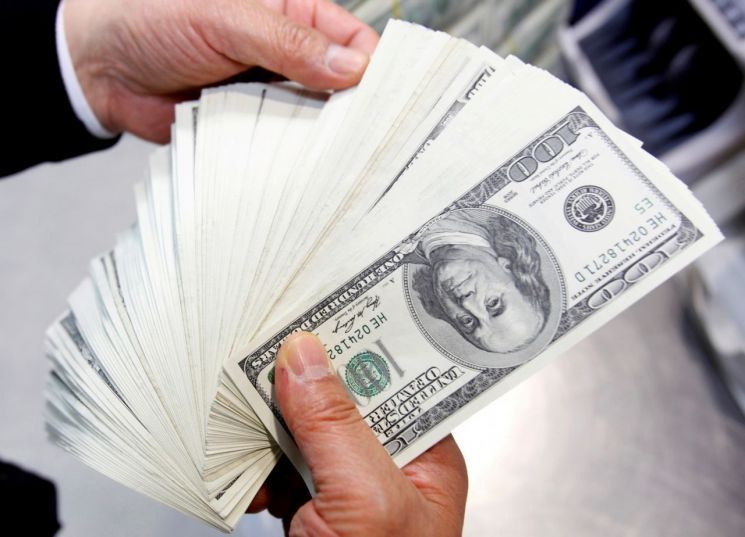
If Argentina abolishes the peso and adopts the dollar as its official currency, the next step would likely be the dissolution of the central bank, as its functions of issuing currency and controlling the money supply would disappear.
This is not unprecedented. Eurozone member countries that adopted the euro as a unified currency have seen their existing central banks absorbed into the European Central Bank (ECB).
Moreover, dollarization?the phenomenon of replacing a country's currency with the US dollar?could provide short-term macroeconomic stability for Argentina. The peso has recently lost over 95% of its value, leading to soaring import prices and a cumulative inflation rate of 138% in Argentina. In contrast, the dollar's value is much more stable.
The clearest benefit Argentina would receive from adopting the dollar would be interest rates. This was explained recently by economist Nicol?s Cachanosky, a supporter of Argentina's dollarization, during a lecture.
If all deposits in Argentina's banking system are dollarized, Argentina's interest rates would be determined by the dollar market rates. Currently, Argentina's benchmark interest rate stands at 133%. This means interest rates would drop dramatically from triple digits to single digits. This alone could significantly stabilize Argentina's banking system compared to the present.
The Cost: Unprecedented Surrender of Monetary Sovereignty

However, dollarization is not a panacea. Since it involves nearly 100% currency substitution, Argentina would lose the ability to independently set its macroeconomic policies. In other words, it would become a country that has surrendered its monetary policy sovereignty.
The monetary policy of the US Federal Reserve (Fed) is determined primarily based on the US economy and some advanced countries linked to it. The Federal Open Market Committee (FOMC) would not set US benchmark interest rates considering Argentina in South America.
The situation becomes even more serious if Argentina experiences a default. Recently, the British economic magazine The Economist pointed out regarding Argentina's dollarization plan that "if the central bank disappears along with the peso, the lender of last resort effectively disappears," making the default process much more painful.
Dollarization: Not a Politician’s Choice but a Result of Failure
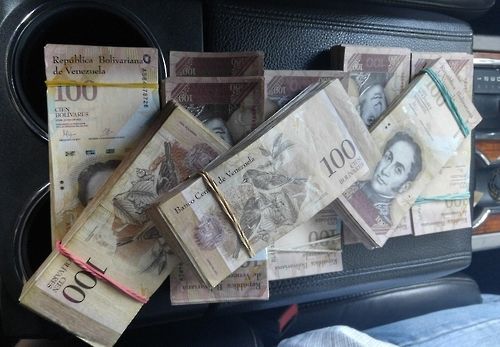 The currency of Venezuela, the Bol?var. In fact, it is rarely used in daily life and is exchanged for dollars on the black market.
 [Image source=Yonhap News]
However, it must be considered that Argentina's dollarization is no longer a matter of choice. According to local statistics, Argentinians hold $246 billion (approximately 316 trillion KRW) in the form of foreign bank accounts, safes, and unreported cash, exceeding 50% of the country's 2021 gross domestic product (GDP) of $487 billion (approximately 625 trillion KRW).
In other words, due to repeated peso depreciation, citizens have lost trust in their national currency and have begun to use the dollar as an 'unofficial currency' themselves. This phenomenon is common in countries experiencing currency crises and is a representative example of dollarization.
Countries like Venezuela and North Korea also experience dollarization. These countries use the dollar in black markets instead of their national currencies. In North Korea, residents are known to prefer the dollar far more than the North Korean won.
Ultimately, whether Milei succeeds or fails in replacing the peso with the dollar, dollar transactions have already become commonplace in Argentina's black market. This also means that Argentina's 'unofficial dollarization' is an ongoing process. Dollarization is less a matter of national choice and more a consequence of a country's failed monetary policy.
© The Asia Business Daily(www.asiae.co.kr). All rights reserved.



















