Interview with Jin Hyunhee, Head of Culture and Arts Division at Mapo Cultural Foundation
Neighborhood Bookstores Across Hongdae and Mapo Lead Local Cultural Development
Resident Participation Workshops Plan Platform for Discussing Cultural Issues
It is a relatively recent phenomenon in human history that many people have come to live in cities. Cities that thrived around ports, with the flow of goods and the industrial ecosystems built upon them, as well as the influx of capital and trade, quickly grew into cultural hubs. Mapo was once the central hub of the city, serving as the main ferry port of Seoul and the Han River, but it lost its port function as water transportation declined in the 20th century. Although the boats no longer come and go, Mapo still proudly stands as a new cultural center today. Behind this is an accurate analysis of local cultural demand and the establishment of tailored policies and program planning through swift issue response. We met with Jin Hyun-hee, Head of the Culture and Arts Division at the Mapo Cultural Foundation, which plans diverse performances and exhibitions that stand shoulder to shoulder with contemporary mainstream culture beyond the local area, to discuss the principles and directions of various performance planning and cultural policies. The following is a Q&A with Director Jin.
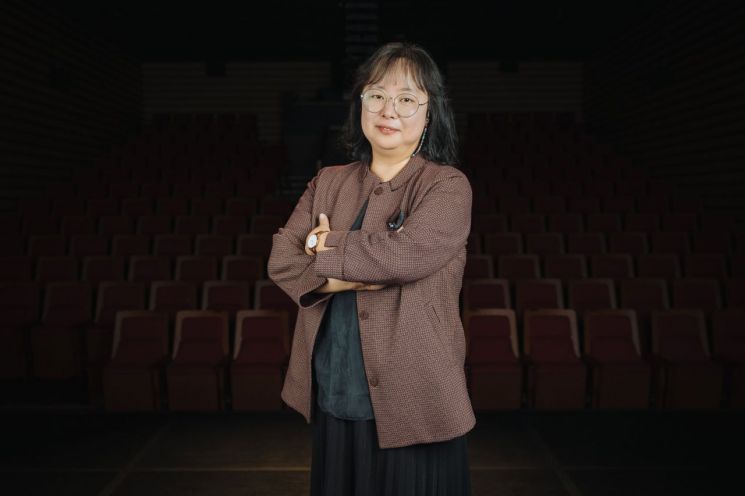 Jin Hyun-hee, Head of Culture and Arts Division at Mapo Cultural Foundation. [Photo by Mapo Cultural Foundation]
-I understand you conduct various tasks to grasp the cultural demand of the region. Could you tell us what kind of work you do?
▲Since 2020, we have been conducting an annual cultural demand survey of Mapo residents. This year marks the fourth round. The survey checks the cultural environment of Mapo and the local residents’ perception of the foundation. Since the internal and external environments are rapidly changing, we conduct the survey every year to respond quickly to demand. Over three months, we closely examine the program demand for the Art Center and the cultural consumption status of about 1,000 Mapo residents and those living in the Mapo area. Additionally, to strengthen our response to changes in internal and external policy environments, we publish an external trend report every month, curating major news such as cultural and artistic trends and local issues.
-The foundation provides a platform where local residents directly participate in workshops and discuss cultural and artistic issues.
▲Through the platform called Gunggeumhan PlatformM, local residents identify various issues and seek solutions. Key programs include Gunggeumhan Table, where 10 local artists and activists conduct workshops, and Gunggeumhan Project, which produces local archive content. Notably, the Gunggeumhan Project plans to present Yuldosa-gye (栗島四季), a board game that expresses the ecology and culture of Hangang Bamseom Island through landscapes and narratives.
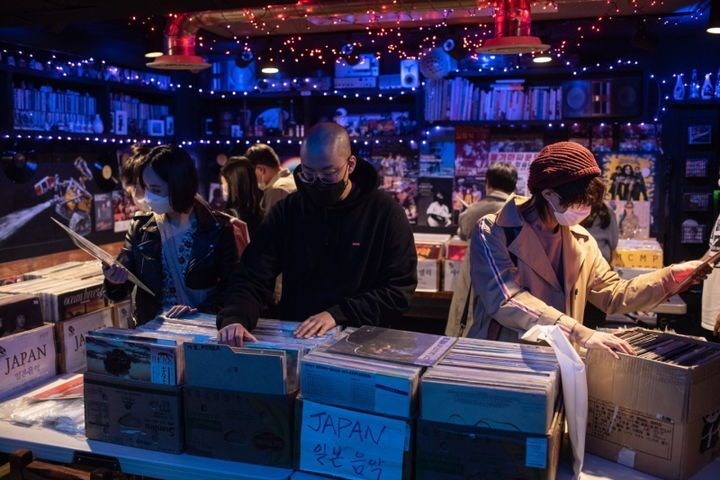
-It seems that the role of music and art culture represented by Hongdae and the neighborhood bookstores scattered throughout Mapo played a big part in Mapo being recognized as a cultural center within the metropolis of Seoul.
▲That’s right. Since Hongdae is a cradle of popular music, recently we held the ‘Mapo Vinyl Festa’ with participation from seven nearby record shops, and hosted music listening sessions and lectures by experts such as popular music critic Im Jin-mo and pop columnist Kim Kyung-jin in the Art Center lobby, showcasing a cultural festival utilizing local resources. We also planned and produced an outdoor book festival called ‘Bookstore on Stage’ linked with 18 neighborhood bookstores located throughout the area, a publishing policy seminar ‘Mapo Bookstore Seminar’ involving local bookstores and publishing journalists, and a video introducing local bookstores called ‘Mapo Booktube,’ providing a space to see, listen to, feel, and discuss the future of books.
-I understand you majored in fine arts. What kind of exhibition-related programs have you planned?
▲Since the Mapo Art Center functions more as a performance venue, rather than traditional exhibitions, we planned new programs where art can be enjoyed in the performance hall. Through the exhibition with commentary by art historians called ‘Art Story M,’ we introduced a unique way for local residents to enjoy historical works imbued with our history in the performance venue. We received positive feedback for programs such as ‘Seoul Landscape,’ where Professor Lee Tae-ho, a master in art history, introduced works depicting Seoul using real landscape painting techniques, and ‘The Beauty of Genre Paintings,’ where art historian and commentator Tak Hyun-gyu interpreted Joseon customs in paintings by Danwon Kim Hong-do and Hyewon Shin Yun-bok, offering a fresh experience.
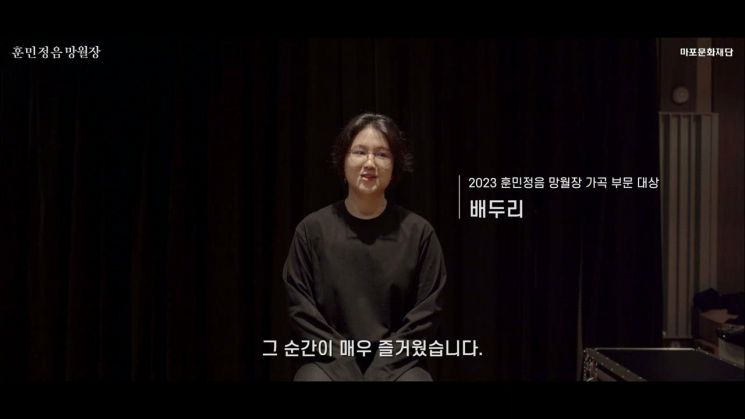 Bae Doori, who was selected as the grand prize winner in the vocal music category of the "Hunminjeongeum Mangwoljang," a contest for Korean lyrics in children's songs and vocal music held by the Mapo Cultural Foundation to celebrate Hangul Day.
 [Photo by Mapo Cultural Foundation]
-As a regional foundation, meeting the demands for social value must not have been easy.
▲We sought answers through culture, and as part of social activities, we started and have been operating the first Hangeul Day commemorative contest project among local government cultural foundations since 2020. This year, we held ‘Hunminjeongeum Mangwoljang,’ a contest for Korean lyrics in children’s songs and art songs, producing and releasing one selected children’s song and one art song on YouTube. Also, in the project ‘M Culture,’ which pursues coexistence with the local community, we offered benefits for customers of marts, cafes, and independent bookstores in Mapo-gu affiliated with the foundation to watch planned performances by the Mapo Cultural Foundation for 1,000 won, simultaneously revitalizing the local economy and expanding citizens’ opportunities to enjoy culture and arts. The ‘Rest (休) Program’ at the performance venue for stress and mental care of local residents was also introduced for the first time this year and received attention.
-It is known that the Mapo Cultural Foundation played a significant role in establishing youth education projects.
▲That is kind of you to say. When we first started the project, we made great efforts to change the exclusive stance of schools toward external organizations. We focused on faithfully acting as a bridge between schools and artists so that artists could conduct regular classes and run programs in the best environment for students. Now, we have achieved the result of working with 80% of elementary, middle, and high schools in Mapo on youth education projects. Since student satisfaction is high, a fan base of teachers who like the foundation’s educational programs has even formed.
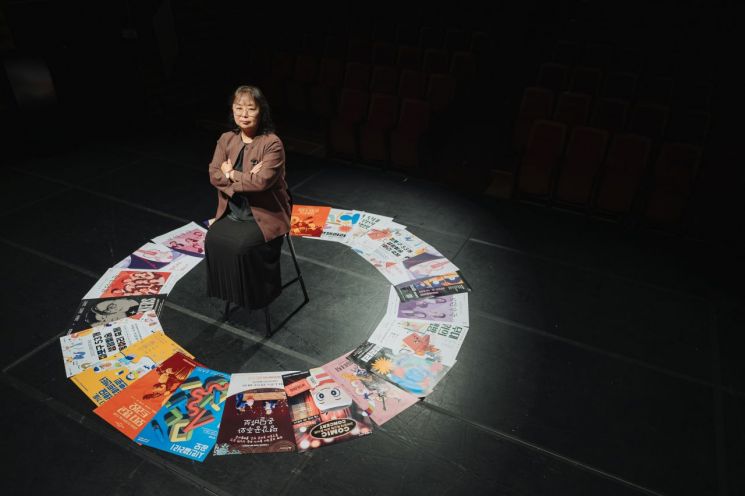 Jin Hyun-hee, Head of Culture and Arts Division at Mapo Cultural Foundation. [Photo by Mapo Cultural Foundation]
-As Head of the Culture and Arts Division at the foundation, what is your ultimate goal through program planning?
▲When the CEO establishes the big picture, I play the role of practically organizing and promoting it. Above all, the foundation’s ultimate goal is for the Art Center to be established as a cultural space that local residents feel close to and affectionate about. Residents near large performance venues representing Seoul appreciate having cultural spaces but do not necessarily feel those spaces are warm and familiar. This is because content is planned targeting not only residents but also diverse audiences. At the beginning of the year, we conduct a cultural demand survey targeting local residents, establish business plans, and plan tailored programs to present. Through this, we plan to focus various efforts on growing into a content production institution that everyone can enjoy beyond the local area.
© The Asia Business Daily(www.asiae.co.kr). All rights reserved.



















