Survey on upper management, just over two months until full legal application
76% of small businesses with fewer than 50 employees are unprepared
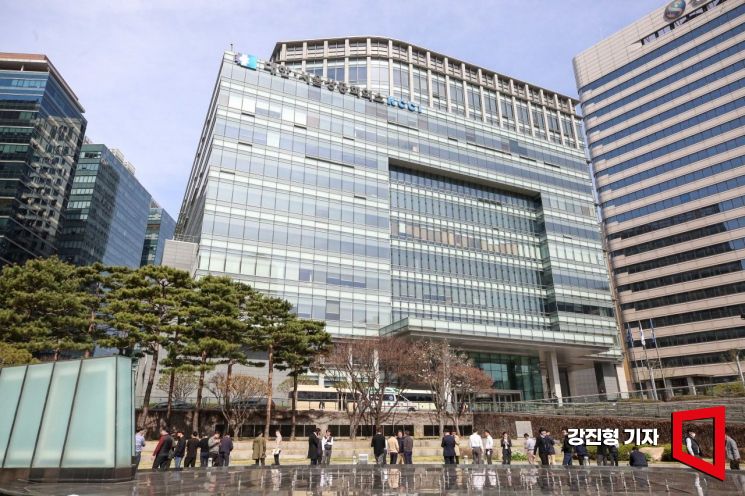
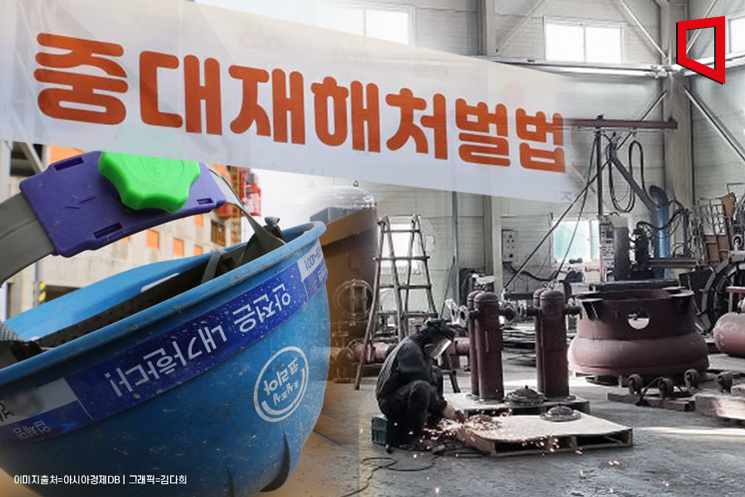
As the 'Serious Accident Punishment Act,' which punishes business owners who neglect safety measures when workers die in workplace accidents, is set to be fully enforced, it has been revealed that most small and medium-sized enterprises (SMEs) with fewer than 50 employees are still inadequately prepared.
A survey conducted by the Korea Chamber of Commerce and Industry (KCCI) along with 22 regional chambers of commerce targeted 641 member companies with fewer than 50 employees. The results showed that 89.9% of the respondent companies believe that the grace period for the application of the Serious Accident Punishment Act, which lasts until January 26 next year, should be extended further.
Only 22.6% of companies with fewer than 50 employees have taken measures to respond to the Serious Accident Punishment Act. On the other hand, 76.4% of respondents reported either 'maintaining the status quo without any particular measures' (39.6%) or 'reviewing possible measures' (36.8%), indicating difficulties in complying with the law.
Currently, a bill has been proposed in the National Assembly to extend the application of the Serious Accident Punishment Act for companies with fewer than 50 employees by two more years until January 26, 2026, considering their small scale and manpower shortages. This bill is pending (proposed by Assemblywoman Im I-ja).
Regarding this, a business owner operating a workplace in a provincial area stated, "Most small businesses are 'one-man companies' run by the owner, so if a serious accident occurs, it would be practically impossible to continue operations, effectively leading to closure." He added, "Since this could result in workers losing their jobs, an additional preparation period should be granted."
The Serious Accident Punishment Act has faced criticism for not achieving the originally intended effect of reducing serious accidents and only strengthening punishments. In fact, looking at the trend of industrial accident fatalities in workplaces with 50 or more employees where the law is already applied, the number of deaths in 2022 decreased by only 1.7% compared to 2021 before the law was enforced. Up to the third quarter of this year, fatalities have actually increased by 4.4% compared to the same period last year. Therefore, even if the law is applied to workplaces with fewer than 50 employees, it is unlikely to expect a reduction in accidents.
Reasons for Difficulty in Responding to the Serious Accident Punishment Act... Extensive Legal Compliance Requirements (54%) · Securing Safety Personnel (52%) · Cost Burden (42%)
Meanwhile, SMEs cited 'extensive safety-related legal compliance requirements' (53.7%) as the biggest reason for difficulty in responding to the Serious Accident Punishment Act. This was followed by 'securing safety management personnel' (51.8%), 'excessive cost burden' (42.4%), and 'managing workers' safety awareness such as violations of safety guidelines' (41.7%). Regarding the establishment of departments responsible for safety and health tasks, only 7.2% of all respondent companies had a dedicated department, while most either had 'dual roles with other departments' (54.9%) or no department at all (29.8%).
However, the enforcement of the Serious Accident Punishment Act has improved safety management awareness in workplaces with fewer than 50 employees. In a survey asking about workplace safety management awareness, 95.5% of respondent companies answered that they 'pay attention to safety management.' Among them, 77.7% said they pay attention to safety management regardless of accidents, and 17.8% said they pay attention because accidents have occurred.
Roles SMEs Expect from the Government... Distribution of Safety Manuals (59%) · Support for Safety Personnel and Labor Costs (50%) · Support for Safety Investment (48%)
Regarding the Serious Accident Punishment Act, SMEs identified the roles they expect from the government as 'distribution of industry-specific safety manuals' (59%), 'support for safety personnel and labor costs' (49.8%), and 'financial and tax support for safety investments' (47.6%). Other responses included 'clear compliance guidelines' (43.5%) and 'technical support such as consulting for safety system establishment' (30.7%).
B, a president of a small manufacturing company, said, "Safety-related laws are so extensive and complex that there are still many confusing parts about where to start." He added, "The government should actively provide free inspections and guidance on legal compliance and expand policy support for SMEs lacking funds or manpower."
Additionally, when asked whether they had received external support related to the Serious Accident Punishment Act, 34.2% responded that they 'responded independently without receiving support.' Among those who received external help, specific sources included the 'Korea Occupational Safety and Health Agency' (53%), 'government (Ministry of Labor, Ministry of SMEs and Startups, etc.)' (22.5%), 'prime contractors (large corporations, etc.)' (8.3%), and 'industrial complex corporations where they are located' (3.4%), either individually or in combination.
Meanwhile, the KCCI will hold an online briefing session on the analysis and response to investigations related to the Serious Accident Punishment Act for member companies on the 6th of next month. A lawyer from the law firm Sejong will be invited as a speaker to explain in detail how to respond at each stage of serious accidents and will also take real-time questions to address companies' concerns.
Yoo Il-ho, head of the Employment and Labor Policy Team at KCCI, emphasized, "Even among companies with fewer than 50 employees, the smaller the size, the greater the variance in the number of fatal accidents." He added, "We need to extend the application grace period and during that time support SMEs to enhance their safety capabilities and push for legal amendments to shift to a prevention-centered legal system."
© The Asia Business Daily(www.asiae.co.kr). All rights reserved.


















