BMW Surpasses Mercedes in Cumulative Sales This October
Consistent Popularity of 3 and 5 Series... Challenging for Annual No.1
Mercedes' Year-End Supply Offensive Could Be a Variable
Mercedes and BMW Increase Discounts on Key Models... Concerns Over Cutthroat Competition
Mercedes-Benz and BMW have once again clashed over the top spot in the domestic imported car market. Mercedes-Benz has held the lead for the past seven years, but this year BMW is ahead in cumulative sales through October, raising expectations that the throne of the imported car market could change hands for the first time in eight years. Both companies are ramping up their final push by offering dramatic discounts on key models, from new to older versions.
According to data from the Korea Automobile Importers & Distributors Association (KAIDA) on the 10th, BMW sold 62,514 units domestically through October this year, surpassing Mercedes-Benz's 60,988 units during the same period. However, the difference in cumulative sales between the two companies this year is around 1,500 units, so the ranking could be reversed at any time. Last year, BMW led until November, but Mercedes-Benz overturned the ranking in the final month with a volume offensive.
BMW had maintained the top position in the domestic imported car market until 2015, but from the following year, it lost first place to Mercedes-Benz and remained in second place for seven years. The company suffered a significant blow in 2018 due to EGR (Exhaust Gas Recirculation) recalls and consecutive fire incidents. However, the atmosphere is different this year. Steady-selling models such as the 3 Series and 5 Series have consistently gained popularity, keeping BMW in the lead.
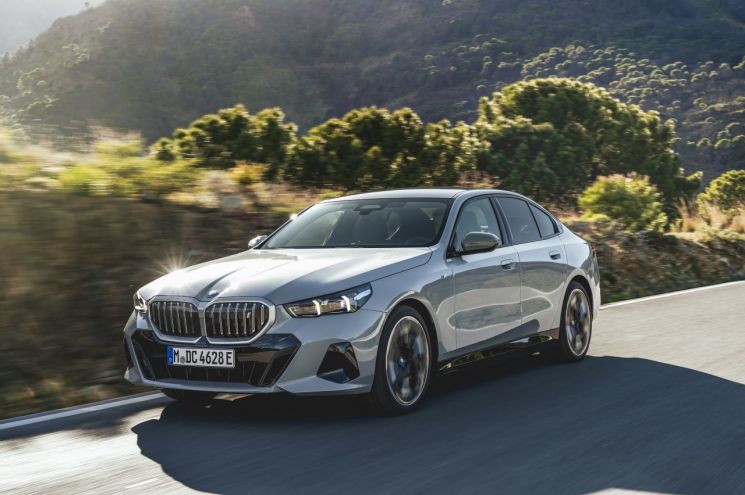
Last month, BMW unveiled the new 5 Series in the Korean market for the first time worldwide. It was notable that the fully redesigned flagship model, released after six years, was launched in Korea. Korea is the second-largest market for the 5 Series globally, after China. Moreover, the new 5 Series was launched simultaneously with the pure electric i5, strengthening BMW's electric vehicle lineup.
With the launch of the new 5 Series model and increased discounts on older models, the year-end discount competition is expected to intensify. BMW plans to offer discounts ranging from 3 million to 5 million KRW depending on the model of the new 5 Series. Offering discounts on a newly launched model last month is unusual and is interpreted as BMW's aggressive marketing strategy to achieve its sales targets for this year and next.
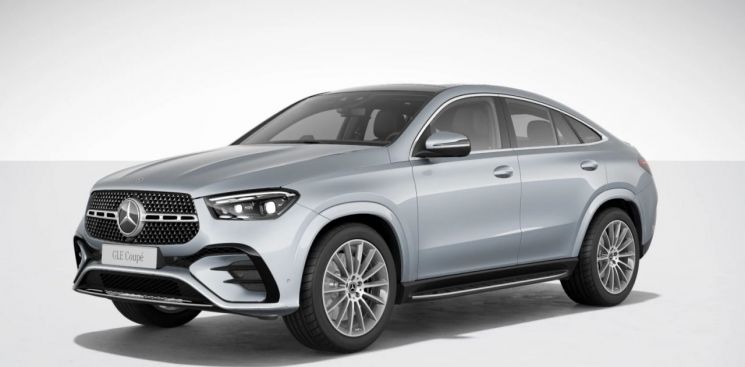
Mercedes-Benz is also launching a counterattack to boost its final momentum. Over the next two months until the end of the year, Mercedes-Benz will introduce eight new models, including the fully redesigned new GLC Coupe, GLA, GLB, and GLS. Another strategy is to expand the eco-friendly vehicle lineup reflecting domestic consumer preferences. The day before, Mercedes-Benz launched the plug-in hybrid (PHEV) model of the mid-large electric sports utility vehicle (SUV) GLE Coupe.
Looking at the sales of eco-friendly vehicles (electric vehicles, HEVs, PHEVs) by Mercedes-Benz and BMW through October this year, Mercedes-Benz has a decisive lead. While electric vehicle sales were close, with Mercedes-Benz selling 6,703 units and BMW 6,391 units, Mercedes-Benz outsold BMW by more than three times in hybrid (HEV) sales, including PHEVs, with 31,300 units compared to BMW's 10,675 units.
Additionally, Mercedes-Benz is boosting its firepower by increasing discounts on its flagship E-Class. This month, Mercedes-Benz is offering discounts of around 10% depending on the E-Class model price. This is part of a plan to implement an aggressive discount policy on older models ahead of the full change model launch scheduled for the first half of next year.
© The Asia Business Daily(www.asiae.co.kr). All rights reserved.


















