Democratic Party Pushes for Public Broadcasting Governance Reform
Increasing Board Members and Expanding Recommendation Authorities
Broadcasting Commission Warns "Concerns Over Fairness... Consensus Needed"
On the 9th, as the opposition-led 'Broadcasting Three Acts' passed in the National Assembly, the Korea Communications Commission proposed that the president exercise the veto power. The Broadcasting Three Acts primarily focus on reforming the governance structure of public broadcasters.
On the same day, the KCC issued a statement saying, "What we need now is a comprehensive reform of the public broadcasting system to enable public broadcasters to properly fulfill their roles," and added, "We cannot help but propose the 'request for reconsideration of a bill' stipulated in the Constitution." The request for reconsideration refers to the president's veto power.
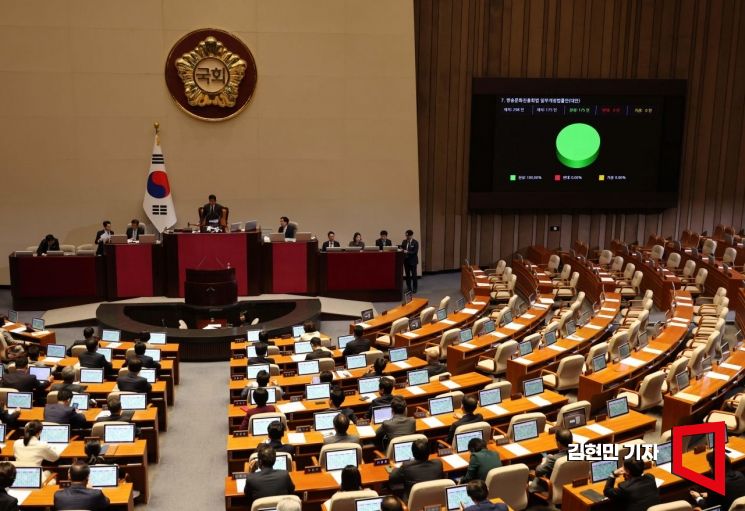 On the 9th, the partial amendment bill to the Broadcasting Culture Promotion Act (alternative) was passed at the plenary session of the National Assembly. Photo by Hyunmin Kim kimhyun81@
What Are the Broadcasting Three Acts... "Must Escape Political Influence" vs. "Controlled by Pro-Union Forces"
The opposition parties, including the Democratic Party of Korea, unilaterally passed the Broadcasting Three Acts (amendments to the Broadcasting Act, the Promotion of Broadcasting Culture Act, and the Korea Educational Broadcasting System Act) at the plenary session of the National Assembly held that day.
The Democratic Party, after the amendments passed the relevant standing committee but were stalled for a long time in the Legislation and Judiciary Committee, referred the bill directly to the plenary session and passed it unilaterally.
The Broadcasting Three Acts include provisions to reform the governance structure of public broadcasters such as KBS, MBC, and EBS. The number of board members of public broadcasters will increase from the current 9 (MBC and EBS) or 11 (KBS) to 21 each, and the authority to recommend board members will be given to academia and professional organizations.
While the intent is to free public broadcasters from political pressure by the government, there is criticism that pro-Democratic Party and pro-media union forces intend to dominate public broadcasters by recommending a majority of the board members.
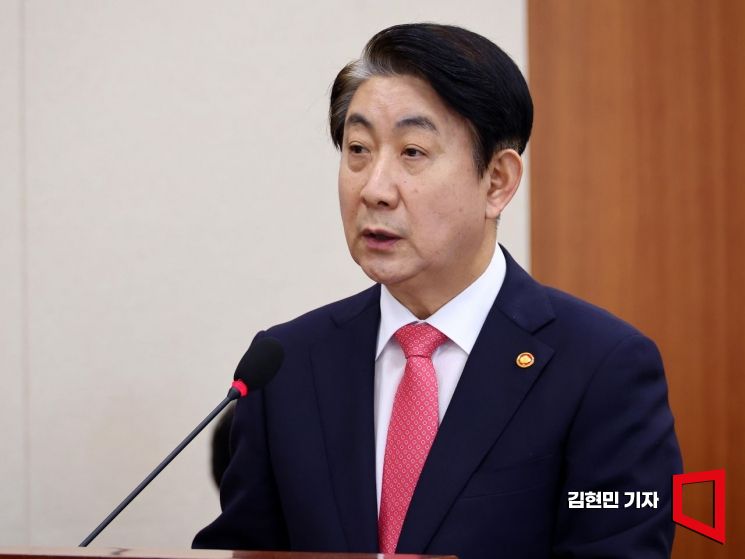
KCC Criticizes Forced Passage of the Bill... "Concerns Over Fairness Violation"
First, the KCC pointed out that "the bill was forcibly processed from the standing committee to the plenary session by the opposition without bipartisan agreement," and criticized the "lack of procedural legitimacy in the bill's passage process."
They argued that it is undesirable to forcibly pass the bill after the regime change without processing it during the 20th National Assembly, and that changes to the governance structure of public broadcasters require social consensus.
They also expressed concern that "among the 21 board members in the amended bill, 16, excluding the 5 recommended by the National Assembly, are heavily concentrated in the broadcasting field," and that "some professional representative organizations have unclear legal status."
They warned that the board could be dominated by directors recommended by ideologically biased organizations, raising concerns about partiality. In particular, since the viewer committees, selected by broadcasting company executives or union representatives, recommend board members, there is a possibility that the fairness of the board could be compromised.
Finally, they stated, "What we need is not superficial changes such as increasing the number of board members, but a comprehensive reform of the public broadcasting system to ensure that public broadcasters can properly fulfill their roles in preparation for the future."
They concluded, "Considering the problems with the bill, the Korea Communications Commission cannot help but propose the 'request for reconsideration of a bill' as stipulated in the Constitution of the Republic of Korea."
© The Asia Business Daily(www.asiae.co.kr). All rights reserved.
![User Who Sold Erroneously Deposited Bitcoins to Repay Debt and Fund Entertainment... What Did the Supreme Court Decide in 2021? [Legal Issue Check]](https://cwcontent.asiae.co.kr/asiaresize/183/2026020910431234020_1770601391.png)
















