Lotte Shopping Q3 Operating Profit 142 Billion Won...5.3% Decrease
Integrated Sourcing Effect of Mart and Supermarket...Operating Profit Up 57% and 147%
Department Store F/W Product Sales Slump...Operating Profit Down 32%
Lotte Shopping posted earnings for the third quarter of this year that slightly missed market expectations. Efforts to improve profitability at Lotte Mart, Super, e-commerce, and Hi-Mart showed results, but the prolonged trend of high interest rates and high inflation continued to weaken household consumption sentiment, impacting the performance of department stores and others.
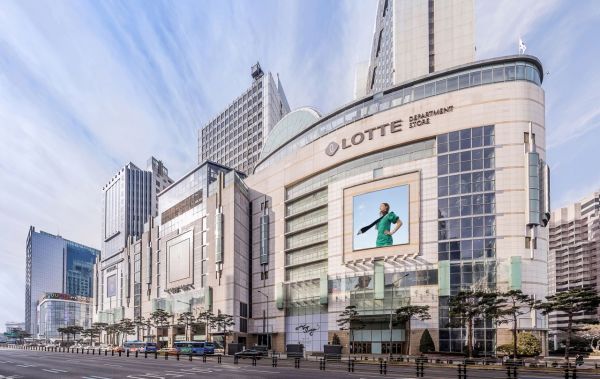
On the 9th, Lotte Shopping announced that its operating profit for the third quarter of this year was 142 billion KRW, down 5.3% compared to the same period last year. This slightly missed the third-quarter earnings consensus (estimate) of 144 billion KRW compiled by FnGuide. Sales for the same period were 3.7391 trillion KRW, down 6.8%, also below the market estimate of 3.8223 trillion KRW. Net profit turned positive at 61.8 billion KRW. On a cumulative basis from the first to the third quarter this year, operating profit increased by 4.4% year-on-year to 306 billion KRW. Sales decreased by 6.5% to 10.923 trillion KRW. Net profit surged 1112.9% to 236.1 billion KRW.
In the third quarter, Lotte Mart and Super saw a significant increase in operating profit due to improved gross profit margins from integrated product sourcing and efforts to reduce selling and administrative expenses. E-commerce improved both sales and operating profit through the stabilization of Lotte On's vertical services, and Hi-Mart greatly improved operating profit by normalizing inventory and expanding the proportion of high-margin product sales.
Department stores experienced a decline in operating profit due to sluggish sales of fall/winter (F/W) products caused by higher-than-average temperatures and increased selling and administrative expenses amid ongoing high inflation. Department store operating profit for the third quarter was 74 billion KRW, down 31.8% year-on-year. Sales decreased by 2.0% to 753 billion KRW. On a cumulative basis from the first to the third quarter, operating profit declined 16.7% to 268 billion KRW, while sales increased 1.3% to 2.372 trillion KRW. The hot summer weather extended through September, leading to weak sales of fall/winter products, and rising fixed costs due to inflation weighed on both sales and operating profit.
However, increased foreign tourist traffic led to a recovery in foreign customer sales, and the introduction of attraction-driving content such as food and beverage (F&B) helped drive sales at flagship stores including the main branch and Jamsil branch. From the fourth quarter onward, stores such as Incheon and Suwon are expected to improve performance based on store renewal effects. Overseas stores also saw significant sales growth, driven by same-store sales growth and the strong performance of the Lotte Mall West Lake Hanoi in Vietnam, which opened in September. Department stores plan to expand performance by strengthening competitiveness at key domestic stores and revitalizing overseas complex shopping mall businesses.
Mart and Super posted a significant increase in operating profit as gross profit margins improved through integrated product sourcing. Mart’s operating profit for the third quarter rose 57.3% to 51 billion KRW, and Super’s operating profit increased 146.6% to 14 billion KRW. Sales were 1.517 trillion KRW for Mart, down 2.8%, and 347 billion KRW for Super, down 1.3%. On a cumulative basis from the first to the third quarter, Mart recorded sales of 4.386 trillion KRW (-2.2%) and operating profit of 80 billion KRW (+89.9%), while Super posted sales of 998 billion KRW (-3.4%) and operating profit of 27 billion KRW (+1496.0%).
Rising food service prices increased demand for home dining, boosting same-store sales for both companies, especially in fresh food and alcoholic beverages. Operating profit significantly increased due to improved gross profit margins from integrated product sourcing at Mart and Super. Mart’s third-quarter operating profit of 51 billion KRW was the highest quarterly result since 2014. Super has recorded profits for three consecutive quarters starting from the first quarter this year and aims to achieve annual profitability for the first time in seven years since 2016 by continuing this trend. Mart and Super plan to achieve the number one grocery market position by expanding integrated sourcing items to enhance quality and price competitiveness and by targeting the Southeast Asian market.
E-commerce posted an operating loss of 23 billion KRW in the third quarter, reducing the deficit by 15 billion KRW compared to the same period last year. Sales increased 26.1% to 32 billion KRW. On a cumulative basis from the first to the third quarter, sales rose 25.9% year-on-year to 97 billion KRW, and operating loss was cut to 64 billion KRW, less than half of the loss in the same period last year. E-commerce has seen sales growth for five consecutive quarters since the third quarter of last year, while continuously reducing losses during the same period. Transaction volume has grown centered on Lotte On’s vertical services represented by beauty, luxury, fashion, and kids categories, leading to sales expansion and profitability improvement. E-commerce plans to continue strengthening platform competitiveness through further advancement of vertical services.
Hi-Mart improved operating profit through inventory normalization and expanding the proportion of high-margin product sales. Hi-Mart’s third-quarter operating profit surged 5179.9% to 36.2 billion KRW, while sales declined 16.9% to 725.9 billion KRW. On a cumulative basis from the first to the third quarter, sales were 2.0316 trillion KRW (-21.9%) and operating profit turned positive at 18.3 billion KRW. Although sales declined due to continued contraction in the home appliance market, operating profit improved as the proportion of high-margin product categories such as private brands (PB) expanded along with inventory normalization.
The company explained that the intensive profitability improvement efforts pursued this year have led to stabilization of the profit structure, resulting in two consecutive quarters of profitability following the second quarter. Hi-Mart plans to grow both sales and profitability by strengthening competitiveness through store renewal, home total care services, and PB enhancement.
Home shopping posted an operating loss of 8 billion KRW in the third quarter, returning to a deficit. Sales declined 14.3% to 219 billion KRW. On a cumulative basis from the first to the third quarter, sales were 682 billion KRW (-15.2%) and operating loss was 2 billion KRW (returning to a deficit). Both sales and operating profit declined amid the overall downturn in the home shopping industry. Home shopping plans to expand its new media commerce business by differentiating MD competitiveness and strengthening intellectual property (IP) businesses such as Bellygom.
Culture Works posted an operating profit of 3 billion KRW in the third quarter, down 85.1%. Sales decreased 18.2% to 154 billion KRW. On a cumulative basis from the first to the third quarter, sales increased 2.7% to 393 billion KRW, but operating loss returned at 6 billion KRW. Last year’s third quarter saw box office hits from investment and distribution works such as "Top Gun: Maverick" and "Hansan: Rising Dragon" alongside the COVID-19 endemic effect, but prolonged stagnation in the film industry led to a decline in audience numbers, resulting in decreases in both sales and operating profit in the third quarter this year.
Kim Won-jae, Head of Finance at Lotte Shopping, said, "In the third quarter of this year, amid economic recession caused by high interest rates and high inflation and worsening household consumption sentiment, efforts to improve profitability at Mart, Super, and Hi-Mart showed meaningful results. We will continue to achieve long-term growth through customer-centric management under the vision of being the customers’ first shopping destination."
© The Asia Business Daily(www.asiae.co.kr). All rights reserved.
![Clutching a Stolen Dior Bag, Saying "I Hate Being Poor but Real"... The Grotesque Con of a "Human Knockoff" [Slate]](https://cwcontent.asiae.co.kr/asiaresize/183/2026021902243444107_1771435474.jpg)










