Minimum Wage Increase and Expanded Streaming Re-Release Royalties Included in Agreement
AI Usage Rules Also Incorporated
Cost Increase Inevitable... Production System to Normalize Soon
The actors' union in Hollywood, known as the "home of movies," reached a tentative agreement with major studios including Netflix, Disney, and Warner Bros. on the 8th (local time), bringing an end to the strike after 118 days. This came about a month after the writers' union strike ended in September. With both actors and writers returning to work simultaneously, the Hollywood production system is expected to normalize soon.
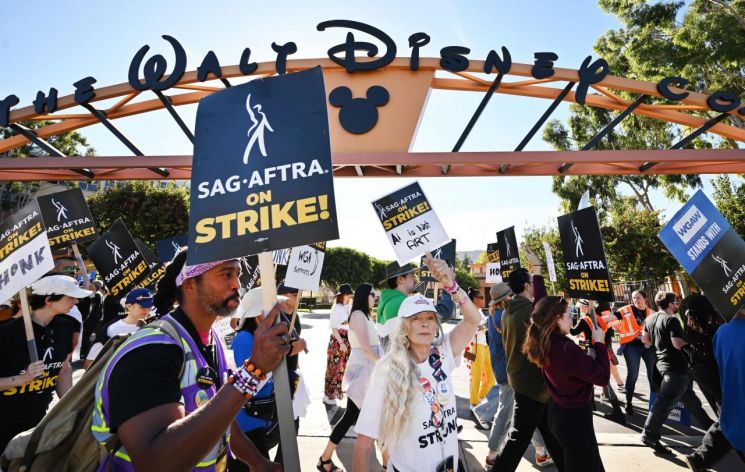
According to Bloomberg and other sources, the Hollywood actors and broadcasters union (SAG-AFTRA) stated in a press release that "this afternoon, we approved a tentative agreement with the Alliance of Motion Picture and Television Producers (AMPTP) to end the 118-day strike," and that "the strike will officially end at 12:01 a.m. on the 9th."
Although the actors' union has ended the strike for now, the union board is scheduled to review the agreement on the 10th, and union members must ratify it for final confirmation. The actors' union has approximately 160,000 members.
The tentative contract agreed upon by labor and management has not yet been disclosed. However, it is reported to include provisions to raise actors' minimum wages, increase residual payments from streaming platforms, and expand contributions to health and pension insurance. Additionally, new rules regarding the use of artificial intelligence (AI), as requested by the actors, have been established.
Foreign media expect the agreement to increase production costs for studios. Bloomberg described it as a "contract valued at over $1 billion (approximately 1.3 trillion KRW)," while The New York Times (NYT), citing analysts, reported that "due to labor cost impacts, production costs are estimated to rise by 10%, leading studios to reduce the number of projects to manage these expenses."
Accordingly, NYT reported that Hulu, NBCUniversal's streaming service, is expected to produce about two-thirds the number of programs next year compared to last year.
Earlier, the actors' union began striking on July 14 against AMPTP, representing Hollywood's major corporations. Together with the Writers Guild of America (WGA), which had started striking in May, they conducted a simultaneous strike, marking an unprecedented crisis of actors and writers striking together in Hollywood for the first time in 63 years since 1960.
During the strike, actors expressed dissatisfaction that they were not properly receiving residual payments?royalties paid to writers and actors each time viewers watch content on streaming platforms. They also voiced concerns about their images and voices being used without permission in AI-generated content and demanded preventive measures.
After the writers' union ended their strike in late September following tough negotiations with AMPTP, the actors' union faced difficulties in final negotiations over streaming residuals and AI issues. As the strike prolonged, both sides experienced hardships, but active negotiations last week ultimately led to a tentative agreement.
The actors' strike caused significant economic damage, with the release and production schedules of Hollywood blockbuster films being repeatedly delayed. An analyst from the Milken Institute estimated that the strike caused losses amounting to $6 billion in California alone.
© The Asia Business Daily(www.asiae.co.kr). All rights reserved.


















