On the 8th, President Yoon Seok-yeol nominated former Supreme Court Justice Cho Hee-dae (66, Judicial Research and Training Institute class 13) as the candidate for Chief Justice of the Supreme Court. This came 33 days after the National Assembly, led by the Democratic Party, rejected the appointment consent bill for former nominee Lee Gyun-yong.
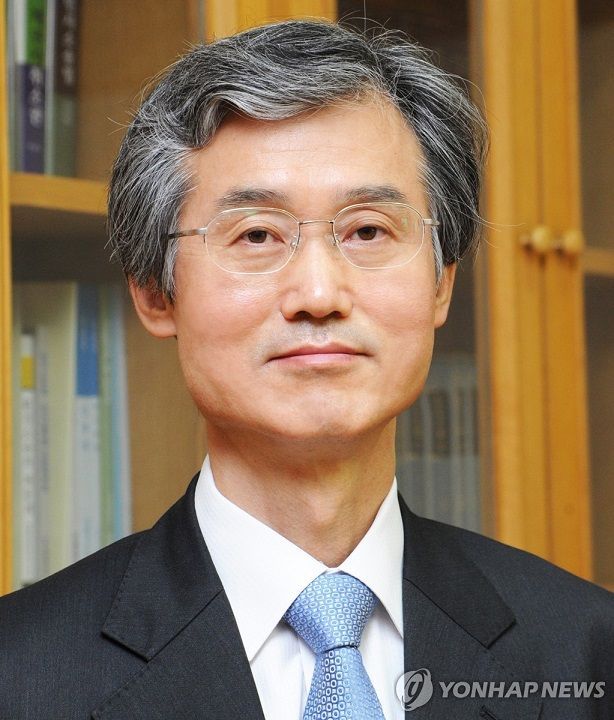
After the failure of the Lee nominee, the vacancy in the Chief Justice position prolonged due to the retirement of former Chief Justice Kim Myung-soo, and with the term of Constitutional Court Chief Justice Yoo Nam-seok expiring on the 10th, an unprecedented situation where both heads of the judiciary would be vacant was inevitable. In this context, the Presidential Office had the urgent task of finding a candidate as quickly and as safely as possible.
With such stringent conditions attached to the new candidate selection, carefully chosen individuals from the Presidential Office were frequently mentioned as potential candidates for Chief Justice. Alongside former Supreme Court Justice Cho Hee-dae, strong candidates included Seoul High Court Chief Judge Kang Min-gu (65, class 14), Seoul High Court Chief Judge Hong Seung-myeon (59, class 18), Supreme Court Justice Oh Seok-jun (61, class 19), and Constitutional Court Justice Kim Hyung-doo (58, class 19).
Since the candidates were meticulously selected from the start, none were lacking in 'ability and capacity,' each possessing distinct strengths and characteristics. Chief Judge Kang Min-gu is recognized as one of the court's leading experts in IT and legal tech. Chief Judge Hong Seung-myeon is well-equipped with solid expertise, having served as Supreme Court Judicial Researcher, Senior Judicial Researcher, and Chief Judicial Researcher. Justice Oh Seok-jun is known for his affability and excellent interpersonal and communication skills, having served twice as the Supreme Court spokesperson. Among those mentioned, he is the most popular within the court. Justice Kim Hyung-doo is a top expert in legal theory and, having served as Deputy Director of the Court Administration Office, has a deeper understanding of court administration than other candidates.
Since former nominee Lee was unable to pass the National Assembly due to allegations of failing to report unlisted stocks of his wife's company, the Presidential Office reportedly placed particular emphasis on the candidates' financial status while assessing their suitability. One leading candidate was excluded from consideration despite having no disqualifications as a legal professional because both his and his wife's families were originally wealthy.
Another candidate reportedly declined once before Lee's nomination but agreed to personnel screening this time. There were rumors that he was once unofficially designated as a candidate, but his close ties to a certain corporation were seen as a negative factor.
Yet another candidate was more favored by the Presidential Office than by himself, but despite this favorable situation, he failed the final screening because the Presidential Office viewed negatively his past rulings that sided with labor groups. It was also said that he was considered lacking in the drive to overturn and correct the Kim Myung-soo Supreme Court system. As with the decision on nominee Lee Gyun-yong, a common narrative around the Yongsan Presidential Office was that the key selection criteria were 'someone who stands in opposition to the Kim Myung-soo Supreme Court' and 'someone who can change everything about the Kim Myung-soo court.'
During this screening process by the Presidential Office, the names of leading candidates changed daily in political and legal circles. Typically, when the President selects a candidate for Chief Justice, the Court Administration Office is somewhat informed. The selected candidate often unofficially or indirectly signals the Court Administration Office before the announcement, asking them to prepare for the confirmation hearing. However, this time, even senior officials at the Court Administration Office reportedly did not know who was selected or when the announcement would be made until the night of the 7th, the day before the announcement. This was also the case with nominee Lee Gyun-yong, who was not even mentioned as a candidate until the night before the announcement.
In this atmosphere, the most prominent figures until the last moment, along with former Justice Cho, were Constitutional Court Justice Kim Hyung-doo. Since his appointment as a Constitutional Court Justice in March, he actively expressed conservative separate opinions in the court's deliberations and decisions starting in April, which reportedly caught President Yoon's attention.
However, some in the legal community found it puzzling that Justice Kim was mentioned as a leading candidate, citing his past progressive rulings. Former and current prosecutors recalled that as Chief Judge of the Seoul Central District Court, he acquitted former Prime Minister Han Myeong-sook in the first trial of the Political Funds Act case and sentenced former Seoul Education Superintendent Kwak No-hyun to a fine in the first trial. Although he recognized Kwak's guilt for giving a bribe of 200 million won to a competing candidate and was indicted and detained, he sentenced him to a 30 million won fine instead of imprisonment, allowing him to retain his position as superintendent. The prosecution, which had expected a prison sentence, felt severely blindsided. At that time, President Yoon was the head of the Supreme Prosecutors' Office's Central Investigation Division 2. Prosecutors currently working at the Yongsan Presidential Office, including Legal Secretary Joo Jin-woo, are unlikely to have forgotten this case, leading to speculation that his nomination was unlikely.
Ultimately, President Yoon chose former Justice Cho. Cho is classified as a conservative principled jurist. After Chief Justice Kim Myung-soo's inauguration, when the judiciary leaned progressive, Cho frequently issued dissenting opinions and was nicknamed 'Mr. Dissent.' However, the fact that he and Constitutional Court Chief Justice nominee Lee Jong-seok are alumni of Kyungbuk High School and Seoul National University Law School reportedly made President Yoon hesitate until the end. Having both heads of the judiciary as TK (Daegu-Gyeongbuk) elites from Kyungbuk High School and Seoul Law School could be a burden for the ruling party in next year's general election.
Cho, who is 66 this year, will serve just over half of the six-year term due to the mandatory retirement age of 70 and retire in June 2027. The presidential election will be held in March that year, and President Yoon will step down two months later in May, so the next Chief Justice will be appointed by the new president. This could positively influence the passage of the appointment consent bill in the National Assembly. For the Democratic Party, if they succeed in regime change, they can immediately nominate their preferred candidate as Chief Justice, providing a hidden justification for consenting to Cho's appointment. Paradoxically, Cho is a candidate who imposes less burden on President Yoon regarding the processing of the appointment consent bill.
© The Asia Business Daily(www.asiae.co.kr). All rights reserved.
!["The Woman Who Threw Herself into the Water Clutching a Stolen Dior Bag"...A Grotesque Success Story That Shakes the Korean Psyche [Slate]](https://cwcontent.asiae.co.kr/asiaresize/183/2026021902243444107_1771435474.jpg)
















