120,000 Residents but Neglected Transportation Welfare in Sinwol-dong 'Zero'
"Current Preliminary Feasibility Study Standards Make It Difficult to Consider Future Demand"
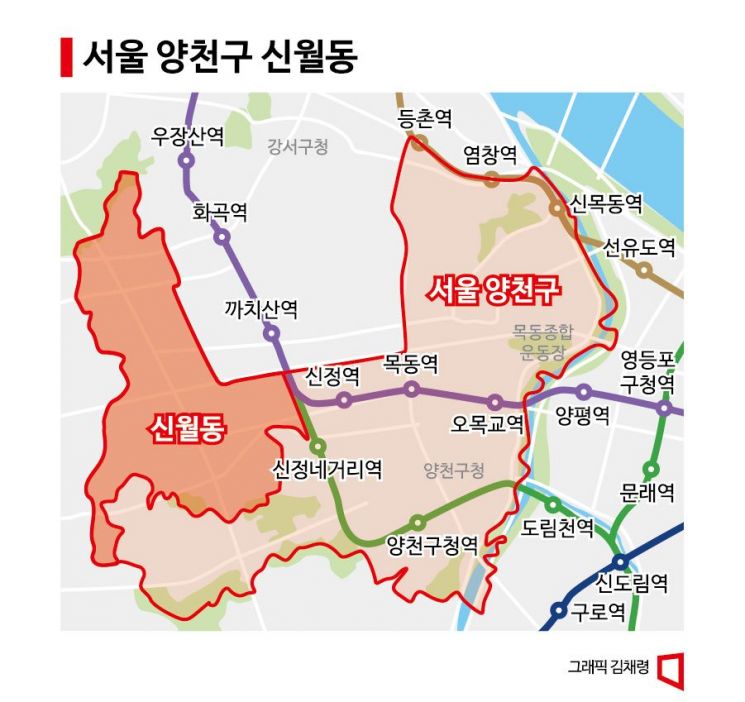 Shinwol-dong in Yangcheon-gu, Seoul, has a population of 120,000, comparable to Jung-gu, but there is not a single subway station passing through Shinwol-dong, indicating poor transportation welfare.
Sinwol-dong in Yangcheon-gu, Seoul, is a fairly large neighborhood with a population of 120,000 residents. It is about half the size of Jung-gu, Seoul (9.98㎢) and has a slightly smaller population than Jung-gu (131,800 people). In terms of scale, it is comparable to most neighborhoods in Seoul.
There is one thing missing in Sinwol-dong, and that is a 'subway station.' Although there are 624 subway stations in the Seoul subway system, none of these stations allow boarding or alighting in Sinwol-dong.
Daechi-dong in Gangnam-gu, which has a smaller area and population than Sinwol-dong (3.79㎢, 81,400 people), has six subway stations on three lines including Line 2, the Suin-Bundang Line, and Line 3, with two transfer stations, and even the construction of the Metropolitan Area Express Railway (GTX) is underway. Considering that there are only six subway stations in the entire Yangcheon-gu, the public transportation gap between the two areas is incomparable.
It is difficult to directly compare Sinwol-dong and Daechi-dong due to factors such as floating population and surrounding conditions. However, the sense of deprivation felt by Yangcheon-gu residents as Seoul citizens is significant.
The relative underdevelopment of Sinwol-dong is largely due to the influence of Gimpo International Airport, which opened in 1958. Since airplanes pass over Sinwol-dong and its surroundings, there are height restrictions, making high-density development impossible. Because high-density development is difficult, even if there is an attempt to bring in new railway networks, it cannot receive good scores in preliminary feasibility studies conducted by the Ministry of Economy and Finance and the Korea Development Institute (KDI). This, in turn, becomes a factor that hinders regional development.
Lee Ki-jae, the mayor of Yangcheon-gu, appeals, “Subway barren areas like Sinwol-dong, which have no subway stations at all, cannot receive good evaluations in economic feasibility assessments of preliminary feasibility studies,” and urges, “Please accept the issue of regions excluded from railway transportation as a problem for everyone and prepare effective improvement measures.”
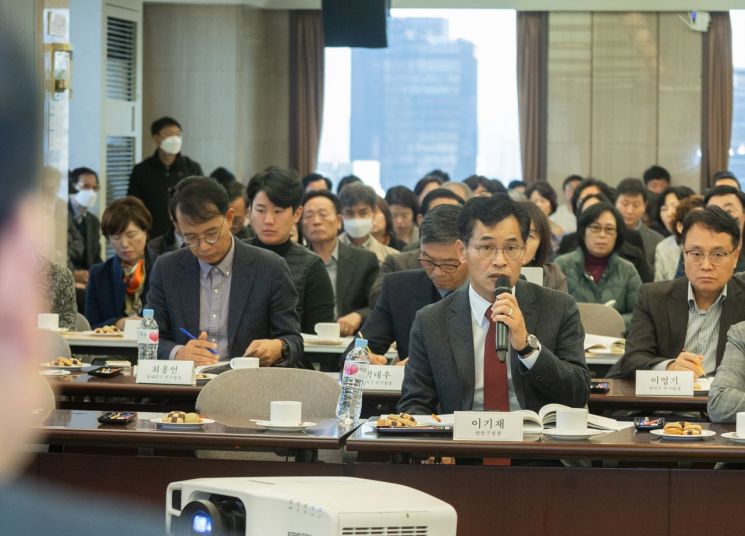 Lee Gijae, Mayor of Yangcheon District Office, is speaking at the Preliminary Feasibility Study System Improvement Grand Debate held on the 7th. (Photo by Yangcheon District Office)
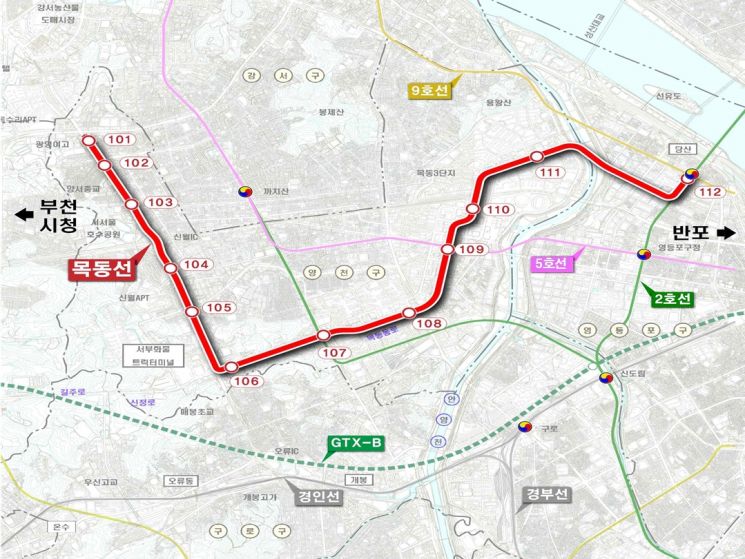
Yangcheon-gu’s plans to bring railway transportation networks for residents' transportation welfare have repeatedly faced setbacks. The light rail Mokdong Line plan, which connects a 10.87 km section from Sinwol-dong through Sinjeong-dong and Mok-dong to Dangsan Station in Yeongdeungpo-gu, is currently stalled at the preliminary feasibility study stage by the Ministry of Economy and Finance.
The preliminary feasibility study results for the Gangbuk Transversal Line, which crosses east to west Seoul from Mokdong Station to Cheongnyangni Station, are the same. The plan to connect the Line 2 branch line from Gajisan Station to Sinwol Sageori to resolve the transportation blind spot in Sinwol-dong is also undecided.
At the ‘Preliminary Feasibility Study System Improvement Grand Debate’ hosted by Seoul City on the 7th, Mayor Lee raised his voice, emphasizing the urgent need to establish railway transportation networks connecting the outskirts of Seoul. He explained that public transportation should be approached from the perspective of transportation welfare, and that the scope of preliminary feasibility study criteria should be expanded to reflect future demand such as population growth, enabling proactive expansion of transportation infrastructure.
Mayor Lee also said, “Yangcheon-gu has large-scale development plans underway, including the reconstruction of Mokdong Apartments, development of the Western Truck Terminal, and redevelopment of Sinwol-dong, but the current preliminary feasibility study criteria only reflect approved projects, so not considering future demand resulting from these is also a problem.”
© The Asia Business Daily(www.asiae.co.kr). All rights reserved.



















