Government to Introduce Standard Sales Ratio in Tax Base for Distilled Liquor
Industry Expects Resolution of Domestic Liquor Discrimination and Price Reduction Effects
As the government has begun revising the liquor tax system to lower the prices of domestically produced soju and whiskey, the liquor industry has welcomed the move, saying it will resolve the relatively unfavorable tax structure for domestic liquors compared to imported ones and also achieve price reduction effects.
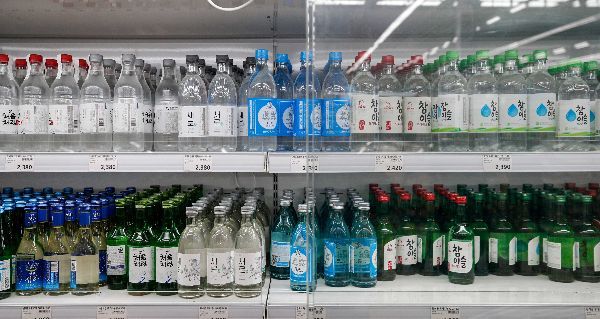
According to the government on the 8th, the Ministry of Economy and Finance and the Korea Customs Service are considering introducing a standard sales ratio to the tax base for domestic distilled liquors such as soju and whiskey. The standard sales ratio is a rate applied when calculating the individual consumption tax base. Since the amount calculated by multiplying the ex-factory price by the standard sales ratio is excluded from the tax base, it has the effect of lowering the prices of soju and whiskey by that amount. The standard sales ratio was previously introduced in July to enhance tax fairness between domestic and imported cars.
Distilled liquor companies such as soju and whiskey have expressed a welcoming response to the government's liquor tax revision efforts. A representative from Company A said, “Liquors subject to the specific tax, such as soju and whiskey, have been experiencing reverse discrimination compared to imported liquors, and the characteristics of the liquor industry, which has a high proportion of marketing and sales management costs, have deepened this reverse discrimination structure. We positively evaluate the current push to apply the standard sales ratio as a measure to resolve reverse discrimination in the tax base for domestic liquors.” A representative from Company B also forecasted, “Currently, it is difficult to produce distilled liquors domestically due to the specific tax, but if taxes are reduced, production of distilled liquors will increase, and more products with improved quality will likely be released.”
However, since this matter is a government policy issue and the detailed contents or timing of the amendment have not been decided, companies are cautious about making specific evaluations. A representative from Company C said, “We have not yet received direct notification from the National Tax Service regarding this matter,” and added, “We need to conduct additional internal simulations to determine what effects the introduction of the standard sales ratio method will have on price discounts and other factors.”
Meanwhile, this liquor tax revision effort is a follow-up measure to opinions raised during last month’s National Assembly audit that emphasized the need to improve fairness between domestic and imported liquors. The standard sales ratio system has been suggested as necessary to enhance fairness between imported and domestic liquors. Imported liquors use the import declaration price as the tax base, while domestic liquors use the sum of manufacturing costs and sales management expenses, resulting in a heavier tax burden on domestic liquors due to this structure.
The liquor tax revision is gaining momentum as soju prices have been rising consecutively. HiteJinro has decided to raise the ex-factory price of soju, including Chamisul, by 7% starting from the 9th. This is due to a 10.6% increase in the price of ethanol, the raw material for soju, and a 21.6% rise in bottle prices.
© The Asia Business Daily(www.asiae.co.kr). All rights reserved.
















