On the First Day of Short Selling, Deposits Increase by 3 Trillion Won... Trading Volume Surges to 8 Trillion Won Then Drops to 4 Trillion Won
High-Frequency Trading Rises, Market Capitalization Turnover Rate Increases to 1% Range
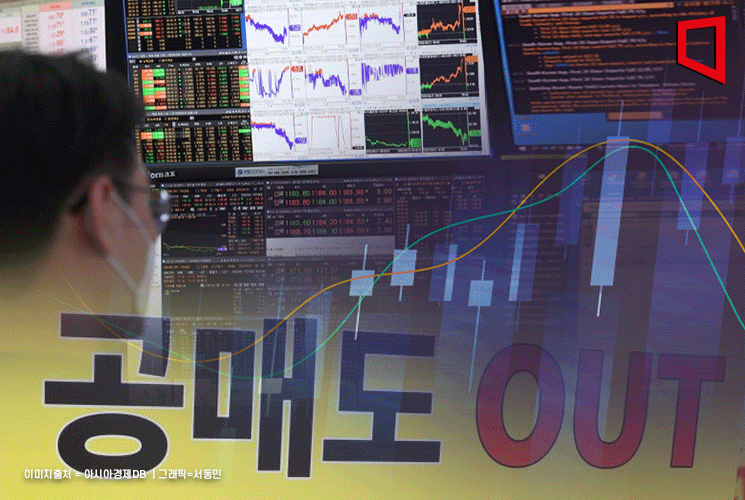
Since the temporary ban on short selling, volatility in the domestic stock market has also been increasing. On the first day of the temporary short selling ban (the 6th), trading volume surged by 8 trillion won compared to the previous trading day, but it decreased by 4 trillion won on the second day. Deposits also increased by 3 trillion won as short selling was blocked. Market experts predict that stock market volatility will remain high for the time being.
According to the Korea Financial Investment Association, investor deposits were recorded at 47.4297 trillion won on the 6th. This is a 6.1% increase from 44.682 trillion won on the previous trading day (the 3rd). On the 3rd, deposits fell below 45 trillion won, marking the lowest level in 10 months this year. Investor deposits refer to funds entrusted to securities firms by investors to purchase stocks, serving as standby funds for stock purchases. The increase in deposits on the first day of the temporary short selling ban is interpreted as a result of buying momentum entering the market, expecting a price rise due to short covering (buying stocks to close out short positions).
Trading volume also surged on the first day of the temporary short selling ban but dropped within a day. On the first day of the ban, trading volume reached 15.2254 trillion won, about twice the 8.0409 trillion won recorded on the 3rd. However, on the 7th, 3.8415 trillion won flowed out, leaving a total of 11.3839 trillion won.
Generally, an increase in deposits and trading volume is interpreted as an expansion of stock market trading scale. However, looking at the rapidly changing trends in deposits and trading volume after the temporary short selling ban, it is pointed out that only stock market volatility has increased. A representative from Kiwoom Securities said, "The increase in deposits and trading volume was largely due to the temporary event of the 'temporary short selling ban,'" adding, "Since the ban did not enhance the attractiveness of the domestic stock market, we need to observe the trend to see if risk appetite has spread."
Looking at the market capitalization turnover rate, it can be confirmed that high-frequency trading has actually increased. The turnover rate is an indicator that shows the frequency of stock ownership changes among investors in the stock market. A higher turnover rate means more short-term trading. The market capitalization turnover rate was 0.64% (October 31), 0.53% (November 1), 0.65% (November 2), and 0.64% (November 3) before the temporary short selling ban. However, it recorded 1.1% on the first day and 1.0% on the second day of the ban.
A representative from Mirae Asset Securities said, "As the market showed rollercoaster-like behavior due to the temporary short selling ban, short-term trading increased," expressing concern that "if liquidity decreases from here and signs of economic downturn become clearer, stock prices may fall further, dampening investor sentiment."
© The Asia Business Daily(www.asiae.co.kr). All rights reserved.

















