LG Chem Turns Profit in Q3 This Year
Lotte Chemical Also Expected to Escape Deficit
Hanwha Solutions Up 13.6% QoQ
Reduced Oversupply in China and Stable Oil Prices
Demand Uncertainty and Other Risk Factors Remain
"Our country is the world's 4th largest chemical power (based on ethylene) with the resilience to overcome difficulties. Although the market conditions are still unfavorable, they are gradually recovering, and innovation and challenges are ongoing. I view this positively and will work even harder." (Shin Hak-cheol, Vice Chairman of LG Chem)
"Petrochemicals is a cyclical industry with ups and downs. In my view, we have passed the bottom. Dawn is near." (Kim Kyo-hyun, Chief Representative of Lotte Group's Chemical Division and Vice Chairman of Lotte Chemical)
"Although the situation is difficult, if we overcome the crisis together, we can prevail. We will continue to pursue new attempts." (Nam Yi-hyun, Head of Hanwha Solutions Chemical Division)
At the 'Chemical Industry Day' event held on the 31st of last month at Lotte Hotel in Jung-gu, Seoul, the CEOs of the domestic petrochemical 'Big 3' showed strong confidence in overcoming the recession and a firm determination to turn the crisis into an opportunity to upgrade their competitiveness.
LG Chem recently announced a surprising performance by ending losses in the petrochemical sector that had continued since Q4 last year and turning a profit in Q3 this year. Hanwha Solutions Chemical Division posted an operating profit increase of over 10% compared to the previous quarter, and Lotte Chemical, which is about to announce its results this week, is also expected to turn a profit. The market is cautiously optimistic that the petrochemical industry has hit bottom. After a cold summer, petrochemical companies are now facing a warm winter.
The most eye-catching aspect of LG Chem's earnings announcement was the escape from losses in the petrochemical sector. The petrochemical division, which recorded losses totaling 230 billion KRW in Q4 last year and the first half of this year, posted an operating profit of 36.6 billion KRW in Q3 this year. LG Chem stated, "The lagging effect occurred due to rising oil prices, and high value-added product groups such as materials for solar panel films (POE) and carbon nanotubes (CNT) showed solid profitability." The lagging effect refers to the margin difference caused by a time gap of more than a month between the purchase and sale of crude oil. The price of the raw material naphtha rose after purchase, resulting in inventory valuation gains.
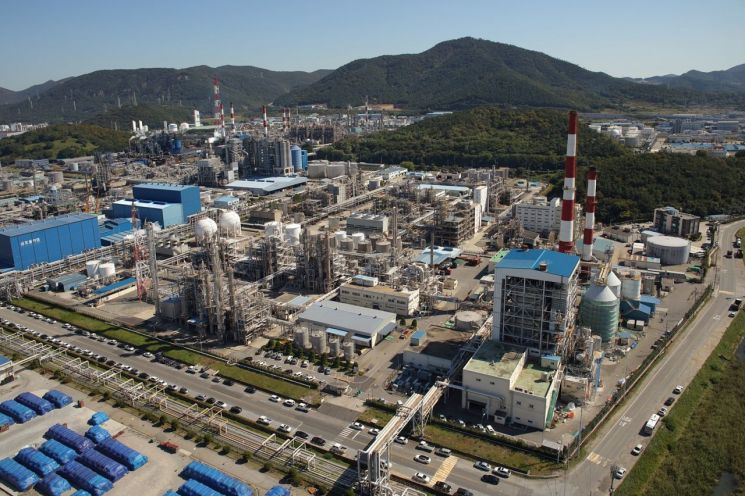
Lotte Chemical, which will announce its earnings on the 9th, is also expected to break free from five consecutive quarters of losses. After returning to a loss (-21.4 billion KRW) in Q2 last year, Lotte Chemical posted losses exceeding 800 billion KRW in Q3 and Q4 of the same year, and operating losses continued until Q2 this year. The total loss during this period approached 1 trillion KRW. Lee Dong-wook, a researcher at IBK Investment & Securities, said, "With one-time costs removed from the previous quarter, inventory effects are expected to increase due to rising raw material prices," adding, "The spread (difference between raw material and final product prices) of general-purpose petrochemical products also slightly improved compared to the previous quarter." IBK Investment & Securities forecast an operating profit of 20.4 billion KRW, and SK Securities projected 4.1 billion KRW.
Hanwha Solutions Chemical Division posted an operating profit of 55.9 billion KRW in Q3 this year. Although this is more than a 50% decrease compared to the previous year, sales margins of major products such as polyethylene (PE) and polyvinyl chloride (PVC) increased, resulting in a 13.6% rise compared to the previous quarter. The petrochemical industry has suffered from worsening market conditions to the extent that the government even formed a 'Petrochemical Emergency Response Council.' Since last summer, the industry struggled due to oversupply from China and the impact of high oil prices. However, with China's demand recovery, reduced expansion scale, and relatively stable international oil prices despite the Israel-Palestine conflict, the market has begun to revive. LG Chem recently restarted the Yeosu NCC Plant 2, which had been shut down since April amid rumors of a sale. Due to improved marketability of some products, they decided to increase ethylene production.
An industry insider said, "The ethylene spread (the price difference between ethylene and its raw material naphtha), which is a profitability benchmark for the petrochemical industry, is improving." He added, "Although it was initially expected that the Middle East situation would raise international oil prices and worsen market conditions, the price of West Texas Intermediate (WTI) crude oil, which had been rising since August, peaked at $94 at the end of September and has since fallen to $80." He explained, "At the same time, naphtha prices have dropped significantly, but product prices have fallen less."
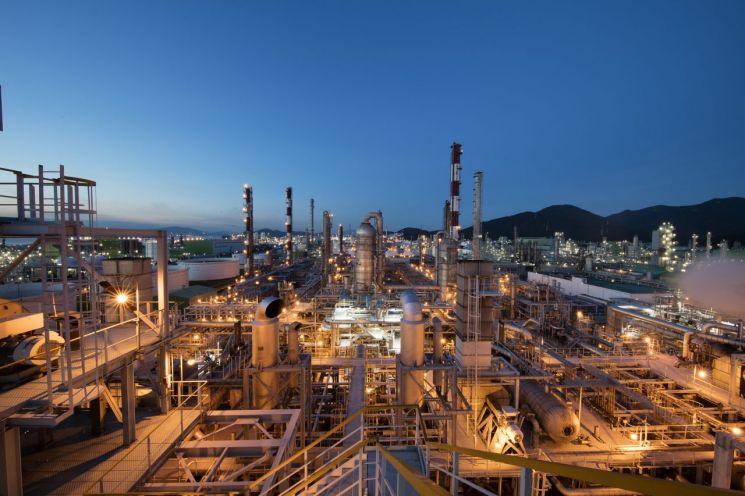
Performance forecasts are also favorable. Among 10 securities firms surveyed over the past week, 8 expect LG Chem's petrochemical division to post an average operating profit of 24.5 billion KRW in Q4 this year. For Hanwha Solutions Chemical, 7 out of 10 securities firms forecast an average operating profit of 38.9 billion KRW. Lotte Chemical is expected to turn a profit with an estimated operating profit of 48.5 billion KRW in Q4. Next year, LG Chem's petrochemical division and Lotte Chemical are expected to maintain profitability compared to this year, while Hanwha Solutions Chemical Division is projected to record 241.1 billion KRW in operating profit, a 45% increase from this year's forecast of 161.5 billion KRW (average of 10 securities firms).
However, there are also risk factors such as uncertainty in core (chemical) demand, sluggishness in non-chemical sectors (battery materials, renewables, etc.), and an unfavorable macroeconomic environment. Lee Jin-myung, a researcher at Shinhan Investment Corp., said, "While China's influence remains significant in the domestic chemical market, the global presence of domestic companies is gradually weakening," adding, "Strategic changes are urgently needed at this crossroads of survival." The petrochemical industry, a representative export sector, has depended on exports to China for over 50% in the past 20 years. However, as China aggressively expanded capacity and increased self-sufficiency in general-purpose products, the export ratio to China has decreased to 40% this year.
To overcome these difficulties, the petrochemical industry is seeking profitability improvement through new businesses. LG Chem announced in July 2021 that it will invest 10 trillion KRW by 2025, focusing on battery materials, eco-friendly materials, and new drugs as its three new growth engines. It is also actively restructuring its business. In the first half of this year, LG Chem demolished the SM plant in Daesan, Chungnam, and plans to build an eco-friendly product plant such as biodegradable plastics by 2028 on the site. It sold its low-profit OLED polarizer business for 1.1 trillion KRW in September. Lotte Chemical is expanding its business into battery materials (copper foil, cathode foil, electrolyte, separator) and making investments. It is also securing funds by selling non-core overseas businesses such as subsidiaries in China and Pakistan, increasing the proportion of high value-added products and eco-friendly materials businesses.
© The Asia Business Daily(www.asiae.co.kr). All rights reserved.


















