Owners of villas, officetels, and residential lodging facilities are raising their voices, demanding deregulation for non-apartment properties. They argue that the government's real estate policies are primarily focused on apartments and call for measures to revitalize transactions of non-apartment residences, which account for half of the housing market.
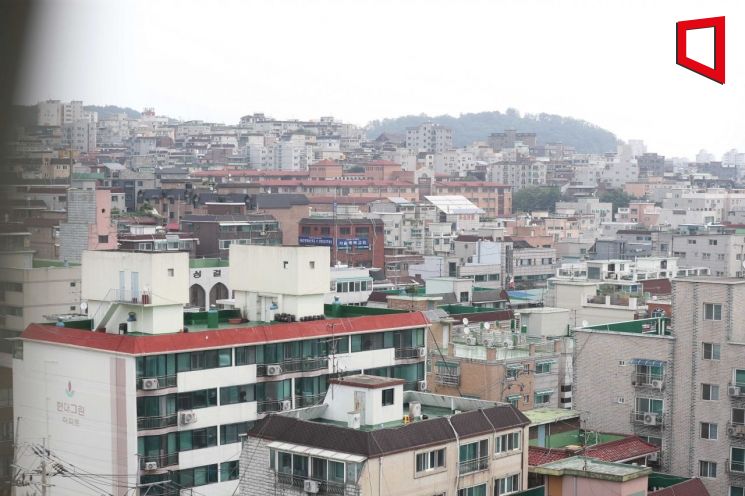 On the 11th, the view of a villa village from a building in Yangcheon-gu, Seoul, where villa transaction volumes are increasing. Photo by Moon Honam munonam@
According to the industry on the 7th, the National Residence Federation, the National Officetel Council, and the National Landlord Federation recently formed the 'National Non-Apartment Federation' and held a 'Press Conference Urging Normalization of the Non-Apartment Housing Market' in Jongno-gu, Seoul. The federation stated, "The current non-apartment housing market is on the brink of collapse, and only substantial deregulation policies can ensure its survival."
According to the Seoul Real Estate Information Plaza, from the beginning of this year to August, the number of multi-family and row house lease transactions was 47,581, a 24.7% decrease compared to the same period last year (63,203 transactions). Officetel lease transactions dropped by 26.7%, from 21,881 to 16,030.
They are demanding the government to ▲improve the rental deposit guarantee cap system ▲revise the officetel taxation system ▲and devise measures to prevent the illegalization of residential lodging facilities.
The government lowered the guarantee insurance subscription criteria in May this year from 150% of the publicly announced price (150% of the official price and 100% of the lease price ratio) to 126%. The rental deposit return guarantee insurance, which landlords subscribe to, will also apply the 126% official price standard starting July next year.
A registered landlord A, who operates one-room and two-room buildings in Yeonje-gu, Busan, said, "While I agree with the necessity of policies to reduce the limit on the lease deposit return guarantee, the level is beyond what landlords can bear." He appealed, "If lease demand worsens and existing tenants increasingly leave, landlords could unknowingly be accused of lease fraud."
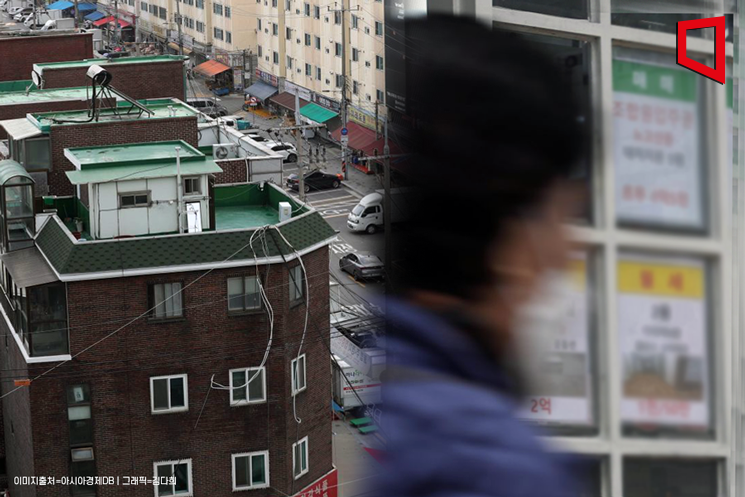
Landlords claim that to find tenants, they must lower lease prices to meet the guarantee insurance subscription criteria, but it is becoming difficult to return deposits from existing lease contracts, causing reverse leases. However, given the simultaneous occurrences of lease price declines due to falling housing prices, reverse leases, and lease fraud, it seems difficult to reduce the lease guarantee insurance limit.
Officetel owners have requested revisions to the taxation system. Since August 2020, the government has included residential officetels in the housing count and imposes comprehensive real estate tax and other holding taxes if the officetel is registered as a residence.
At the time of transfer, officetels are also classified as housing, so if the owner already has a house, they are considered multi-homeowners and face increased capital gains tax. Additionally, acquisition tax surcharges apply when acquiring additional houses. However, acquisition tax is uniformly applied at a 4% rate regardless of use.
There is also opposition to the imposition of enforcement penalties when residential lodging facilities (Saengsuk) are used as residences. Earlier, on September 25, the government decided to extend the grace period for enforcement penalties on residential use of Saengsuk by one year and two months until the end of next year, while clearly maintaining the principle that Saengsuk cannot be recognized as residential.
Meanwhile, due to recent lease fraud, worsening construction conditions, and soaring construction costs caused by inflation, the non-apartment market is in a state of collapse. According to the Ministry of Land, Infrastructure and Transport, the number of non-apartment permits nationwide until September this year was 36,013 households, about half compared to the same period last year, raising concerns about supply shortages in two to three years.
There are concerns that if the supply shortage of officetels, villas, and other representative residences for low-income and young people leads to price instability, the housing cost burden on vulnerable groups could increase.
© The Asia Business Daily(www.asiae.co.kr). All rights reserved.
![Clutching a Stolen Dior Bag, Saying "I Hate Being Poor but Real"... The Grotesque Con of a "Human Knockoff" [Slate]](https://cwcontent.asiae.co.kr/asiaresize/183/2026021902243444107_1771435474.jpg)

















