Police Begin Investigation of Former Representative Lee Jun-seok
Controversy Over Past Politician 'Super Chat' Donations
Election Commission Prohibits Politicians' SNS Revenue Activities
Recently, former People Power Party leader Lee Jun-seok's fundraising through membership support on the YouTube channel 'Yeouido Reconstruction Association' has come under investigation by the police for alleged violations of the Political Funds Act, bringing the issue of politicians violating the Political Funds Act on social networking services (SNS) back into the spotlight.
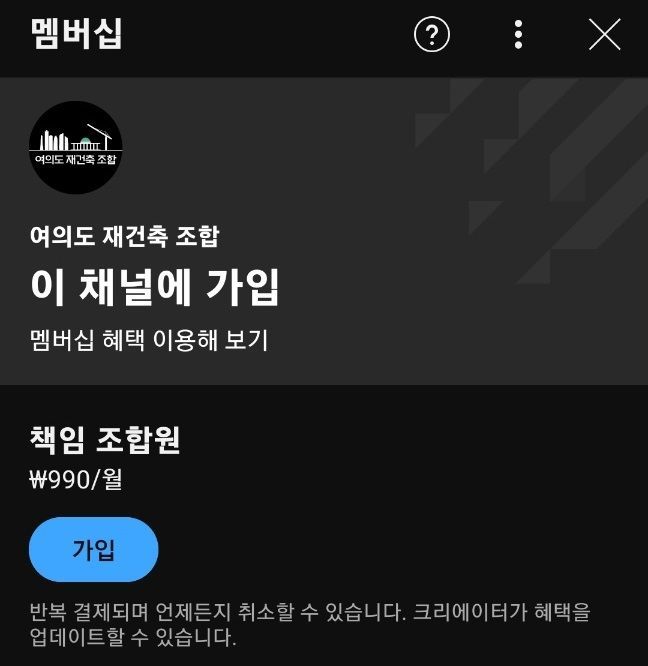
According to the Seoul Yeongdeungpo Police Station on the 6th, the police began an investigation on the 3rd after receiving a complaint alleging that former leader Lee violated the Political Funds Act. The complaint stated that Lee was receiving sponsorship funds through YouTube memberships and using them for his political activities, which could constitute a violation of the Political Funds Act, and requested an investigation. A police official said, “The case is currently at the pre-indictment investigation stage,” and added, “It is difficult to confirm detailed charges or the progress of the investigation.”
Lee’s side maintains that since the profits accrue to a third-party corporation, there is no legal issue. However, Park, the owner of the Yeouido Reconstruction Association YouTube channel, is a close aide of Lee. Park said, “I left the People Power Party leader’s office and registered a corporation for YouTube content production.” On the 30th of last month, Lee introduced a paid membership system called 'Responsible Member' at 990 KRW per month. According to Lee, about 2,000 people joined within three hours of launching the membership, amounting to approximately 1.98 million KRW. On the same day, Lee posted on Facebook, stating, “During the last party convention, the communication system between party members and supporters who supported the ‘Cheon Ah-yongin’ (Cheon Haram, Suncheon Gap Party Committee Chairman; Heo Eun-ah, lawmaker; Kim Yong-tae, former youth supreme committee member; Lee Gi-in, Gyeonggi Provincial Assembly member) candidate was not established, so timely information could not be provided,” and added, “I intend to try using the YouTube membership function.”
This is not the first controversy over political donations through YouTube. In 2019, the National Election Commission (NEC) sent a notice to Hong Joon-pyo, then leader of the Liberty Korea Party (predecessor of the People Power Party), to stop fundraising through YouTube 'Super Chat' (a chat function where viewers donate a certain amount). At that time, former Roh Moo-hyun Foundation director Yoo Si-min also received Super Chats on YouTube, but the NEC ruled that he was not subject to sanctions because he was a non-politician who had declared retirement from politics, which sparked controversy. Additionally, in August this year, Jang Ye-chan, a Supreme Council member of the People Power Party, was reported for violating the Political Funds Act after receiving a 190,000 KRW Super Chat during a live broadcast on his YouTube channel. Jang informed on his SNS that he had received a notice from the NEC stating that if donation acts such as Super Chats do not recur, no further action would be taken.
The NEC has established ‘Standards Related to Social Media Revenue Activities under the Political Funds Act’ to regulate such activities. These standards define receiving donations through platforms such as YouTube (Super Chat), AfreecaTV (Star Balloon), and podcasts (Cash) operated by individuals engaged in political activities as violations of the Political Funds Act. Even if the operator is not ostensibly a political actor, if the purpose, method, and internal relationships indicate that the political actor effectively operates the platform, receiving donations is prohibited. Those who have declared retirement from politics, lack eligibility to run for office, or are volunteers, unpaid staff, or ordinary party members are exempt.
However, experts argue that the NEC’s standards still leave room for interpretation, such as in the ‘substantial operation evaluation,’ and that clearer regulations are needed. As online platforms continue to increase, similar issues may arise repeatedly, highlighting the need for proactive regulatory refinement. Attorney Lee Ah-young of Gangnam Law Firm said, “It is most important to determine who ultimately benefits from YouTube membership revenues, and legal judgments should be made accordingly.” Professor Lee Jun-han of Incheon National University’s Department of Political Science and Diplomacy stated, “The NEC should establish clear standards based on precedents that everyone can recognize.”
© The Asia Business Daily(www.asiae.co.kr). All rights reserved.

















