5-term Seo Byung-su "Seoul is too much of a megacity, causing problems"
"Will incorporating Gimpo into Seoul solve the hellish subway issue?"
Regarding the incorporation of Gimpo City into Seoul, which the People Power Party is pushing as party policy, Seo Byung-soo, a five-term veteran lawmaker and former mayor of Busan Metropolitan City, publicly expressed opposition. This follows Daegu Mayor Hong Joon-pyo's negative view on the incorporation of Gimpo City into Seoul, marking similar criticism among current lawmakers.
On the 5th, Seo posted on his Facebook, stating, "Seoul is not a mega city because it is a problem, but it is a problem because it is too much of a mega city," and criticized, "Making Seoul even more 'mega' is an act that undermines South Korea's competitiveness."
Seo said, "Seoul is already a 'super ultra mega city.' Is the problem that the population of 10 million in Seoul has shrunk to about 9.4 million?" He added, "How many people have left Seoul because they dislike it? Most of them have been pushed out to the outskirts because they cannot afford the expensive housing prices. Therefore, we must ensure that metropolitan citizens do not have to endure 'hell trains' during their commutes. That is what politics should do."
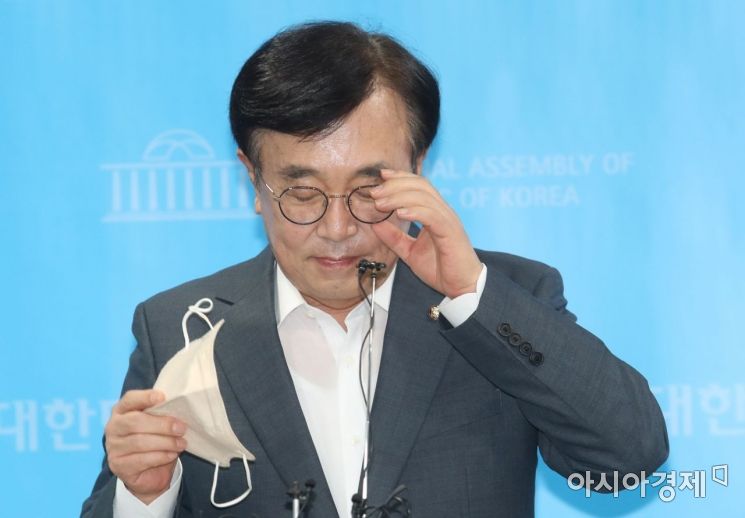
He questioned, "But if we attach Gimpo to Seoul, will the hardship of commuting on hell trains be resolved? Will Seoul's competitiveness increase if Gimpo City is incorporated as Gimpo-gu, Seoul Special City?" and pointed out, "The original concept of a mega city was to transform South Korea's unipolar metropolitan system into a multipolar system including the Southeast and Honam regions to enhance the nation's overall competitiveness."
He continued, "Are they going to use such a mega city to make Seoul even more 'mega'? Seoul is already sucking in South Korea's money and people. The very idea of attaching Gimpo to Seoul is proof of that," and criticized, "What about regions that cannot even join the metropolitan area? They have long been on the brink of extinction. Forty percent of cities, counties, and districts have been designated as population decline areas."
He also emphasized, "'Regional competitiveness is national competitiveness' is not only President Yoon Seok-yeol's promise and my conviction but also a constitutional value of South Korea," adding, "This is why a Presidential Commission on the Local Era was established and a 'Comprehensive Plan for the Local Era' was announced."
Seo said, "If you want to preempt issues by confronting the Democratic Party, which often resorts to reckless remarks, shouldn't you at least prepare by reading reports from the Bank of Korea?" and citing a Bank of Korea report, he said, "Concentration in the metropolitan area deepens regional disparities, and such polarization negatively affects the national economy. Metropolitan concentration also poses a significant risk to growth potential."
Seo is the first current lawmaker to publicly oppose the incorporation of Gimpo City into Seoul. Outside the National Assembly, Daegu Mayor Hong Joon-pyo has also expressed negative views.
On the 1st, Mayor Hong wrote on Facebook, "While the President is holding daily meetings making balanced national development the most important policy in this era of decentralization, is the policy to expand Seoul, which has already become a mega city, further enlarging it and intensifying metropolitan concentration really appropriate? Isn't it a policy that goes against the times? Everything is confusing."
Those in favor of incorporating Gimpo City into Seoul argue that it is to fulfill the aspirations of Gimpo citizens.
Cho Kyung-tae, chairman of the People Power Party's special committee on the incorporation of Gimpo City into Seoul, said in a KBS radio interview on the 6th, "In the past, administrative or political leaders led changes in administrative systems, but now the flow should go from the bottom up. The incorporation of Gimpo reflects the desires and demands of local residents and Gimpo citizens."
He added, "Other countries are already pursuing ultra-strong mega city policies," and said, "If we fail to properly read global trends, we may fall behind in urban planning or administrative reorganization in other countries, which could reduce our global competitiveness."
© The Asia Business Daily(www.asiae.co.kr). All rights reserved.
!["The Woman Who Threw Herself into the Water Clutching a Stolen Dior Bag"...A Grotesque Success Story That Shakes the Korean Psyche [Slate]](https://cwcontent.asiae.co.kr/asiaresize/183/2026021902243444107_1771435474.jpg)
















