Short Selling Balance Top Sector Stock Momentum
Financial Investment Industry "Going Against Global Standards"
Concerns Over Market Manipulation Forces Running Rampant
Financial Authorities' 'Order' Shaken by Unjustified Extreme Measures
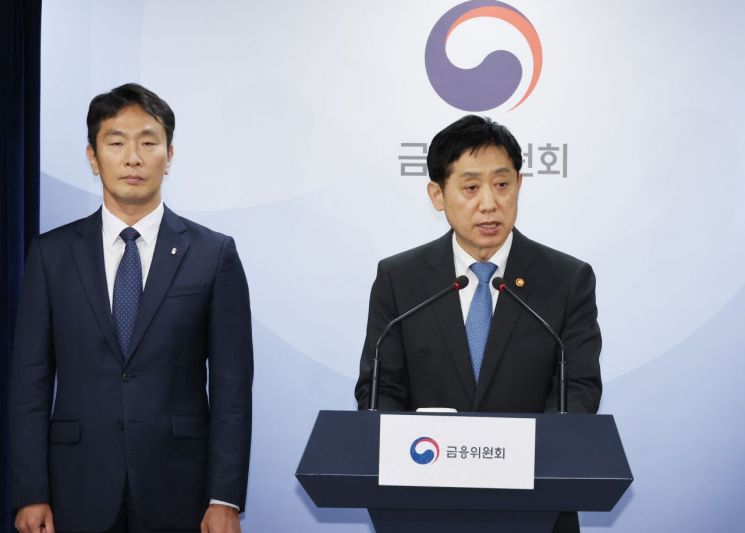
Financial authorities announced on the 6th that short selling will be completely banned for eight months starting from the stock market opening. It is expected that the effects of the short selling ban will be immediately felt, especially in sectors with high short selling activity. However, controversies are expected to continue regarding changes in foreign investor demand and policy credibility.
Han Ji-young, a researcher at Kiwoom Securities, stated on the 6th, "Controversies surrounding the implementation of the short selling ban, such as the medium- to long-term direction of the domestic stock market, changes in foreign investor demand, and the inclusion in the MSCI developed markets index, are expected to persist for some time."
Han added, "Even if side effects emerge, it is expected to take time before they are felt. However, at the sector or individual stock level, the effects of the short selling ban are likely to be felt starting this week."
According to the Korea Exchange, as of November 1, the short selling balance amount in the KOSPI increased from 9.3 trillion won at the beginning of the year to 11.4 trillion won. During the same period, the KOSDAQ increased from 2.8 trillion won to 5.6 trillion won.
Han explained, "Growth stocks such as secondary batteries and biotech, as well as Chinese consumption-themed stocks like duty-free, travel, and distribution, occupy the top ranks in short selling balance amounts. Considering this, there is a possibility that short-term price momentum will form centered on sectors with high short selling balances starting this week."
The Financial Services Commission announced the day before, "Short selling will be completely banned from the 6th until June 28 of next year." Accordingly, new short selling entries will be blocked for all stocks in the KOSPI 200 and KOSDAQ 150 indices, which previously allowed short selling, as well as all securities in the KOSPI, KOSDAQ, and KONEX markets. However, as with previous full short selling bans, borrowed short selling by market makers and liquidity providers will be allowed.
This is the fourth time in history that a full short selling ban has been implemented. Previously, financial authorities temporarily banned short selling entirely during the 2008 global financial crisis, the 2011 European debt crisis, and the 2020 stock market crash due to COVID-19.
This measure differs in that it was taken without clear macroeconomic reasons such as a financial crisis. Inside and outside the financial authorities, there are concerns that financial policy is being swayed for political purposes ahead of next year's general election.
A CEO in the financial investment industry said, "Borrowed selling is not short selling. If borrowed short selling is also completely banned, hedge funds will find it difficult to operate, and trust in the domestic capital market could decline. Strong punishment of illegal short selling would lead to improvement."
Another senior official in the financial investment industry pointed out, "There is also a side effect where market manipulators can freely drive up stock prices due to the full short selling ban. If extreme market measures are taken without justification under political pressure, the 'command' of financial authorities in the market could be shaken."
© The Asia Business Daily(www.asiae.co.kr). All rights reserved.

















