Likely to Raise Prices to Secure Revenue
Uncertain Improvement in Tobacco Industry Performance
The government is reportedly considering raising cigarette prices next year to secure tax revenue. Although the Ministry of Economy and Finance has stated that no such review has taken place, the industry is leaning toward the possibility of a price increase based on past cases.
'10-Year Cycle Theory of Cigarette Price Increases'... Industry Forecasts "Prices to Rise by 500~3500 Won Early Next Year"
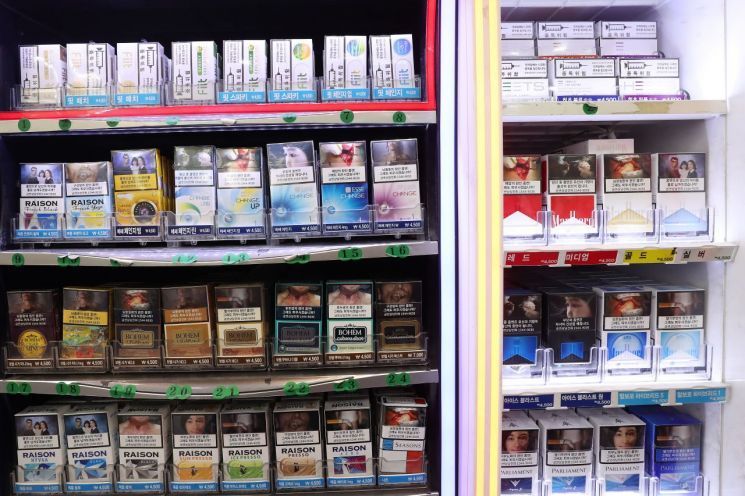
According to the tobacco industry on the 2nd, industry insiders have recently judged that cigarette prices will rise next year and have begun preparations accordingly. The '10-year cycle theory' of cigarette prices is being mentioned again.
The 10-year cycle theory means that the government significantly raises cigarette prices once every 10 years.
In the past, the government raised prices by 500 won in 2004 and announced a 2000 won increase in the second half of 2014, applying the increased price from January of the following year. Cigarette prices were raised twice in 10-year cycles.
Based on past cases, it is speculated that a decision to raise cigarette prices will be made next year and applied from the year after next. However, some in the industry analyze that since the government is struggling with tax revenue shortages, the increase could be announced as early as the third quarter after the general election.
Price Increase for Heated Tobacco Products Also Inevitable... Difficult to Secure Tax Revenue Due to Differential Application of Various Levies
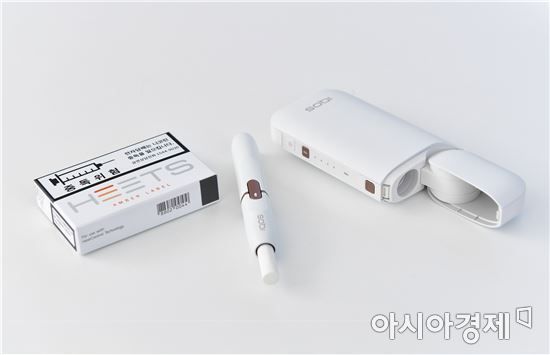
The price of a pack of conventional cigarettes (yeoncho) is expected to rise by 500 to 3500 won, reaching up to 8000 won, and if conventional cigarette prices rise, a price increase for heated tobacco products also seems inevitable.
Over the past three years (2020?2022), cigarette sales volume increased by 1.1%, but tax burdens decreased from 12 trillion won to 11.8 trillion won.
The difficulty in securing tax revenue through cigarette taxes is partly due to an increase in people quitting smoking as prices rise, but also because the market share of heated tobacco products has increased from 2.2% in 2017 to 16.5% in the first half of this year.
This is because heated tobacco products receive differential tax burdens based on the premise that they are less harmful than conventional cigarettes (yeoncho).
Likely to Align with OECD Average... But Difficult for Tobacco Industry to Improve Performance
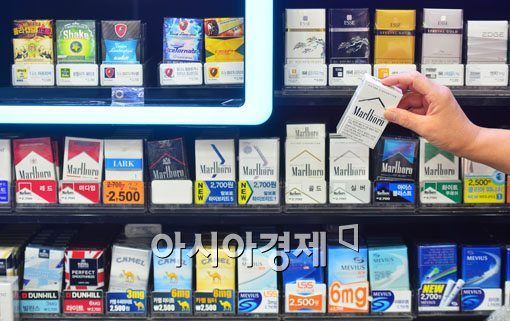
The fact that cigarette prices in South Korea are only about half of the OECD average of 8,000 won is also expected to be considered at the government level. Additionally, compared to recent inflation rates, cigarette prices have effectively decreased, which is also likely to influence the price increase.
As cigarette prices rise, the number of people quitting smoking naturally increases, so there is hope that this will contribute to improving public health. However, from the tobacco industry's perspective, it may be difficult to expect improved performance since this decision reduces market demand amid rising production costs.
The rise in production costs is partly due to worsening crop yields caused by abnormal weather such as heatwaves and floods in major tobacco leaf producing countries like Brazil and India over recent years. Since tobacco leaves require about a year of curing after cultivation, it is not possible to rapidly increase production volume, which has also contributed to raising production costs.
According to the National Statistical Portal of Statistics Korea, the tobacco leaf import price index recorded 106.43 as of last September. This index is based on 2015 (100) and is the highest in over eight years since July 2015 (106.34).
© The Asia Business Daily(www.asiae.co.kr). All rights reserved.



















