Rice Management Act Originating from 1960s Food Shortage... Paved the Way for Diluted Soju Popularization
Steady Alcohol Content Reduction Competition Since Launch... Halved in 100 Years
'Chamisul' and 'Cheoeumcheoreom' Established as Two Pillars Supporting Domestic Soju Market
Expanding Overseas with K-Content Interest... Domestic Consumption Decline Remains a Challenge
"The history of soju in our country is imbued with the pain of the era from the 1960s to the 1980s. That is why even today, when we say 'we are suffering,' we often turn to soju. The word 'soju' involves the collective unconsciousness of Koreans." Yoon Dae-nyeong, "On Soju and Beer, Their Warmth and Coldness"
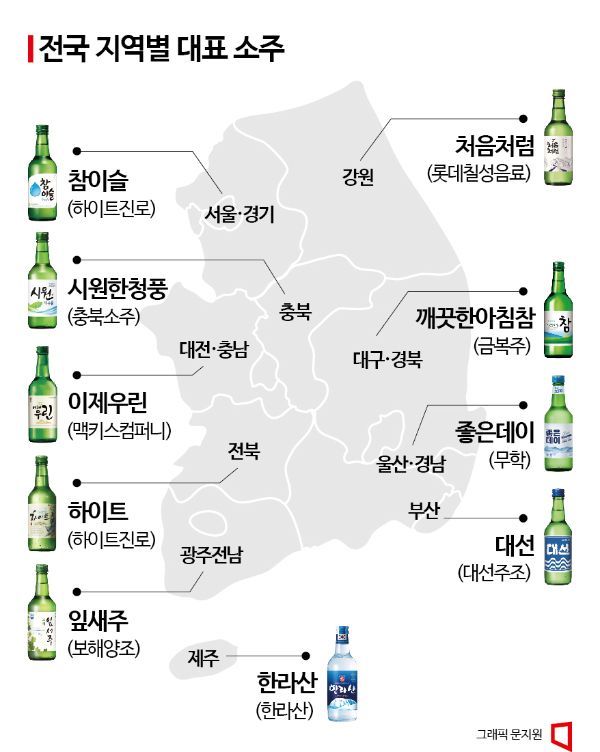
Soju played a role in soothing the sorrows of the common people during the economic development era of the 1960s to 1980s. Since it originated in a heartbreaking era of food shortages, its main mission and reason for existence at that time was to wash away the bitter fatigue and anguish of daily life. However, soju is no longer just a name swallowed down with a hard day. It has evolved into an icon that not only accompanies Koreans through joy, anger, sorrow, and pleasure but also changes with the times?lowering alcohol content and reducing sugar as Korea entered the ranks of developed countries through industrialization?showcasing the trendiness of K-culture to the world.
Diluted Soju, The Beginning of 100 Years
It is said that soju drinking began in Korea during the late Goryeo period under King Chungnyeol. Soju originated from Mongolia, and the brewing method was introduced through Gaeseong and Andong, where the Yuan dynasty established logistics bases during its rule over Goryeo. Distilled liquors like soju are known to have first been developed around the 10th century in the Arab world, where alchemy advanced, using distillation technology. The vaporized liquor looked like drops of sweat, so it was called ‘Arak,’ meaning sweat. This spread to various regions and was called ‘Araki’ in Mongolia, ‘Alki’ in Manchuria, and ‘Aragilju (阿喇吉酒)’ in Gaeseong, Goryeo, which adopted distilled liquor through the Yuan dynasty.
Soju is originally a distilled liquor made by further refining fermented grain alcohol. The main components of alcohol and water boil at different temperatures: 78°C and 100°C, respectively. When heating fermented liquor, alcohol evaporates more than water first. Collecting and cooling this vapor turns it back into liquid, resulting in a colorless, transparent liquor with a higher alcohol content than the original fermented liquor. This process produces distilled liquor. Generally, the volume reduces to one-third to one-tenth when making distilled liquor from fermented liquor, requiring additional processing. Because of this, distilled soju was more expensive and rare, and during the Joseon Dynasty, it was a drink for the upper class.
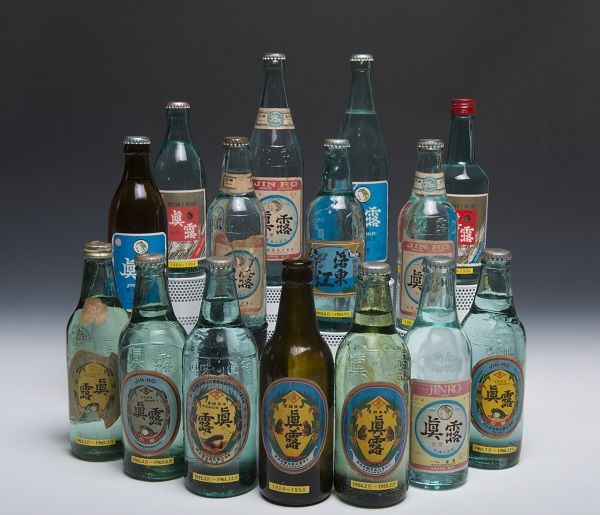
The soju familiar to us today is diluted, not distilled. Diluted soju is made by fermenting starch extracted from inexpensive raw materials like cassava, continuously distilling it to obtain high-purity ethanol, then diluting it with water and adding sweeteners, as the name suggests. The production of diluted soju began over 100 years ago. In June 1919, the first diluted soju factory, Joseon Soju, was established in Pyongyang, and Jincheon Brewing Company, the predecessor of Jinro Soju, was founded in October 1924 in Yonggang County, South Pyongan Province. Although thousands of diluted soju factories spread in the 1920s, many closed after difficulties during liberation and the Korean War.
Endless Competition to Lower Soju Alcohol Content
The establishment of diluted soju as Korea’s representative liquor was greatly influenced by the Grain Management Act revised by the Park Chung-hee government in 1965. Korea’s rice production could not meet demand until self-sufficiency was achieved in 1977. Facing chronic rice shortages, the government enacted the Grain Management Act, banning the use of rice for brewing liquor. From then on, diluted soju made with cheaper raw materials instead of rice emerged as a substitute for existing alcoholic beverages.
The trend of lowering alcohol content, which continues today, also began with the Grain Management Act. As diluted soju, which dilutes alcohol with water, began mass production to solve food shortages, the alcohol content started to decrease. Jinro Soju’s alcohol content was 35% when first launched in 1924. It dropped to 30% in 1965 and then to 25% in 1973. For over 20 years afterward, all companies maintained the same alcohol content, solidifying the perception of ‘soju = 25%.’
The 25% barrier was broken in 1998 when HiteJinro introduced 23% ‘Chamisul.’ The low-alcohol competition then accelerated. Soju with 22% in 2001 and 21% in 2004 followed, and in 2006, a 19.8% soju broke the 20% barrier. In March this year, Chungcheong-based liquor company Mackiss Company launched a 14.9% product, lowering it below 15%. In 100 years, the alcohol content has been reduced to less than half.
The Two Giants of Soju: 'Chamisul' and 'Cheoeumcheoreom'
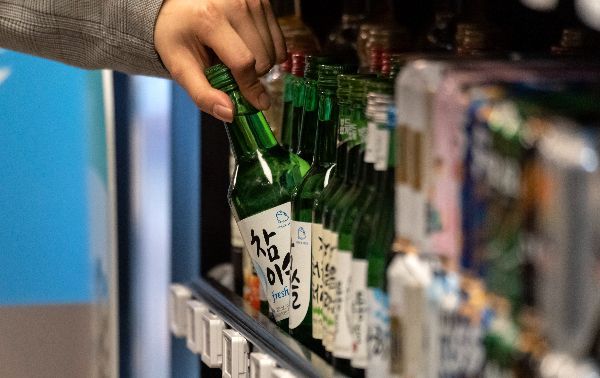
The current structure of the domestic soju market was formed after the late 1990s. Jinro, which had dominated the market for over 40 years since becoming number one in the 1970s, broke the perception of ‘soju is 25%’ by launching the low-alcohol product Chamisul in October 1998. Chamisul was introduced with the goal of making soju’s image softer and cleaner by adopting bamboo charcoal filtration. Actress Lee Young-ae was chosen as the advertising model, a groundbreaking choice at a time when soju models were mostly male. Since then, top female stars have continued to appear in soju advertisements.
Emphasizing a soft and clean taste, Chamisul has strengthened its brand power through nine product renewals and currently holds the top market share as the largest soju brand. According to the UK liquor media Drink International, Jinro, the collective brand name for HiteJinro’s soju including Chamisul, maintained the world’s number one sales position for 22 consecutive years last year.
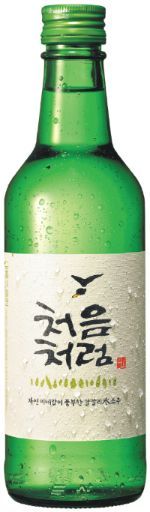 The first Lotte Chilsung Beverage 'Cheoeum Cheoreom' launched in 2006
The brand competing against HiteJinro’s Chamisul and Jinro is Lotte Chilsung Beverage’s ‘Cheoeumcheoreom.’ Cheoeumcheoreom was launched in February 2006 by Doosan Liquor before Lotte Chilsung acquired it. Previously, Doosan Liquor had acquired Gangwon-do soju brand Gyeongwol and sold ‘Green Soju’ in Seoul and Gyeonggi areas, but struggled after Chamisul’s appearance in 1998, and the ‘San Soju’ launched in 2000 also failed to gain traction. Cheoeumcheoreom was introduced as a fresh start. To increase brand recognition, it adopted a four-syllable name, unlike the mostly two- or three-syllable names of existing soju brands.
Last September, Cheoeumcheoreom launched the zero-sugar soju ‘Saero,’ intensifying the chase against HiteJinro. Saero added distilled soju to preserve the original soju taste and preemptively applied nutritional labeling for alcoholic products, which will be mandatory from next year. It also used a clear bottle to highlight a premium and trendy image, surpassing 100 billion KRW in sales within one year of launch.
55 Bottles Per Person Annually, From ‘National Liquor’ to K-Alcohol
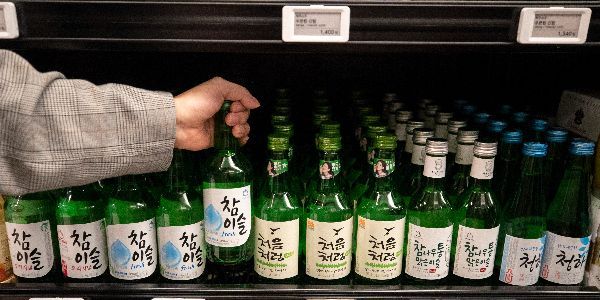
About 55 bottles. This is the average annual amount of soju (360ml standard) consumed by one adult in Korea. Despite competition with various alcoholic beverages such as traditional liquors, whiskey, and wine, and rising consumer prices due to increases in raw material and logistics costs, domestic consumption is gradually declining. According to the National Tax Service, the shipment volume of diluted soju was 917,959 kiloliters in 2018 but dropped 6.1% to 861,540 kiloliters last year over four years. Soju manufacturers are seeking solutions by expanding overseas markets. According to customs export-import statistics, general soju exports reached 93.327 million USD (about 115.4 billion KRW) last year, a 13.2% increase from the previous year. The category of other mixed liquors, including fruit soju, also saw high popularity, with exports reaching 88.965 million USD (about 110 billion KRW), up 9.9% year-on-year. Export volume also hit a record high at 54,000 tons in both value and quantity.
Soju is recognized by foreigners as Korea’s representative liquor. According to a survey conducted by the Korea Agro-Fisheries & Food Trade Corporation from September to October last year targeting 8,500 foreigners in 15 countries worldwide, 41.2% identified soju as the Korean liquor they knew best. By continent, the highest recognition was in Southeast Asia at 68.1%, followed by Northeast Asia (51.2%), North America (30.3%), Oceania and Latin America (27%), and Europe (17.2%).
Expanding Overseas Investment to Southeast Asia and the Americas
HiteJinro exports its flagship soju Chamisul to over 80 countries, achieving double-digit growth every year from 74.86 million USD in 2020 to a record 120 million USD last year. Lotte Chilsung Beverage, promoting Cheoeumcheoreom and Soonhari, exports soju to about 50 countries, recording growth rates around 15% annually from 2019 for three years, with a 48% increase last year. Their products are most popular in the US, Canada, the Philippines, Australia, and Vietnam.
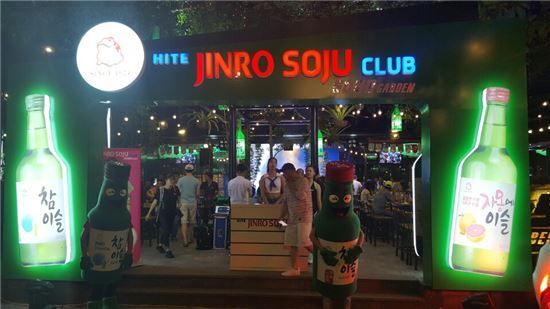
These companies are focusing on building infrastructure for globalizing soju, especially in countries where their brand recognition is high. HiteJinro recently laid the groundwork for building a soju production plant in Vietnam through its overseas subsidiary HiteJinro Singapore by signing a sublease contract with the operator of the Green I-Park Industrial Complex in Thai Binh Province, Vietnam. This is HiteJinro’s first attempt to establish a production plant overseas. The company expects that soju exports, which have grown 15% annually over the past six years, will triple compared to 2022 within ten years. A HiteJinro official explained, "We made this decision considering the continuous growth of overseas soju markets, cost competitiveness, and the possibility of launching local brands and products."
Lotte Chilsung Beverage recently acquired management rights of ‘Philippine Pepsi,’ with annual sales of about 1 trillion KRW, incorporating it as a subsidiary to secure independent management rights. Through this, they plan to expand influence in the Southeast Asian market with their own beverages and soju brands. A Lotte Chilsung Beverage official said, "We are considering a long-term plan to produce soju locally and use this as a foothold to distribute to neighboring regions."
© The Asia Business Daily(www.asiae.co.kr). All rights reserved.



















