Villa Jeonse Demand Concentrates on Small Apartments
Mid-to-Large Apartments See Decline in Jeonse Demand
As the villa market's aversion to jeonse continues to spread due to the jeonse fraud crisis, monthly rent for multi-family houses (villas) is steadily rising. Tenants seeking jeonse are turning their attention to apartments, causing apartment jeonse prices to soar.
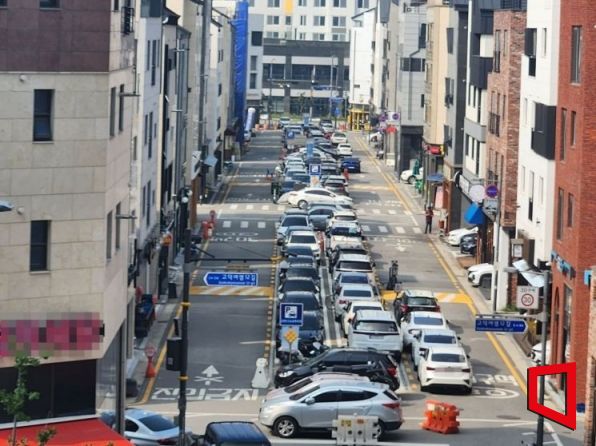
According to the Monthly Housing Price Trend released by the Korea Real Estate Board on the 25th, the nationwide villa monthly rent price index has been steadily increasing. It is analyzed that the villa jeonse market has further contracted as the government strengthened the criteria for subscribing to the jeonse deposit return insurance as one of the measures against reverse jeonse difficulties. Since May this year, the government has lowered the jeonse deposit limit from 1.5 times the publicly announced price to 1.26 times.
The jeonse villa monthly rent price index has been rising since it turned up by 0.03% in March, continuing to increase by ▲0.10% in April ▲0.08% in May ▲0.11% in June ▲0.12% in July ▲0.13% in August ▲0.16% in September, showing an expanding upward trend. Seoul also entered an upward trend with a 0.02% increase in February and showed a 0.25% rise in September.
Analyzing monthly rent by type, the quasi-monthly rent (deposit equivalent to 12 to 240 months of monthly rent) price index shows an upward trend. Nationwide, the increase rates were ▲0.01% in July ▲0.03% in August ▲0.04% in September. During the same period, Seoul saw increases of 0.11%, 0.10%, and 0.13%, respectively.
On the other hand, the quasi-jeonse (banjeonse, deposit exceeding 240 months of monthly rent) price index has recorded a significant decline. Nationwide, it has been on a downward curve since December last year through this year, dropping by 0.34% in September.
Although the government has issued several measures against jeonse fraud, the popularity of monthly rent with smaller deposits is interpreted as reflecting concerns over not being able to get deposits back on time due to jeonse fraud and reverse jeonse difficulties.
There is also a trend of existing villa jeonse demand shifting toward small apartments and the like. In fact, the proportion of jeonse in the Seoul apartment lease market is increasing, contrary to the villa market. According to the Seoul Real Estate Information Plaza, the jeonse ratio rose from 55.2% in January this year to 61.1% in September.
KB Financial Group Management Research Institute also made such a forecast in its report "Checking the Possibility of Jeonse Switching to Monthly Rent" released last month. Senior Researcher Son Eun-kyung said in the report, "The villa market in the metropolitan area, which has been a major target of jeonse fraud, is expected to continue switching to monthly rent for the time being," adding, "From the tenant's perspective, monthly rent preference will continue to protect the lump sum entrusted as a jeonse deposit."
On the other hand, "For medium to large apartments with large deposit amounts, switching to monthly rent will impose a housing cost burden that tenants' income levels cannot easily bear, making it inevitable to maintain the jeonse system," and "Especially since the jeonse system serves as a stepping stone for home ownership, demand will continue," it forecasted.
© The Asia Business Daily(www.asiae.co.kr). All rights reserved.
![Clutching a Stolen Dior Bag, Saying "I Hate Being Poor but Real"... The Grotesque Con of a "Human Knockoff" [Slate]](https://cwcontent.asiae.co.kr/asiaresize/183/2026021902243444107_1771435474.jpg)
















