Bank of Korea, 'October Consumer Sentiment Survey'
Interest Rate Expectation Index Rises by 10 Points
Housing Price Expectation Index Falls for the First Time in 11 Months
The consumer sentiment index declined for the third consecutive month in October as international oil prices fluctuated due to the war between Israel and the Palestinian armed group Hamas, and domestic demand remained sluggish amid high inflation. The consumer sentiment index fell below the baseline of 100 for the second consecutive month amid expectations that the tightening stance will continue due to prolonged high interest rates in the U.S., and the expected inflation rate, which reflects future inflation expectations, rebounded for the first time in eight months due to concerns over price instability caused by geopolitical risks.
According to the "October Consumer Survey Results" released by the Bank of Korea on the 25th, the Consumer Confidence Index (CCSI) for this month was 98.1, down 1.6 points from the previous month, showing a declining trend for the third consecutive month. The consumer sentiment index exceeded 100 for the first time in 13 months in June and remained above 100 for three consecutive months until August. However, it fell below 100 again in September due to delayed global economic recovery, including in China, turning pessimistic, and continued to decline this month.
The CCSI is an indicator calculated using six of the 15 indices that make up the Consumer Survey Index (CSI): current living conditions, outlook on living conditions, household income outlook, consumption expenditure outlook, current economic conditions, and future economic outlook. A value above 100 indicates optimistic consumer sentiment compared to the long-term average (2003?2022), while a value below 100 indicates pessimism.
As inflation concerns grew due to Middle East risks, the expected inflation rate, which forecasts consumer price increases over the next year, rose by 0.1 percentage points from September to 3.4%. This is the first increase in the expected inflation rate in eight months since February.
Hwang Hee-jin, head of the Bank of Korea’s Statistics and Survey Team, said, "Consumer sentiment declined due to growing concerns over price instability caused by geopolitical risks, sluggish domestic demand amid high inflation, and the prolonged tightening stance. There was also an announcement of public utility fee hikes in October, and prices of agricultural products rose, leading to an increase in responses expecting continued price rises."
The housing price outlook index, which had remained high until last month, fell 2 points from 110 to 108, marking a decline for the first time in 11 months. Although nationwide housing sale prices continue to rise, the index dropped 2 points due to the impact of rising loan interest rates following increases in market interest rates. A housing price outlook index above 100 means that more consumers expect housing prices to rise than to fall, and this index had shown a continuous upward trend this year.
Hwang explained, "Although nationwide housing sale prices are on the rise, some consumers seem to think there are limits to housing price increases due to recent rises in market interest rates, including mortgage rates. The increased economic uncertainty caused by the Israel-Hamas war is also a factor."
The interest rate level outlook index (128) rose by 10 points due to the prolonged high inflation and high interest rate environment and sustained high market interest rates. The index itself was the highest since January (132), and the increase was the largest in two years and seven months since March 2021.
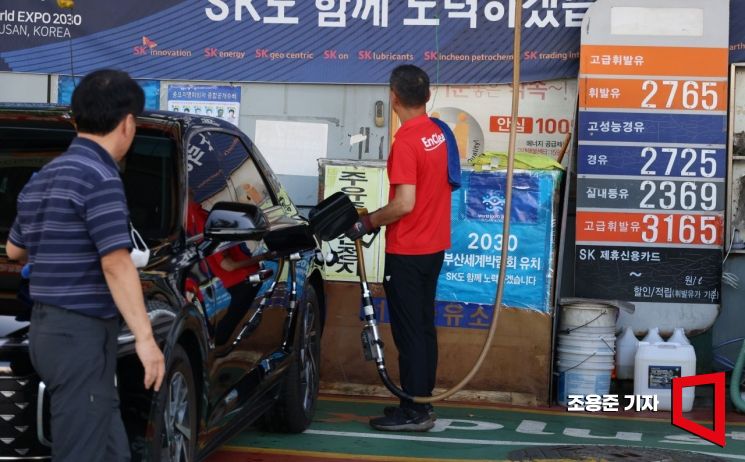
The price level outlook index (151) rose by 4 points as the perceived inflation remained high due to a reduction in the decline of petroleum product prices caused by rising international oil prices, increases in agricultural product prices, and public utility fee hikes.
© The Asia Business Daily(www.asiae.co.kr). All rights reserved.
![Clutching a Stolen Dior Bag, Saying "I Hate Being Poor but Real"... The Grotesque Con of a "Human Knockoff" [Slate]](https://cwcontent.asiae.co.kr/asiaresize/183/2026021902243444107_1771435474.jpg)
















