Rights Offering for Financial Structure Improvement
Major Shareholder's Stake Expected to Drop from 46.05% to 38.08%
Favorable Capital Increase Environment Anticipated if Nickel Prices Rebound
General trading company STX has launched a rights offering to improve its financial structure and secure funds for nickel purchases. However, as the stock price continues to decline, there is a growing possibility that the amount raised will be smaller than planned.
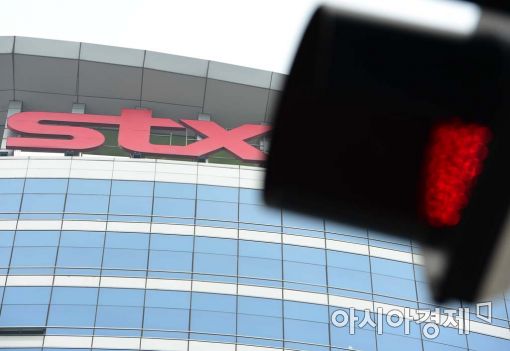
According to the Financial Supervisory Service, STX is pursuing a rights offering with a shareholder allocation of 0.31 new shares per existing share, followed by a general public offering of unsubscribed shares. The planned issue price for the new shares is 10,860 KRW, and a total of 7.36 million shares will be issued. The final issue price will be confirmed on December 5. The company aims to raise 79.9 billion KRW, of which 40 billion KRW will be used to repay short-term borrowings, 30 billion KRW will be allocated for nickel purchases, and the remaining 9.9 billion KRW will be spent on purchasing wood pellets.

As of the first half of this year on a consolidated basis, STX’s capital erosion ratio stands at 22.84%. If the capital erosion ratio exceeds 50%, the company may be designated as a management item under the listing regulations of the Korea Exchange. In recent years, STX’s performance has been sluggish due to the ongoing Russia-Ukraine war, the COVID-19 pandemic, and trade disputes between the U.S. and China. The company recorded net losses for three consecutive years from 2019 to last year and failed to return to profitability in the first half of this year. The debt dependency ratio on a consolidated basis increased from 51.7% in 2021 to 60.6% in 2022 and 64.3% in the first half of 2023, increasing the burden of repaying short-term borrowings. STX is currently using trade finance funds, and repaying 40 billion KRW of these borrowings will reduce interest expenses and improve the financial structure.
The remaining funds will be used as investment capital to improve performance. Of the funds raised through the rights offering, 20 billion KRW will be used to purchase nickel from Ambatovy in Madagascar, and 10 billion KRW will be used for nickel purchases in Sulawesi, Indonesia. STX is securing various nickel supply sources to strengthen its supply chain for secondary battery materials. In 2006, STX formed a consortium with Korea Resources Corporation and POSCO International to invest in the Ambatovy nickel mine in Madagascar, Africa. The company invested in the Madagascar mine operating company (AMSA) and the refinery operating company (DMSA) and also provided loans to supplement operating funds. As of the first half of this year, approximately 69.45 million USD has been invested.
In August, STX established a related corporation in Indonesia, which has the world’s largest nickel reserves, and completed the licensing application. It is expected to receive the license in January next year. The company has planned its fundraising with the goal of starting nickel sales and transportation-related businesses locally from next year.
The problem is that raising funds as planned is not easy. First, the stock price decline has not stopped. After resuming trading following a spin-off on September 15, the stock price once rose to 49,500 KRW intraday but fell to around 10,000 KRW within two months. The closing price on the previous day was 10,010 KRW, which is lower than the planned new share issue price of 10,860 KRW. If the stock price does not rebound by December 2, when the first issue price is decided, the new share issue price is likely to be lower than planned.
If the amount raised is less than planned, the budgets for wood pellet and nickel purchases, which are lower in priority, are expected to be reduced first. A financial investment industry official explained, "If nickel prices rebound, it will create a favorable environment for the rights offering," but added, "Concerns about a slowdown in electric vehicle growth recently seem to be affecting STX’s stock price." He also noted, "Nickel prices have been weak due to external factors such as slowing demand in China, increased mineral production, and unstable economic conditions. However, the long-term increase in nickel demand is a positive factor."
Nickel prices, which soared to 43,000 USD per ton in March 2022, have recently fallen to around 18,000 USD per ton. If expectations for electric vehicle market growth revive next year, a rebound in nickel prices and STX’s stock price can also be anticipated. Demand for high-nickel batteries, which increase nickel content to over 80% to extend electric vehicle driving range, is rising. The amount of nickel required to produce one electric vehicle is also gradually increasing.
The largest shareholder, APC Mercury Limited, holds a 46.05% stake in STX. It will be allocated 3,395,083 new shares, worth approximately 36.8 billion KRW based on the planned issue price. APC Mercury plans to participate with at least 10 billion KRW. The final participation amount will be decided by the APC Mercury board of directors. Upon completion of the rights offering, the largest shareholder’s stake is expected to decrease by about 8 percentage points.

© The Asia Business Daily(www.asiae.co.kr). All rights reserved.


















