"CCTV Installation Alone Does Not Fulfill Supervisory Duty"
The fine imposed on a daycare center director who failed to properly manage and supervise a childcare teacher repeatedly committing emotional child abuse against children has been finalized.
The ruling states that simply installing CCTV in a daycare center cannot be considered fulfilling the supervisory duties under the Child Welfare Act.
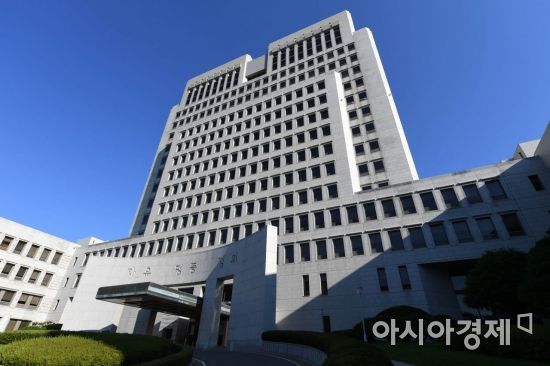
According to the legal community on the 24th, the Supreme Court's 2nd Division (Presiding Justice Kwon Young-jun) upheld the original court ruling that sentenced daycare center director A to a fine of 5 million KRW for violating the Child Welfare Act.
The court stated the reason for dismissing the appeal was that "there was no error in the lower court's judgment that violated the rules of logic and experience, exceeded the limits of free evaluation of evidence, or misinterpreted the legal principles regarding Article 74 (Joint Punishment Provision) of the Child Welfare Act."
A, who operates a daycare center in Gimpo-si, Gyeonggi-do, was jointly prosecuted under the joint punishment provision of the Child Welfare Act in connection with childcare teacher B repeatedly emotionally abusing the children at the daycare center.
B was tried on charges of repeatedly committing emotional abuse (violations of the Child Abuse Punishment Act and the Child Welfare Act) from September to November 2019 by tapping or hitting the heads, chests, or cheeks of two-year-old children who spat out food or played pranks, or tripping them.
B was sentenced in the first trial to one year imprisonment with two years probation, 120 hours of community service, 40 hours of child abuse treatment lectures, and a five-year employment ban at child-related institutions. B appealed but the appeal was dismissed, and the prison sentence was finalized as no further appeal was made.
A's side argued in court that "they fulfilled their management and supervisory duties to prevent child abuse by having childcare teachers, including B, complete preventive education and by installing and operating CCTV, so under the proviso of Article 74 of the Child Welfare Act, they should not be punished."
Article 74 (Joint Punishment Provision) of the Child Welfare Act stipulates that "if a representative of a corporation, a corporation, an individual’s agent, employee, or other worker violates Article 71 in relation to the corporation’s or individual’s business, not only the perpetrator but also the corporation or individual shall be fined accordingly." This means that when a childcare teacher is punished for child abuse, the director who employs them is also punished.
However, the proviso states, "Provided, however, that if the corporation or individual has not neglected reasonable care and supervision regarding the relevant work to prevent such violations, this shall not apply," creating an exception for cases where proper management and supervision were conducted.
However, the court did not accept A's argument.
The court judged that it was difficult to see that A properly fulfilled the management and supervisory duties to prevent child abuse based on the following reasons: ▲ B’s abusive acts were continuous and repetitive, and despite being easily discoverable through CCTV footage playback, A did not take measures such as checking the CCTV ▲ Although A was aware of situations where the victim children burst into tears, A only trusted the statements of B, the accused and one party to the incident, without further verification ▲ The victim children were only about two years old, making it difficult to expect them to testify about unfair treatment themselves, yet A made a complacent judgment that "childcare teacher B would not be a teacher who commits abuse."
The court further stated, "Defendant A argued that 'there are many CCTVs installed in the daycare center, making it difficult to check each one daily,' but merely installing and operating CCTV cannot be considered fulfilling the management and supervisory duties to prevent child abuse as an operator of a childcare facility. Considering the circumstances that as the person authorized to install and manage CCTV, A should have identified problematic situations and taken appropriate measures, the defendant cannot be said to have fulfilled the management and supervisory duties to prevent child abuse."
Regarding sentencing, the court said, "Defendant B, a childcare teacher who should protect children, repeatedly abused the victim children, and defendant A, the daycare center operator, failed to fulfill the duty to manage and supervise, adversely affecting the healthy physical and mental development of the victim children. As a result, parents who entrusted their young children to the daycare center, trusting the defendants, also suffered considerable mental distress. Nevertheless, efforts to restore the victims have not been adequately carried out, so strict punishment commensurate with the defendants’ culpability is inevitable."
However, the court added, "We take into account as favorable circumstances that defendant B fully admitted their wrongdoing, that the defendants had no prior criminal records, and that some parents of the victim children submitted petitions requesting no punishment against the defendants."
The second trial court reached the same conclusion.
However, the second trial court accepted A’s claim of excessive sentencing considering that some parents of victim children had submitted petitions requesting no punishment against A, including another parent who submitted such a petition during the second trial, and reduced A’s sentence to a fine of 5 million KRW.
Article 17(5) of the Child Welfare Act prohibits "emotional abuse acts that harm the mental health and development of children," and Article 71(1)(2) of the same law stipulates that violations shall be punishable by "imprisonment of up to five years or a fine of up to 50 million KRW."
Article 10(2)(12) of the Child Abuse Punishment Act requires daycare center directors and childcare staff to immediately report to local governments or investigative agencies if they become aware or suspect child abuse crimes while performing their duties. Article 7 of the same law (Enhanced Punishment for Workers at Child Welfare Facilities) stipulates that if a mandatory reporter commits child abuse crimes against children under their protection, the punishment shall be increased by up to half of the prescribed sentence.
© The Asia Business Daily(www.asiae.co.kr). All rights reserved.

















