Korea Economic Focus
Private Consumption That Supported the US Economy So Far Shakes
US Wage Growth Slows, Consumer Sentiment Expected to Weaken
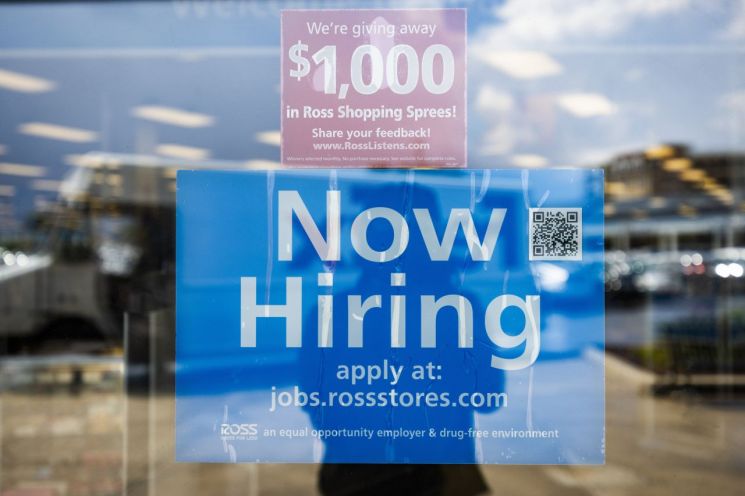
The Bank of Korea noted that despite the U.S. Federal Reserve's (Fed) tightening monetary policy since last year, private consumption remained robust, supporting the U.S. economy. However, it forecasted that the growth in private consumption will slow down going forward.
On the 22nd, the Bank of Korea explained this in its Overseas Economic Focus report titled "Background of Strong U.S. Consumption and Future Risk Assessment."
According to the Bank of Korea, the strong private consumption in the U.S. has been a key factor enabling the U.S. economy to withstand the high-intensity tightening stance.
The reasons for the resilience in private consumption were attributed to a healthy labor market and excess savings.
The Bank of Korea stated, "In the labor market, which recovered rapidly after reopening, excess demand has persisted recently, especially in face-to-face service sectors. Accordingly, wage income has risen faster than the overall price level this year, and the real purchasing power of vulnerable groups has relatively improved, supporting the recovery in consumption."
It added, "Excess savings accumulated during the pandemic due to consumption restrictions and government transfer payments have been used as a source for private consumption. It is estimated that about $1 trillion (approximately 5% of disposable income) of excess savings has been spent on consumption from the second half of 2021 to recently."
The Bank of Korea also explained that the Fed's interest rate hikes did not significantly impact household consumption.
It said, "Following the global financial crisis, households have been deleveraging, mainly through mortgage repayments, and a significant portion of mortgage loans were fixed at ultra-low interest rates immediately after the pandemic. Despite the rise in new loan interest rates, the debt service ratio (DSR) remains at pre-pandemic levels."
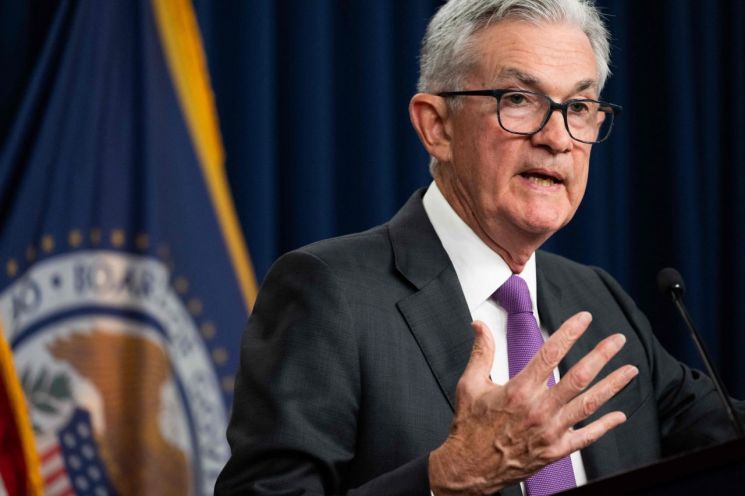
However, the Bank of Korea expects U.S. private consumption to weaken in the future.
This is because the recent moderate slowdown in employment growth and wage increases in the U.S. is expected to continue.
U.S. companies may also adopt a cautious stance on further employment expansion due to concerns over weakening profit growth caused by rising costs, credit tightening from high interest rates, and reduced fiscal support.
The Bank of Korea also expects excess savings in the U.S. to decrease compared to before.
It explained, "So far, a significant portion of excess savings has been used for consumption, resulting in a household savings rate of 3.9% as of August, which is considerably below the pre-pandemic level of 6.2%. However, a large portion of the remaining excess savings is held by the top 20% income earners, who have a low marginal propensity to consume and a strong incentive to accumulate assets for the future, so the depletion of remaining excess savings is likely to be slow."
In particular, the Bank of Korea assessed that the ripple effects of high interest rates will gradually expand with a time lag. In fact, in the U.S., the effects of rate hikes are becoming visible mainly in consumer credit, and there is growing analysis that the resumption of student loan repayments will increase interest burdens.
According to the Bank of Korea's analysis, while the effective interest rate on mortgage loans has risen by about 30 basis points (1bp = 0.01 percentage points) since the Fed began raising rates, the effective interest rate on consumer credit has already increased by more than 400 basis points and still has room for slight further increases.
The Bank of Korea added, "The resumption of student loan repayments starting in October could increase household principal and interest burdens, restricting the growth in consumption."
Additionally, recent rises in international oil prices have strengthened expectations that the Fed's tightening monetary policy stance will be prolonged, causing long-term interest rates to rise and raising concerns about financial risks, which are expected to further dampen private consumption sentiment.
Nonetheless, the Bank of Korea expects the slowdown to be moderate compared to the past, as the robust labor market situation is likely to persist longer than expected and household financial conditions appear relatively sound.
© The Asia Business Daily(www.asiae.co.kr). All rights reserved.
![Clutching a Stolen Dior Bag, Saying "I Hate Being Poor but Real"... The Grotesque Con of a "Human Knockoff" [Slate]](https://cwcontent.asiae.co.kr/asiaresize/183/2026021902243444107_1771435474.jpg)

















