Major Wall Street banks in the United States, expected to face profit deterioration due to the prolonged high-interest rate environment, are desperately downsizing.
According to CNBC, a U.S. economic media outlet, on the 19th (local time), the five largest U.S. banks have collectively laid off 20,000 employees so far this year. Among these banks, Wells Fargo, which reduced its workforce by about 5% of its total staff, had the largest scale of layoffs.
Michael Santomassimo, Chief Financial Officer (CFO) of Wells Fargo, stated, "Reductions have been made across all business areas this year, but the workforce adjustment is not yet complete," hinting at the possibility of further layoffs.
Goldman Sachs is reportedly planning to lay off about 1-2% of its total employees within weeks. CNBC, citing sources, reported that Goldman Sachs intends to identify low performers by rank and proceed with layoffs accordingly.
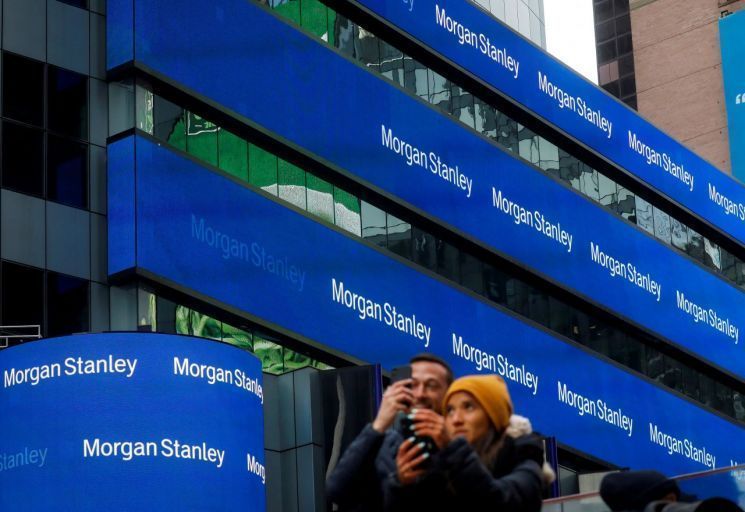
Earlier, Morgan Stanley and Bank of America each reduced their total jobs by 2%. Citibank is also pursuing overall workforce reductions through organizational restructuring such as personnel redeployment. Jane Fraser, CFO of Citibank, said, "We plan to reduce the total number of employees in the fourth quarter through restructuring of the corporate banking and overseas retail sales divisions."
The tightening stance of the U.S. Federal Reserve (Fed), which began last year, is expected to continue for a long time, and global economic uncertainty is increasing due to the Russia-Ukraine war followed by armed conflict between Israel and Palestine. Additionally, the effects of overemployment and business expansion during the COVID-19 pandemic have also impacted the worsening management of banks.
Christopher Marinac, Head of Research at Janney Montgomery Scott, said, "As economic uncertainty is expected to increase next year, banks' cost-cutting measures are likely to continue," forecasting comprehensive restructuring including workforce reductions, business reorganization, and downsizing.
Morgan Stanley and JPMorgan Chase, which focus on corporate banking as their main business, both received poor performance reports in the third quarter due to a drought in transactions caused by the direct impact of high interest rates.
Yesterday, Morgan Stanley announced in its earnings report that its net profit for the third quarter of this year was $2.48 billion (approximately 3.27 trillion KRW), down 9% compared to the same period last year. The decline in net profit was due to a drop in performance in its core Investment Banking (IB) division. During the same period, IB division revenue was $938 million, down 27% from $1.277 billion in the same period last year. JPMorgan Chase also saw a 3% decrease in IB division revenue compared to the same period last year.
James Gorman, CEO of Morgan Stanley, said, "It is unusual for IB division revenue to fall below $1 billion," adding, "The banking industry is in a vulnerable situation."
© The Asia Business Daily(www.asiae.co.kr). All rights reserved.
![Clutching a Stolen Dior Bag, Saying "I Hate Being Poor but Real"... The Grotesque Con of a "Human Knockoff" [Slate]](https://cwcontent.asiae.co.kr/asiaresize/183/2026021902243444107_1771435474.jpg)











