Ex-Husband Who Went to Ex-Wife's House and Knocked on Front Door Sentenced to 10 Months in Prison
Court: "Repeated Stalking Behavior Significantly Amplified Victim's Anxiety"
The Supreme Court has made its first ruling that even minor stalking acts, if repeated and accumulated, can sufficiently amplify the anxiety and fear experienced by the victim.
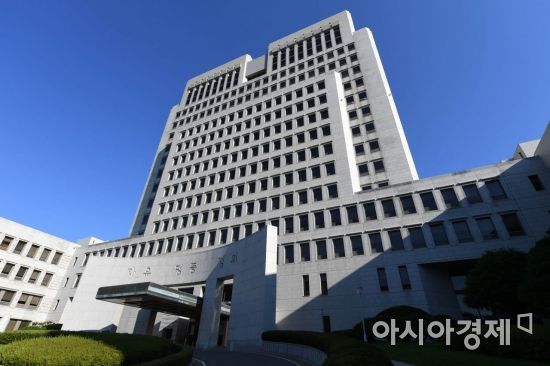
The Supreme Court's Second Division (Presiding Justice Cheon Dae-yeop) announced on the 20th that it upheld the original sentence of 10 months imprisonment for Mr. A, who was indicted for violating the Stalking Punishment Act.
Mr. A was charged with approaching his divorced ex-wife Ms. B's house six times over about a month starting from October 15 last year, waiting for Ms. B and her children, knocking on the front door, and shouting.
Ms. B had been raising her children alone since divorcing Mr. A in November 2017. In 2021, she suffered sexual violence from Mr. A and subsequently filed for a restraining order against him to prevent him from approaching her and her children, living in fear of encountering him.
During the trial, the key issue was whether, to establish stalking, it is necessary that the victim realistically experiences anxiety or fear, and whether Mr. A’s actions objectively and generally constitute stalking acts sufficient to cause anxiety or fear in the victim.
The first trial court found that all of Mr. A’s actions likely caused realistic anxiety and fear to the victim and sentenced him to one year in prison.
The appellate court also ruled that "if the acts are sufficient to cause anxiety or fear in the other party, they constitute stalking acts regardless of whether the other party actually experienced anxiety or fear." However, considering Mr. A’s partial admission of guilt, remorse, and efforts to compensate the victim by depositing 3 million won, the sentence was reduced to 10 months imprisonment.
The Supreme Court held that if, from an objective and general perspective, the acts can be evaluated as sufficiently causing anxiety or fear in the other party who perceives them, they constitute ‘stalking acts’ regardless of whether the other party actually experiences anxiety or fear. Furthermore, if a series of stalking acts continue or repeat, a ‘stalking crime’ is established.
In this case, the Supreme Court also provided a method for determining whether the stalking acts are sufficient to cause fear in the victim. The court stated, "It is necessary to objectively judge by comprehensively considering various circumstances before and after the acts, such as the relationship, status, and disposition of the actor and the other party, the circumstances leading to the acts, the words and behaviors of both parties, and the surrounding situation."
It added, "Due to the essential nature of stalking acts, even relatively minor individual acts, if repeated and accumulated, can significantly amplify the anxiety or fear experienced by the other party." The court explained that there was no error in the lower court’s judgment that affected the verdict by misunderstanding the legal principles regarding the establishment of the crime of violating the Stalking Punishment Act, thus dismissing the appeal.
A Supreme Court official said, "This ruling is the first to set forth a method for determining whether stalking acts are sufficient to cause anxiety or fear in the victim from an objective and general perspective. It is also the first case to judge that relatively minor individual acts, when cumulatively and comprehensively evaluated, can be regarded as a series of stalking acts sufficient to cause anxiety or fear."
© The Asia Business Daily(www.asiae.co.kr). All rights reserved.

















